Tree Stump Removal Auckland: Why Steep Banks Decide the Job
Where do stumps get stuck on Auckland's steep, tight sections?

Why do wheeled and towed grinders struggle on wet Auckland clay?

Wheels concentrate a machine's weight over a small contact area and can sink into wet clay. Tracks spread the load over a wider footprint, reducing ground pressure. They can reduce rutting, but they do not make saturated ground safe or guarantee an undamaged lawn. TractorTowed or wheeled grinder can sink and leave deep ruts. Tracks can reduce rutting but still disturb turf when turning Ground conditions may still limit operation Access through gates, machine dimensions and turning space must be checked. Firm, compact soil with grass cover permits steeper work than soft or muddy ground. Wet Auckland clay is a particular concern in winter and spring. Volcanic clays lose strength when heavy rain saturates them, as Martin Brook explained in a January 2026 commentary on Phys.org about Tauranga slopes. Tracks are not permission to push onto an unstable bank.
How does a tracked remote grinder work on a bank?
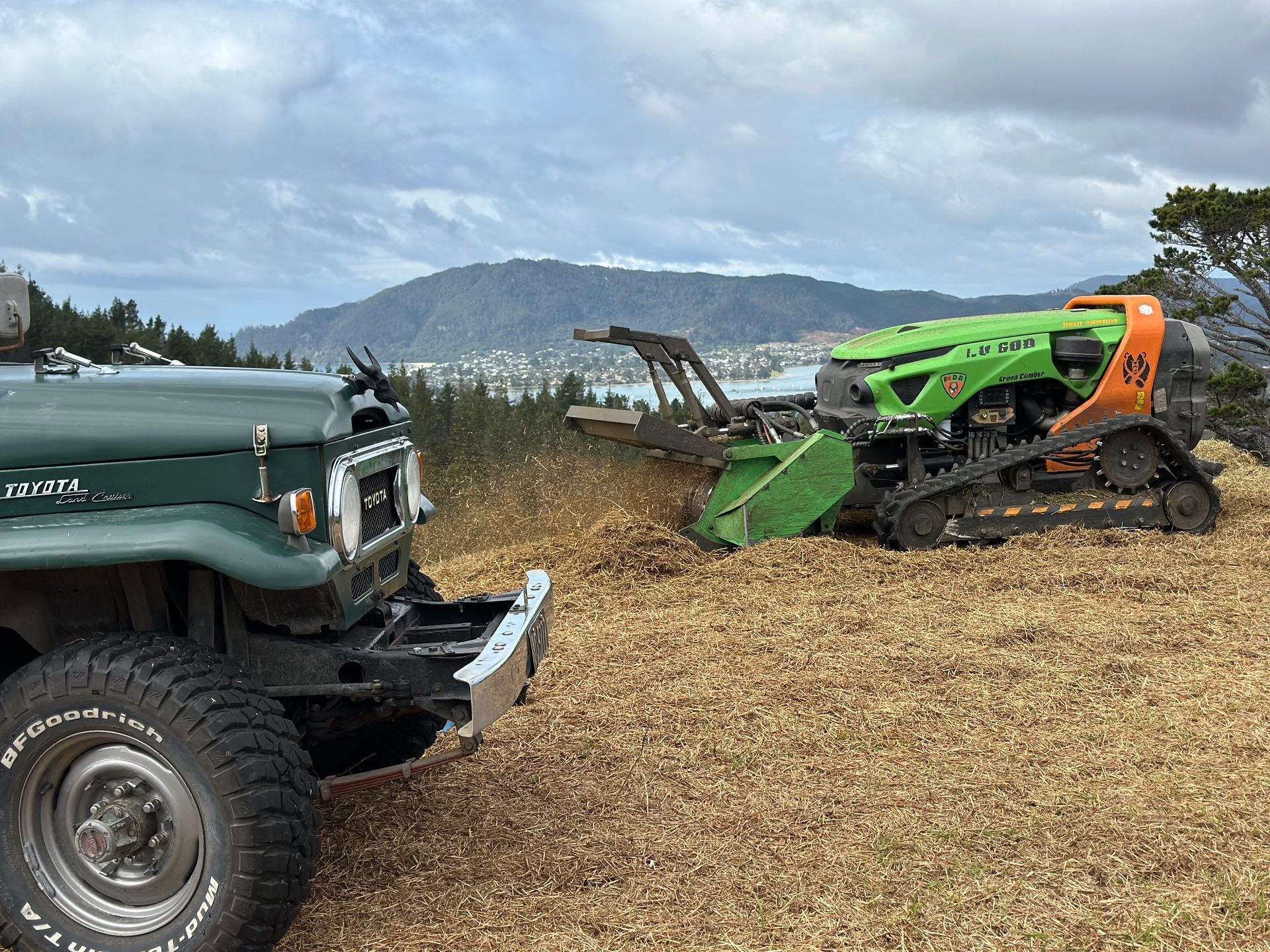
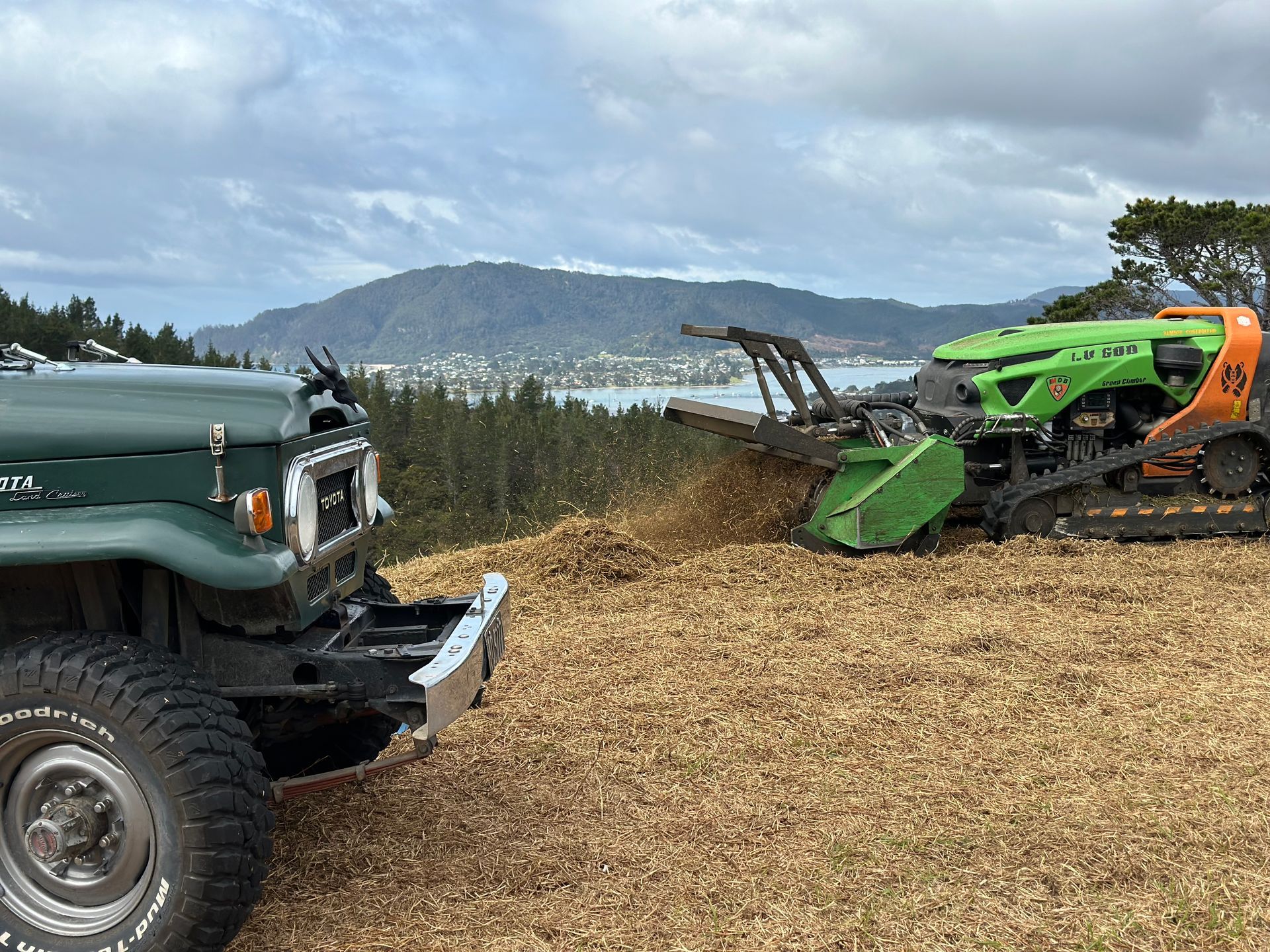
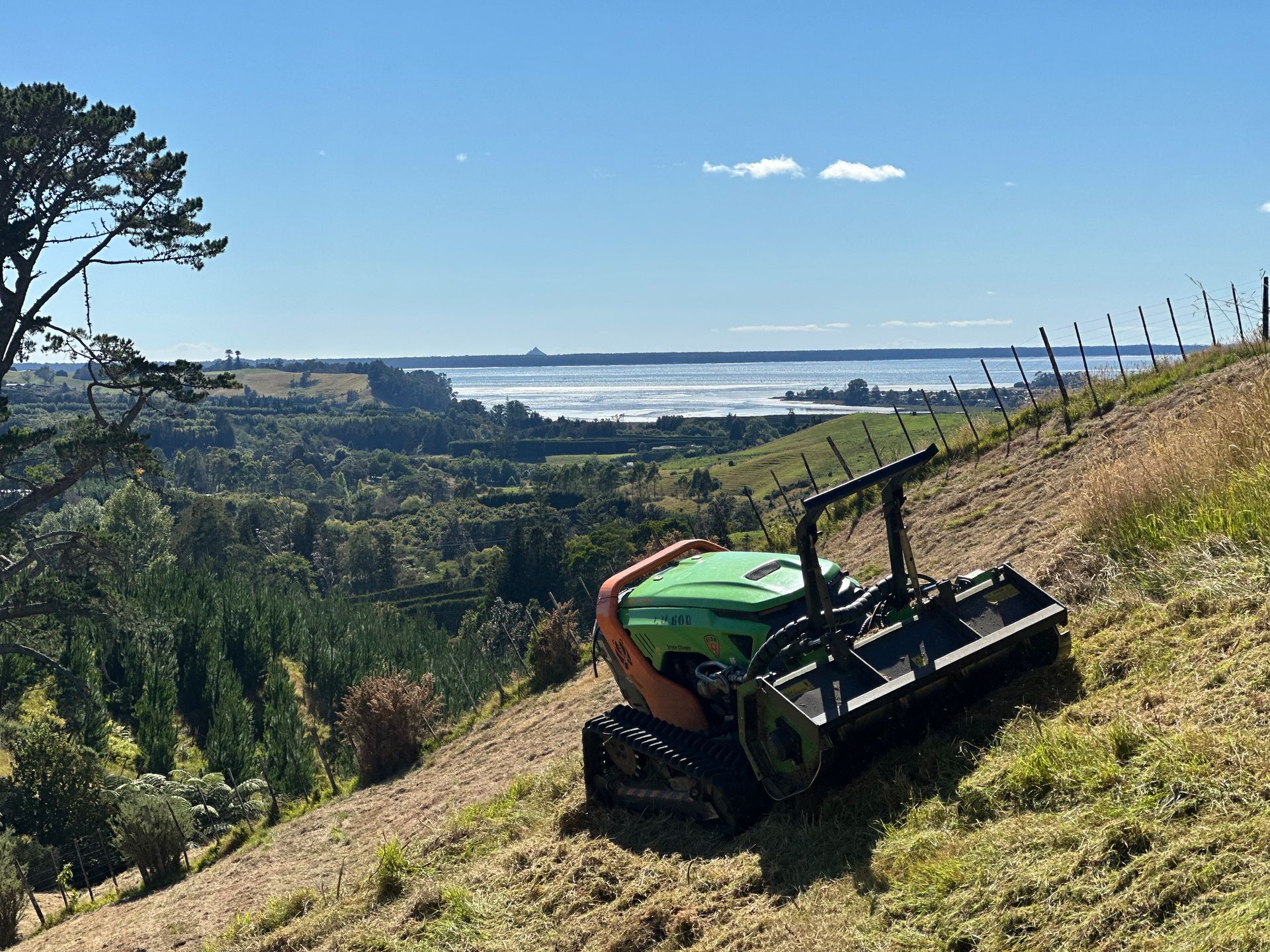
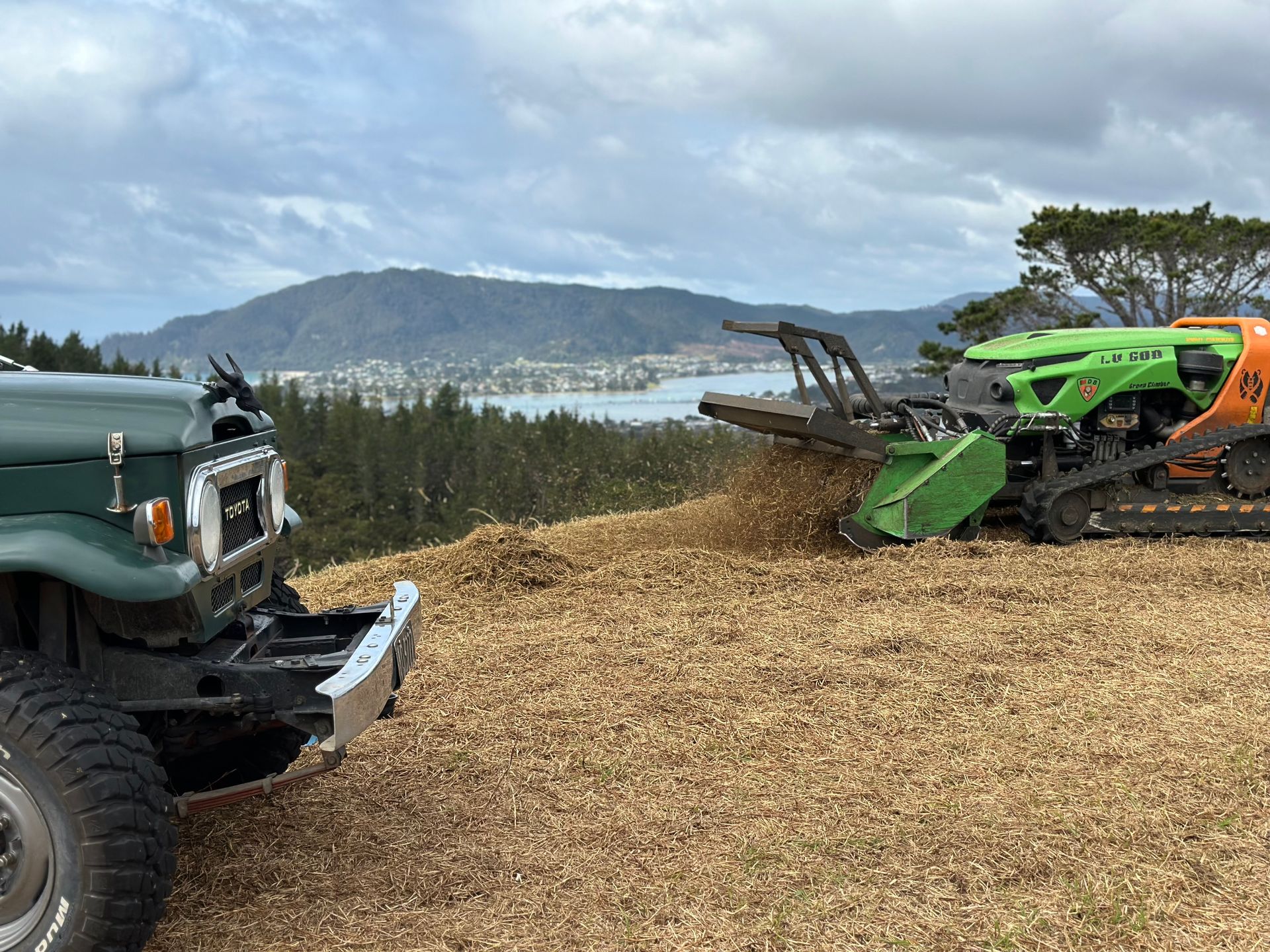
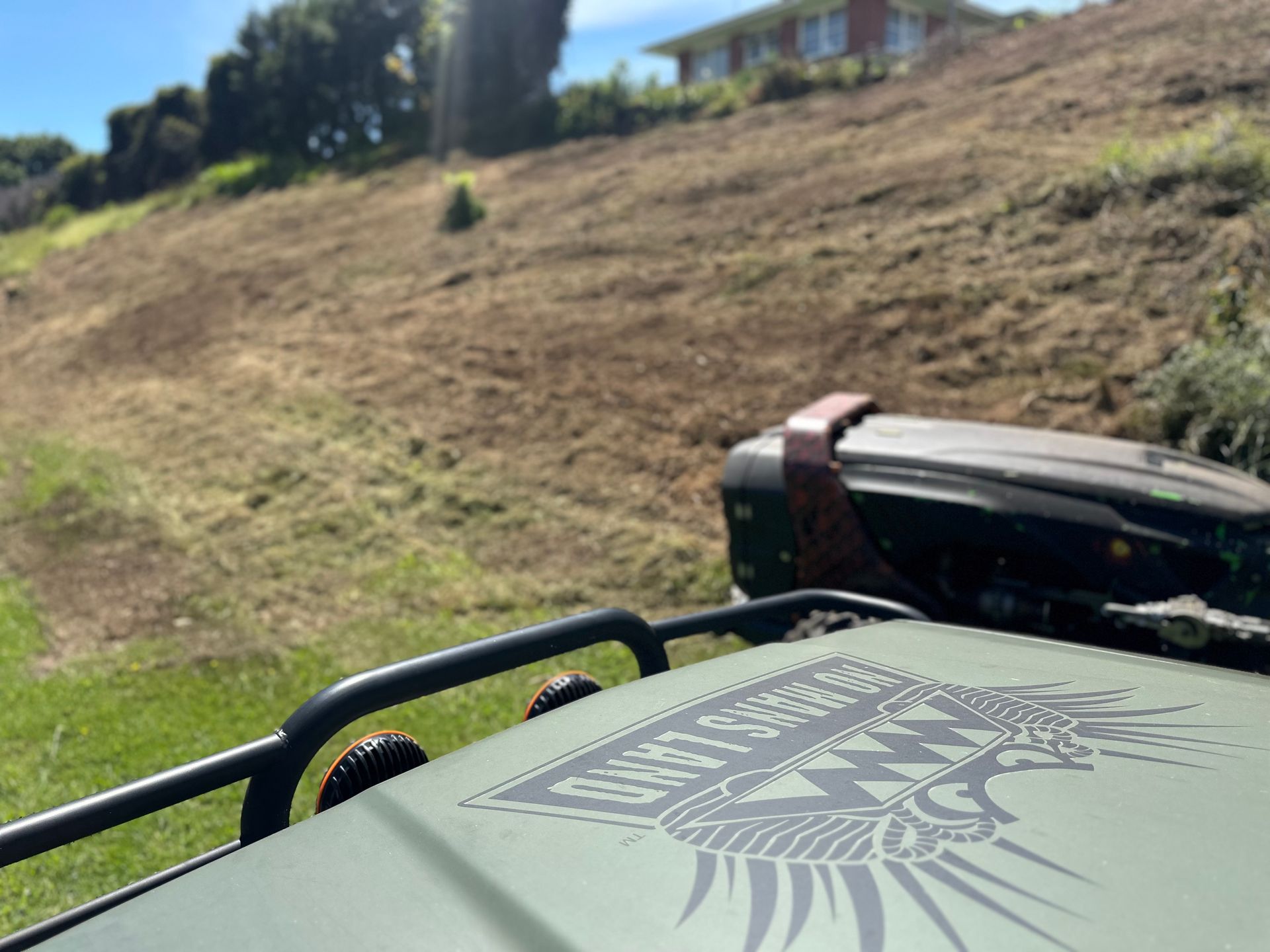
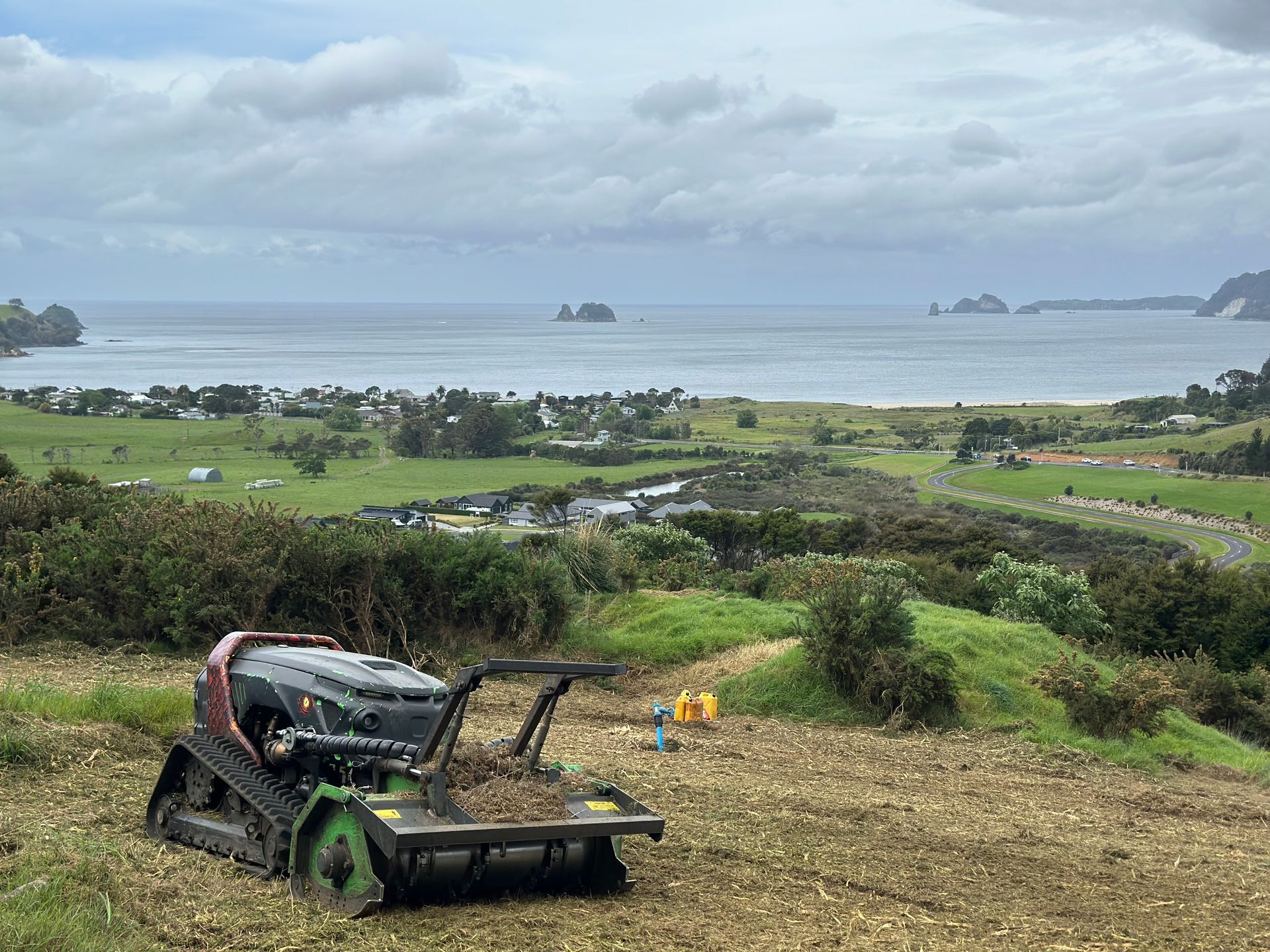
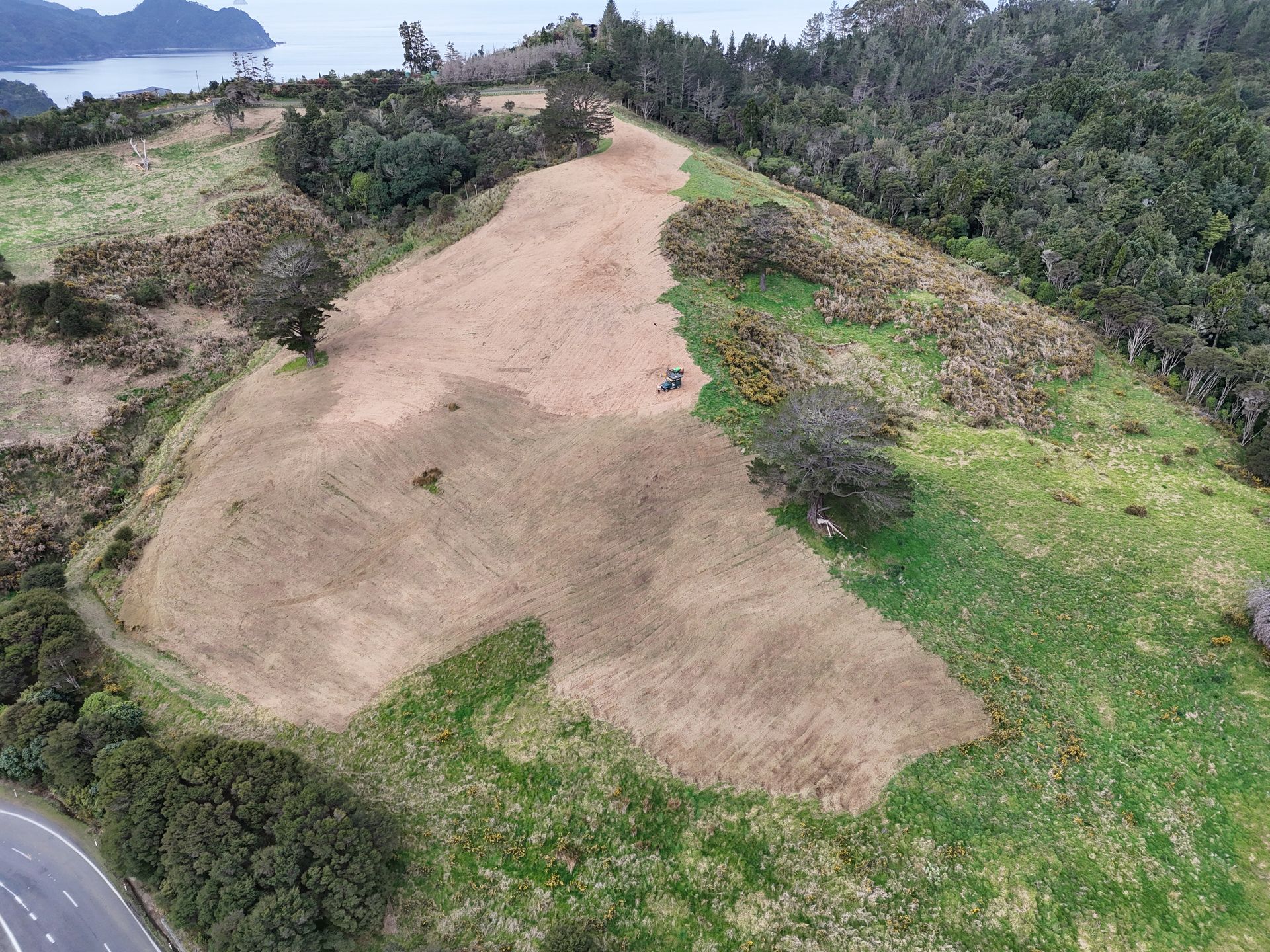
Yes, we operate remote-controlled equipment on slopes of 50+ degrees where ground conditions allow, with our extendable rubber tracks we are able to gain a stable safe hold on steep hills to begin Stump Grinding where others would struggle, not a promise for every bank. Grinding leaves wood chips that can be left in situe or used as garden mulch. On steep ground, loose chips can wash downhill in heavy rain.
How narrow a gate can a tracked grinder get through?
The machine's width is only part of the answer. Measure the narrowest gap between the gateposts, then check overhead clearance and turning room along the full route. A wide gate is no help if a steep or tight corner blocks access beyond it. Photographs should show those pinch points. On a difficult route, a site walk is a recommended next step before confirming machine access.
What do Auckland's earthworks rules mean for a bank above a wall?
Grinding a stump is different from cutting into a bank for a retaining wall or path. Earthworks on steep or sensitive land are regulated, so checking with Auckland Council is recommended before reshaping the slope beyond what grinding requires. Requirements depend on the property and proposed work. Our steep-slope stump removal guide covers the general approvals question in more detail.
Should a stump above a wall be ground or pulled out?
Pulling a large stump out removes its root plate and disturbs the soil around it. Above a retaining wall or cut, that disturbance can be a bigger concern than the stump itself. Grinding at ground level is often the safer choice, subject to assessing the bank and nearby structures. Grinding does not permanently stabilise a slope. Roots left underground eventually decay, so a bank relying on those roots for support may need specialist assessment before work proceeds. Burning is a poor option in suburban Auckland, where fire restrictions may apply. Chemical stump treatments can take months and leave residue in the soil. Mechanical grinding avoids chemical stump-killer products.
What should you send before anyone quotes a steep-section stump?
Stump diameter alone cannot establish the work involved. Photos and access measurements help identify whether a machine can reach the stump and where an on-site assessment is needed.
- Photos showing the stump and surrounding ground.
- Any other Photos of interest that may paint a clearer picture of job
- Any narrow gates , measurements if nessesary, We are 1.5 metres wide.
- A rough slope estimate and a description of the ground conditions.
- The property location.
What to send with your photos
Mark or verbally point out any known possible hazards, things you need kept safe e.g. irrigation lines, power or water hazards etc. Send the details through the contact page or call 021 994 891; for a steep or cliff-edge section, a site walk or phone call may suffice. Google Earth is also very helpful with measuring areas (small ruler icon and adding point to point around area to be done is recommended and time saving.
What no quote can see
Buried rocks and old fence wire may remain hidden until grinding starts. Not everything can be found during inspection, and debris strikes are part of this work. Discuss how damage would be fixed and who carries liability before machinery goes in. Our stump grinding cost guide explains the factors affecting a job's price.
Frequently asked questions
Can a stump grinder get into a tight back section or through a narrow gate?
Some tracked grinders suit restricted access, but the machine must fit the whole route. Measure the narrowest gate gap and photograph any overhead obstructions or tight corners on the route. A site assessment may be needed to confirm access.
How much does stump grinding cost in Auckland?
The price depends on access and ground conditions, including the slope. Photos and measurements help establish the scope, but difficult sites may require an inspection. The stump grinding cost guide explains those cost factors.
Do I need a resource consent for a stump or earthworks on a steep Auckland section?
Consent requirements depend on the property and the work proposed. Grinding a stump and excavating a bank for a wall are different activities. Checking with Auckland or your local Council is recommended before cutting into steep or sensitive ground.
Does stump grinding stop the tree growing back?
Grinding removes the stump to the agreed depth, but it does not remove every root. Some species can send up shoots from remaining roots. Checking for regrowth afterwards is recommended.
How do I get an accurate quote for a stump on a steep section?
Send the location, photos from above and below the stump, and measurements of the narrowest access point. Include known underground services and nearby retaining walls. For a steep or cliff-edge bank, arrange a site walk rather than relying on photos alone.