
Couch Grass on Steep Hills: How to Clear It and Plan Follow-Up
No Mans Land Mowing • October 24, 2026
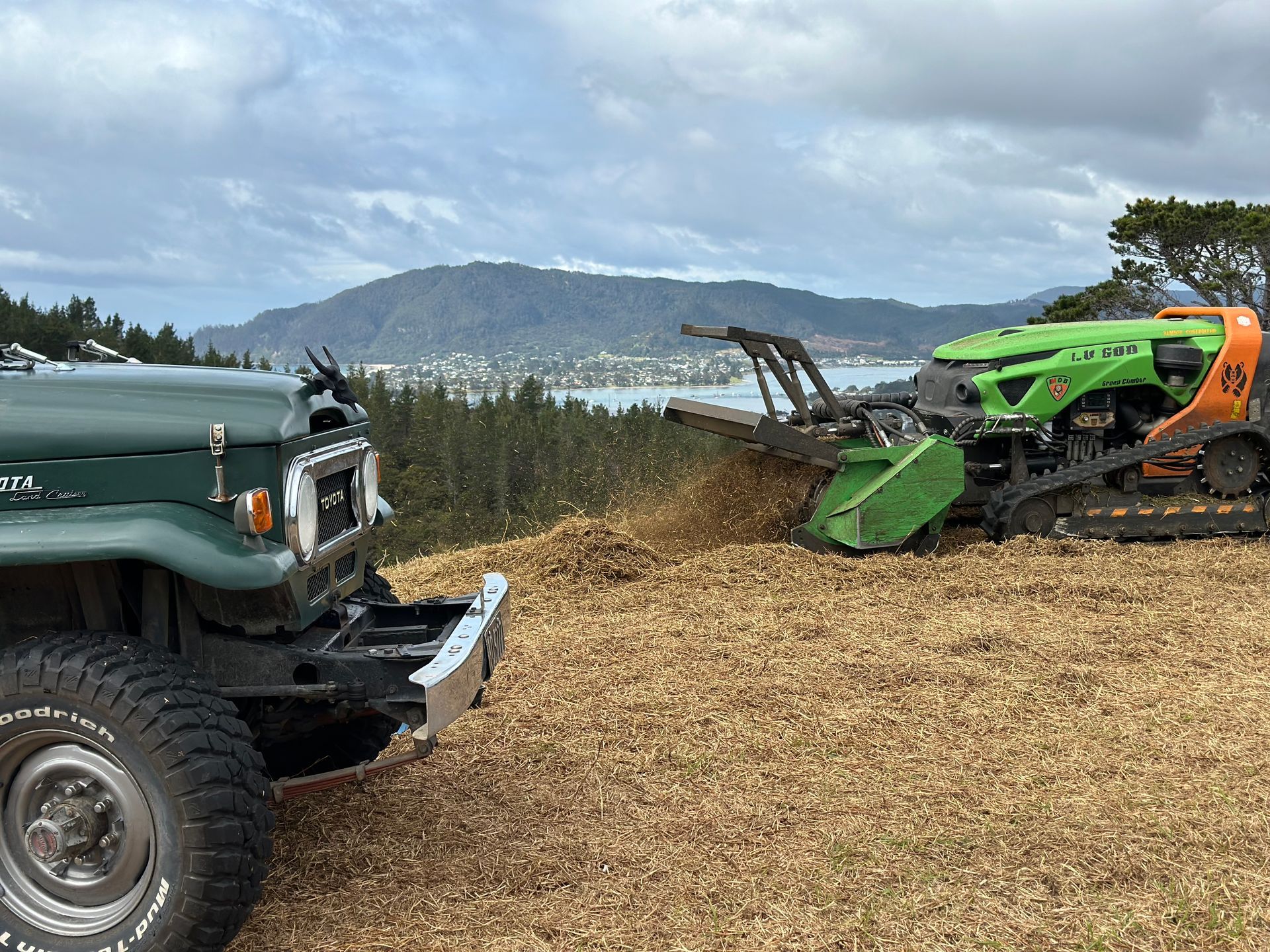
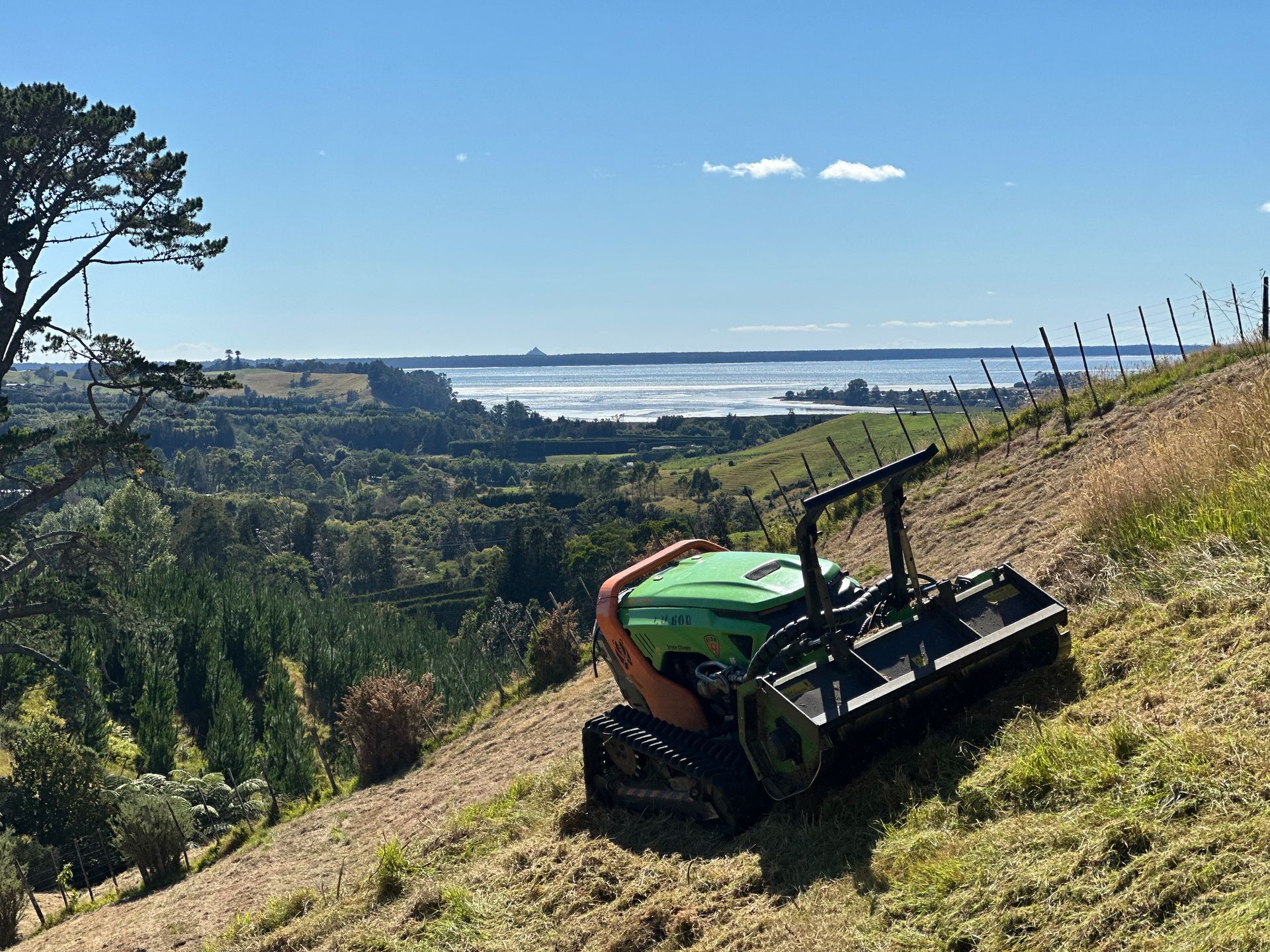
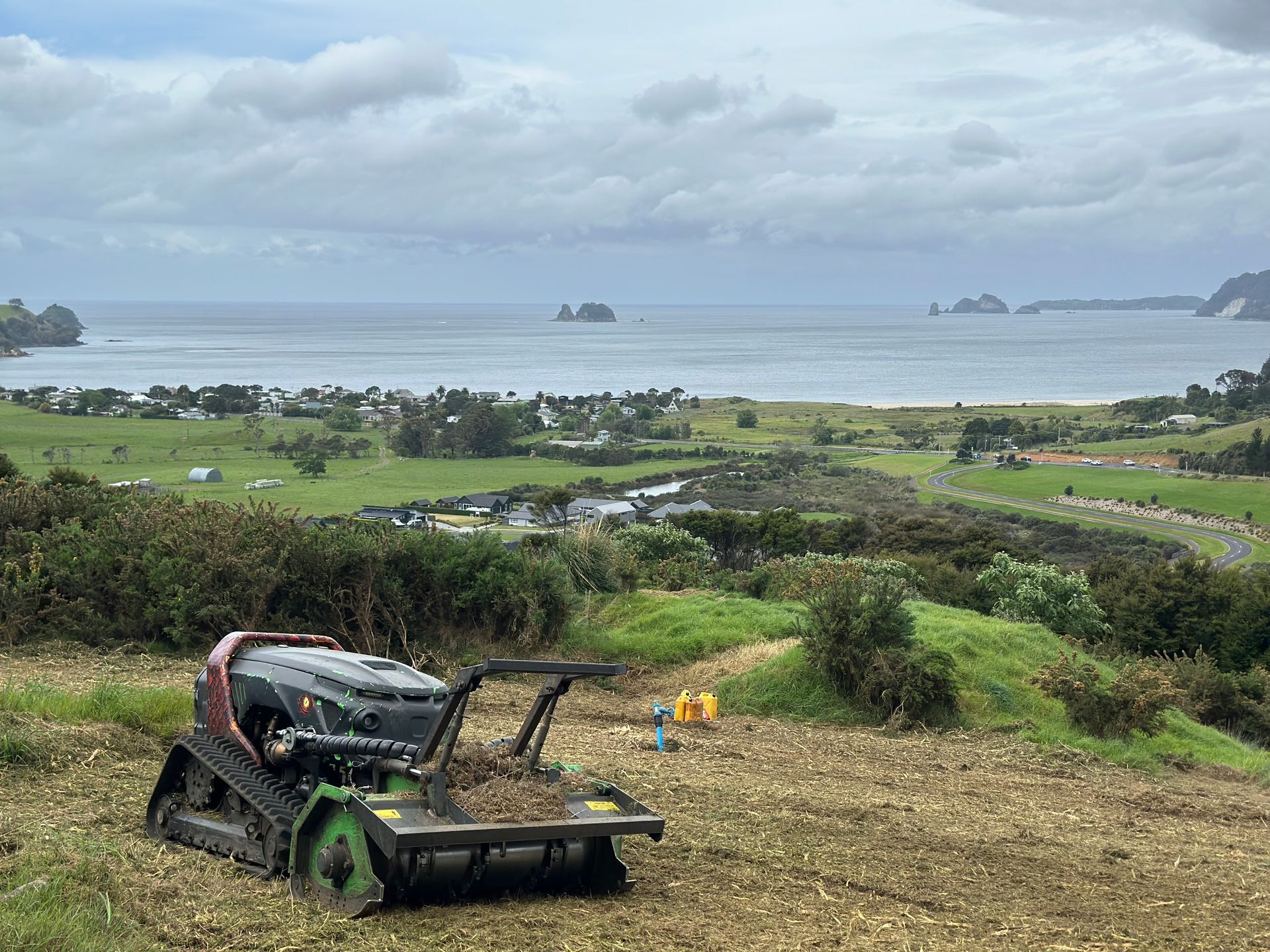
Couch grass survives mulching because its underground rhizomes grow back. On a steep paddock, steep slope mulching
can clear the standing mat without deep cultivation, but it is only the first step. Identify the grass, assess the slope and plan follow-up before spending money on seed.
Across Waikato and Bay of Plenty, “couch” can mean several different grasses. The right approach depends on what is growing and whether the ground can safely support the machine.
A paddock can look full without producing useful feed
Mature, stemmy grass can leave a paddock looking productive when much of it is unpalatable. Massey University's weed database notes that couch often goes unnoticed in ryegrass pasture because the leaves and flower stems look similar. Cultivation can reveal the rhizomes that were hidden below ground. Our part is clearing the growth on difficult terrain, not deciding how you run the paddock. Our steep slope mulching covers that mechanical clearing work.Not every rough grass on a hill is couch

Couch has no above-ground runners. That is the quickest field check. Grasses sometimes called couch in New Zealand, including Indian doab, Mercer grass and browntop, produce surface runners as well as underground rhizomes, according to Massey University.
Check the plant below ground too. True couch has thin, wire-like rhizomes with pointed tips. Small pieces can regenerate, so moving soil containing them can spread the problem.
- Look for runners across the soil surface.
- Lift a plant and examine its underground rhizomes.
- If the identification is uncertain, a recommended next step is confirmation before choosing a control method.
Discs and harrows are the wrong tools for a steep face
A disc or harrow is the wrong first move on a 30-degree face. Side slopes create skidding and rollover hazards, while cultivation on clay can expose the bank to slipping. Heavy cultivation needs a ground assessment, not an assumption that a tractor can get across. Disturbance alone also fails to control couch. Massey University describes it as particularly good at regrowing after cultivation. Our note on when tracked mulchers beat standard tractors covers the machinery choice on difficult ground.Mulching the mat does not kill couch
Mulching cuts the growth above ground, but leaves living rhizomes underneath. Couch can grow straight through the resulting mulch. Anyone promising a clean, one-pass kill on a steep face is overselling it.Check for hidden hazards before the machine goes in
A pre-mulching inspection cannot find everything. Buried wire can disappear into rough grass, along with old posts and rock. Debris strikes are part of this work, and we discuss any damage in terms of fixes and liability before work starts. Our in-house repair facility keeps repair costs low when a machine takes a knock.Treat the mulch as the start of the job
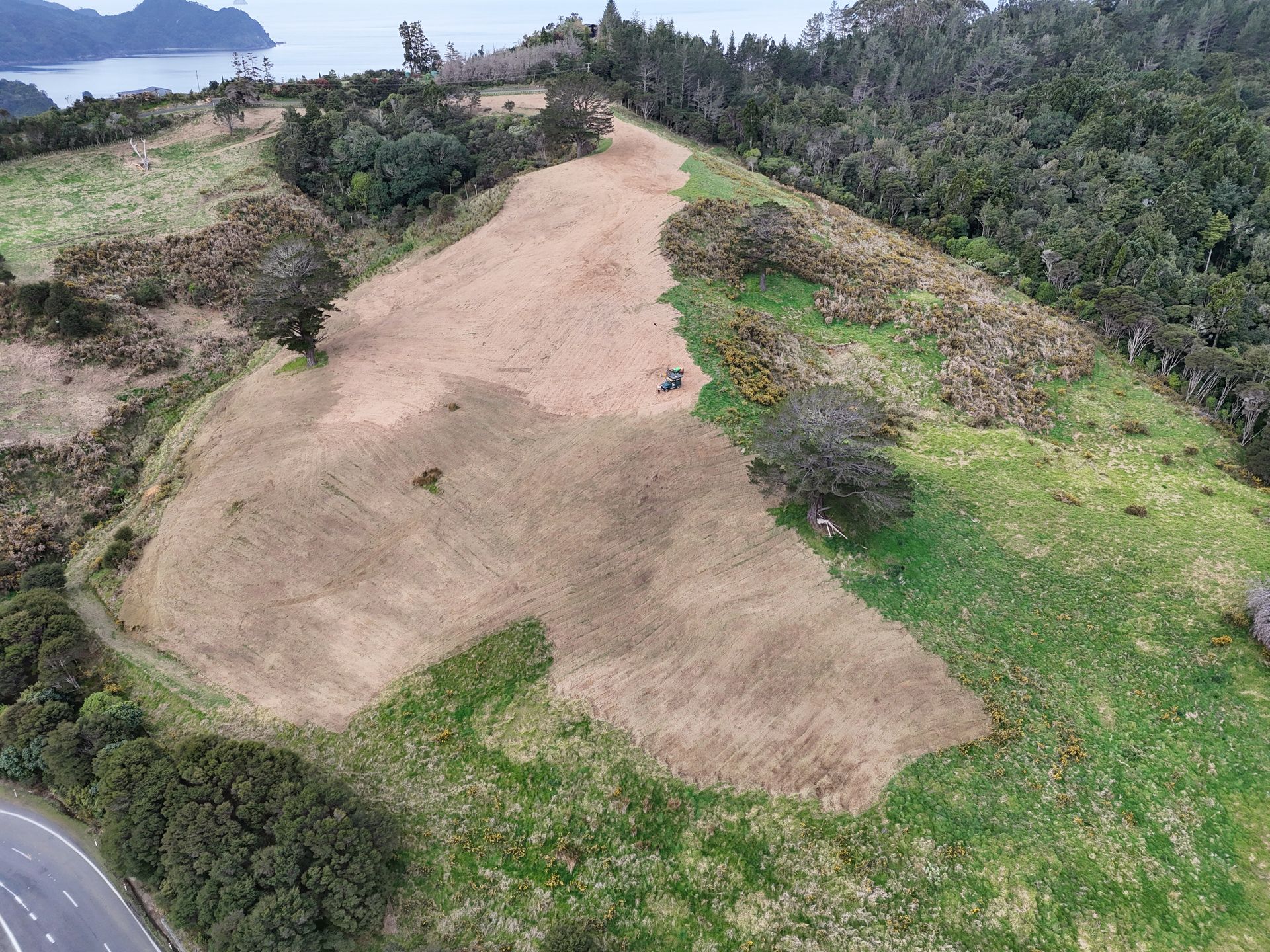
Plan for regrowth from surviving rhizomes before clearing begins. Where woody weeds are mixed through the grass, the finish matters too. Slashers leave large, sharp debris that stock will not walk over, so those areas go unused and weeds regrow quickly. Pasture regrowth on areas mulched with the No Mans Land system has been excellent.
Ground preparation comes before any reseeding
Ground that has been mulched bare can be harder to re-establish than it looks, so a recommended next step is to check it before any seed goes on. Choices about fertiliser and seed mix belong to you and your seed adviser.Scratch lightly and oversow into a firm seedbed
The aim is seed contact with firm soil, not a deeply cultivated bank. Any surface preparation still depends on safe access and ground stability.- Plan couch follow-up before sowing, so surviving rhizomes do not simply compete with the new plants.
- Where safe and appropriate, scratch the surface lightly rather than turning the bank over.
Early spring spraying is not a quick fix
Chemical follow-up is sometimes needed, but freshly regrowing couch is not automatically ready for treatment. Massey University identifies glyphosate as the best translocated herbicide for couch and specifies waiting until each plant has three to four leaves. Semi-dormant plants in early spring may respond poorly. Our mulching uses no chemical sprays. Any herbicide treatment is separate work to discuss with a qualified applicator, including runoff risks to the gully below. Our page on kikuyu grass and mat suppression discusses another persistent grass, but identification comes before applying the same approach.Ground conditions set the limit for a tracked mulcher
We operate MDB LV600 remote-controlled tracked machines, with 4,500 hours of operating experience. They have 50+ degree slope capability, but that is not permission to work every hillside. Firm, compact soil with grass cover permits steeper work than sandy, muddy or clay ground. The same slope can be workable after dry weather and unsafe after rain. To discuss the ground before choosing a method, call No Mans Land Mowing on 021 994 891 or use our contact page.- Slips or a gully head warrant assessment before machinery enters.
- Ground lines, irrigation lines and Hidden debris affect the work plan.
- Wet ground or signs of movement are reasons to stop.

Frequently asked questions
How do I get rid of couch grass in a paddock rather than a garden?
First confirm the grass and assess safe access. On steep ground, mulching can clear the standing growth, but surviving rhizomes need follow-up. Soil testing and adviser-led seed selection come before oversowing.Is couch grass the same as browntop or Indian doab?
No, although local names can overlap. True couch has underground rhizomes but no above-ground runners. Browntop and Indian doab produce surface runnersCan I oversow clover and fine fescue straight onto mulched couch?
Mulching alone does not control the surviving couch, so a recommended next step is to check the ground and deal with regrowth first. Seed also needs contact with soil, rather than sitting on a thick mat.What slope can a tracked mulcher work on safely?
Our MDB LV600 machines have 50+ degree slope capability, but ground conditions set the safe working limit each day. To discuss your slope and access, send the site details through our quote request page.
Access, ground and slope decide whether a tracked remote grinder can clear a stump on an Auckland bank, and what to send for a fair quote.
Kikuyu grass forms mats that mowing alone cannot clear. Here is why it spreads, what to check before the first pass, and how follow-up keeps it in check.
Hedge trimming services suit light annual growth on a maintained boundary. Gorse, blackberry and dense woody scrub need a mulching assessment instead, and this piece shows how to tell them apart.
Ag contractors for steep hill country: the machine, pre-qualification and written plan to check before you hire. Ground conditions set how steep a job can safely be.
Steep Rotorua banks are hard to mow with a ride-on, especially after October rain. Here is what drives the cost and when remote-controlled mulching makes more sense.

Hydrocotyle includes native New Zealand pennyworts as well as weeds, so identify it before clearing a damp bank near water. Here is what to check first and when to call a professional.
Hedgerow removal on a steep fence line means finding the wire and isolating the energiser before any machine goes in. Regrowth needs a plan too.
Grinding a tree stump below ground on a steep slope is usually safer than digging out its roots. The ground needs checking first, and the stump size alone does not settle the job.
Mechanical mulching clears gorse and blackberry on steep slopes without herbicide, and the ground and follow-up decide how well the clearing holds.
Published NZ price guides put tree felling at $350 to $5,000+ including GST, and steep banks often sit higher. Here is what changes the price and what to confirm in a quote.