
Hydrocotyle on Stream Banks: Identify It Before You Clear
No Mans Land Mowing • October 19, 2026
Hydrocotyle is a group of pennyworts, not one weed. Some are native to New Zealand, so identify yours before clearing a damp bank. If it is a weed, mulching can remove surface growth but will not kill buried rhizomes. Near water, keeping cuttings out of the stream comes first.
For steep banks, our steep slope mulching and native restoration clearing
can remove unwanted growth around native plants. Whether machinery can work there depends mostly on the ground under the tracks.
What rules limit spraying and clearing near a waterway?
Waterway rules differ between regions and change over time. It is recommended to check your regional council’s current rules and ask whether consent is needed before clearing near open water. Spraying a riparian bank is not recommended. A product labelled for hydrocotyle in grass lawns is not automatically suitable beside a stream, and spraying leaves the dead matter behind. Mechanical work also needs limits: keep machinery on suitable ground above the waterline and contain the cut material.Which hydrocotyle is on your bank?

A pennywort spreading across damp ground is not enough to identify a weed. New Zealand has native species with different regional conservation rankings.
The native rankings come from NZ Native Plants entries updated on 16 October 2026. DOC’s Smart Weed Alert Tool lists water pennywort as a weed. If identification is uncertain, get it checked before clearing; native restoration clearing
should preserve the plants that belong there.
Why does hydrocotyle matter in a stream, and how does it spread?
NSW WeedWise describes floating pennywort, Hydrocotyle ranunculoides, forming dense mats that reduce water quality and displace native vegetation. Its undated species guide says a small stem fragment containing a node can regrow. Flowing water can carry those fragments downstream. That warning concerns a particular species, not every New Zealand pennywort. Where fragmenting weeds are present, mechanical clearing can spread them unless cut material is contained. Growth floating in the stream needs specialist advice, not a mulcher pass along the edge.Can a tracked mulcher clear the bank above the waterline?

Tracked machinery can reduce ground disturbance, but it cannot make saturated ground safe. Distance from the stream and exposed soil both affect silt risk. A soft margin may be unsuitable even when the machine can handle the slope angle.
We have 4,500 hours of operating experience on MDB LV600 remote-controlled tracked mulching machines, with capability on slopes of 50+ degrees where conditions allow. Firm ground permits steeper work than loose or saturated soil. For the equipment trade-offs, see our article on tractors versus mulchers.
Ground and weather that set the work window
October ground can still be soft after winter rain. A dry spell is often the safer window; a planting deadline does not improve traction. Allow a buffer from the water and stop work in heavy rain.Signs to stop work
Slumping, cracks along the bank’s top edge or seepage at its base warrant assessment by a qualified person before mechanical work continues. Ground giving underfoot is another warning. Pre-mulching inspections cannot find everything beneath dense scrub. Debris strikes are part of the business, and our in-house repair facility keeps repair costs low. If one damages something, we talk through the fix and liability before the machine moves. If in the event our machine does becomg stuck we have truck winches and a portable battery winch to easily remove machines from deep mud holes.
How do you clear weeds around native plants?
Mark the native plants first, then plan machine access around them. Clearing the whole face to reach a few weed patches defeats the restoration work.- Identify and mark the native plants to retain.
- Choose a machine route that avoids the marked plants.
- Remove unwanted growth without stripping the whole margin.
- Contain cuttings above the waterline.
- Check the retained plants and cleared ground afterwards.
How does fine mulch protect a cleared bank in spring rain?
A thin layer of fine mulch cushions rain impact and slows surface runoff while planting establishes. Spread it in a controlled layer, clear of the water. Heavy debris tipped over a steep face can slide; mulch does not stabilise a bank that is already moving.How do you deal with the creeping mat itself?
Pulling off leaves leaves the underground stems behind. Surface mulching has the same limitation: it removes growth above ground but does not reliably kill buried rhizomes. Follow-up checks are recommended before regrowth forms another mat. Mechanical control of gorse on slopes also needs follow-up, but hydrocotyle presents a different problem. Clearing access and killing a creeping plant are separate tasks.What should happen before the cleared bank is planted?
Clear the unwanted growth, protect the exposed surface, then plant. New plants struggle in a living weed mat, for a steep-bank clearance in Bay of Plenty, Waikato, Coromandel or Auckland, send us the site details for a quote or call 021 994 891. Include photos showing access and the distance between the weed and water.Frequently asked questions
Is hydrocotyle always a weed?
No. Hydrocotyle includes native New Zealand pennyworts, including H. robusta and H. microphylla. Some have threatened regional rankings, so identify the species before removing it.Can I spray hydrocotyle on a stream bank?
Spraying a riparian bank is not recommended. A lawn herbicide label does not establish suitability beside water. Check your regional council’s rules and get site-specific advice before choosing a treatment.Will a tracked mulcher muddy the stream?
It can if work disturbs saturated soil or allows sediment into the water. Tracks do not remove that risk. A suitable buffer and stopping in heavy rain help limit disturbance, but some banks are unsuitable for machinery.Does mulching stop hydrocotyle coming back?
Not on its own. Creeping hydrocotyle can regrow from rhizomes left beneath the surface. Mulching removes top growth, so follow-up checks are recommended.Do I need a consent before clearing a bank near a creek?
That depends on the region and proposed work. It is recommended to ask your regional council about current waterway rules and consent requirements before clearing, especially where machinery or cut material could affect the stream.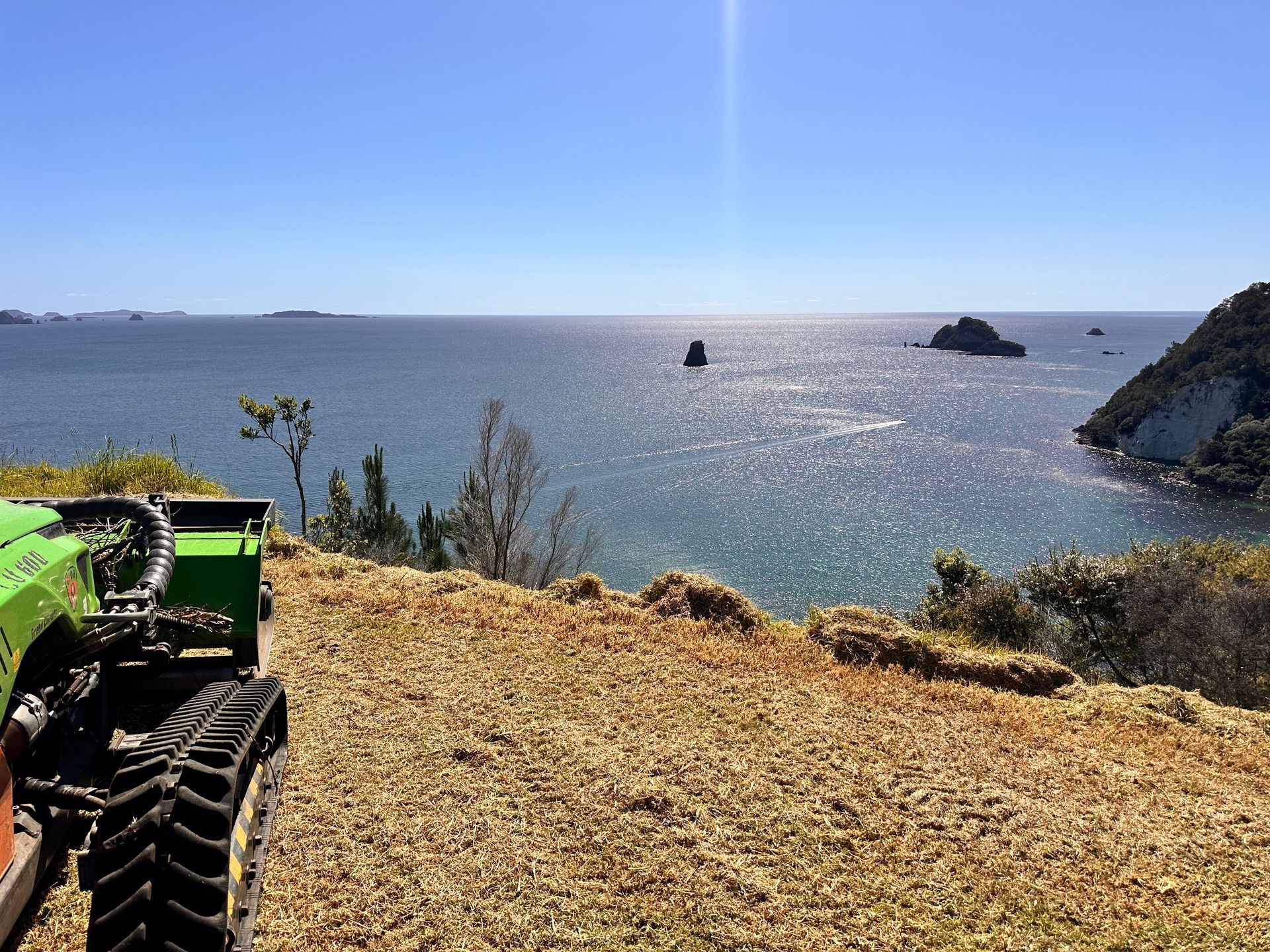
Access, ground and slope decide whether a tracked remote grinder can clear a stump on an Auckland bank, and what to send for a fair quote.
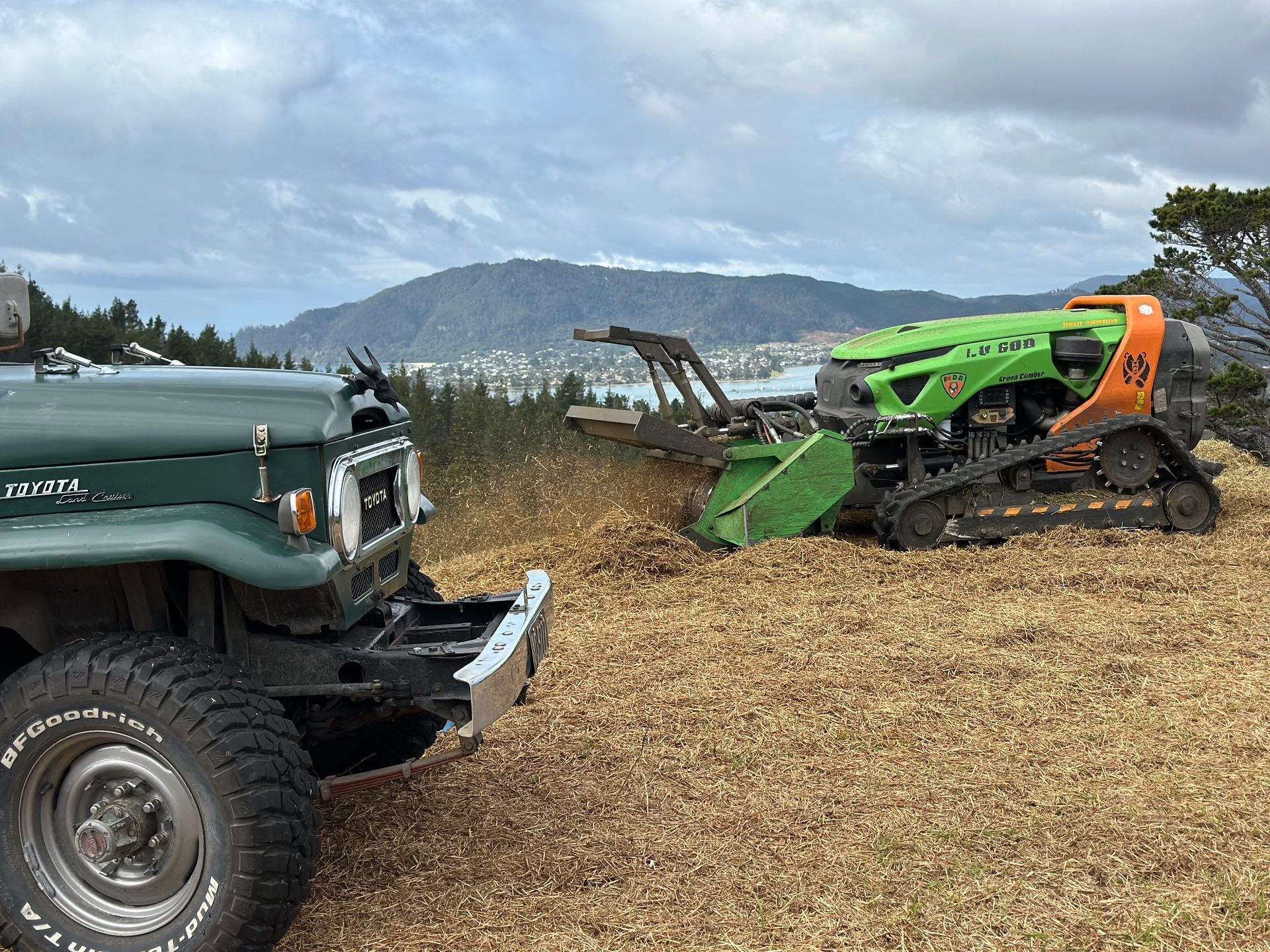
Mulching clears the standing growth of couch grass on steep hills, but its underground rhizomes regrow. Here is how to identify it, check the ground and plan the follow-up.
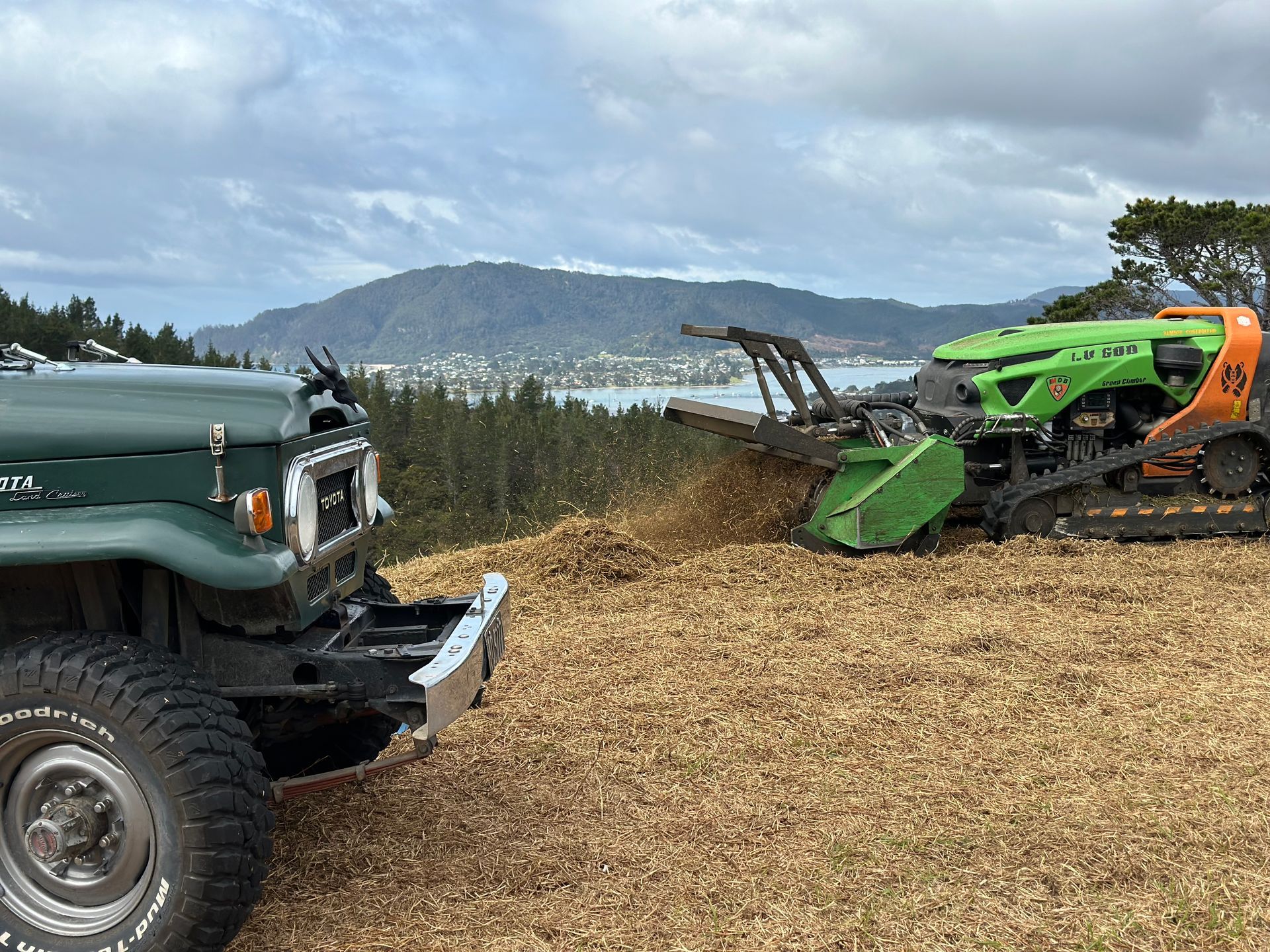
Kikuyu grass forms mats that mowing alone cannot clear. Here is why it spreads, what to check before the first pass, and how follow-up keeps it in check.
Hedge trimming services suit light annual growth on a maintained boundary. Gorse, blackberry and dense woody scrub need a mulching assessment instead, and this piece shows how to tell them apart.
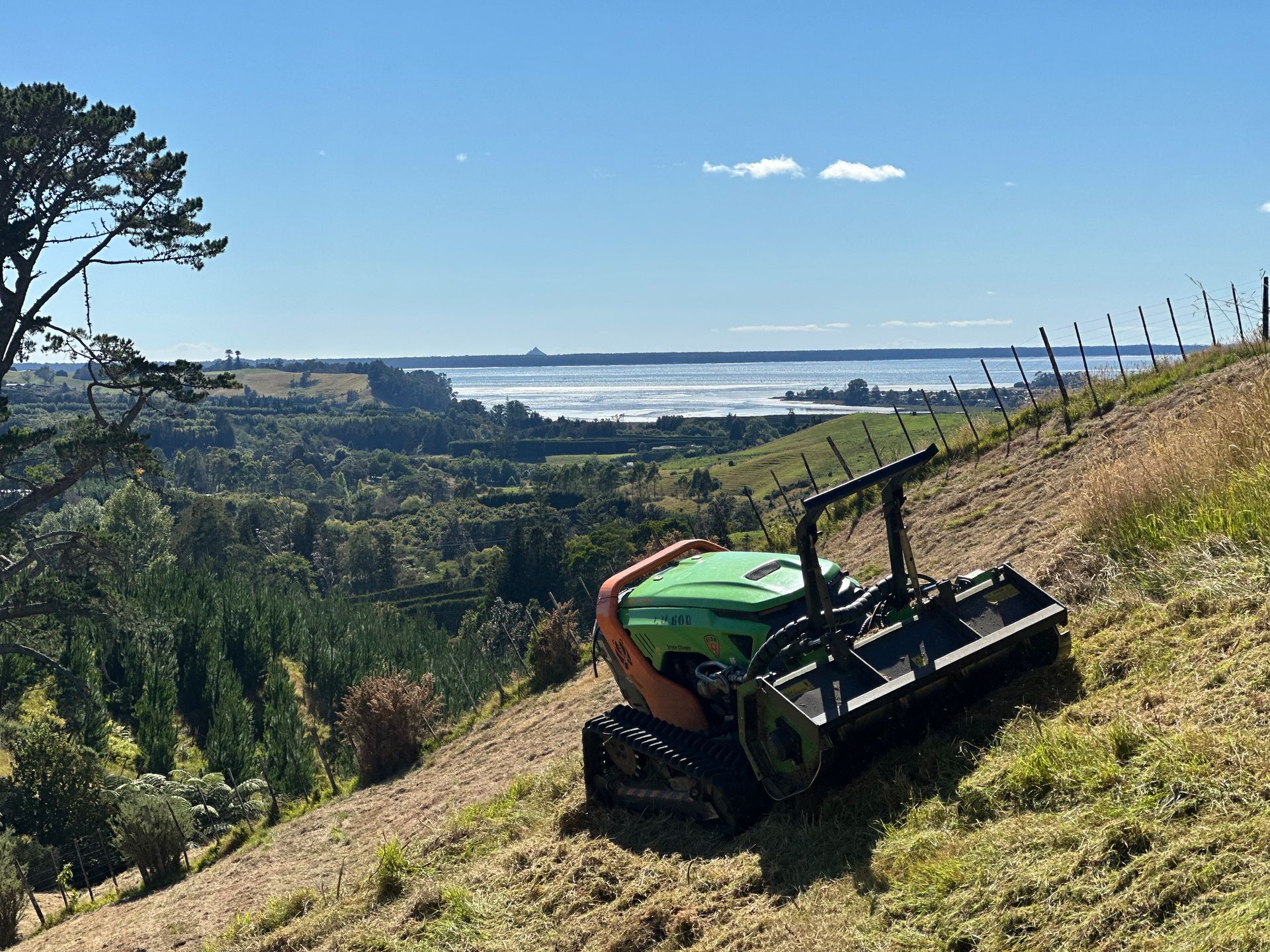
Ag contractors for steep hill country: the machine, pre-qualification and written plan to check before you hire. Ground conditions set how steep a job can safely be.
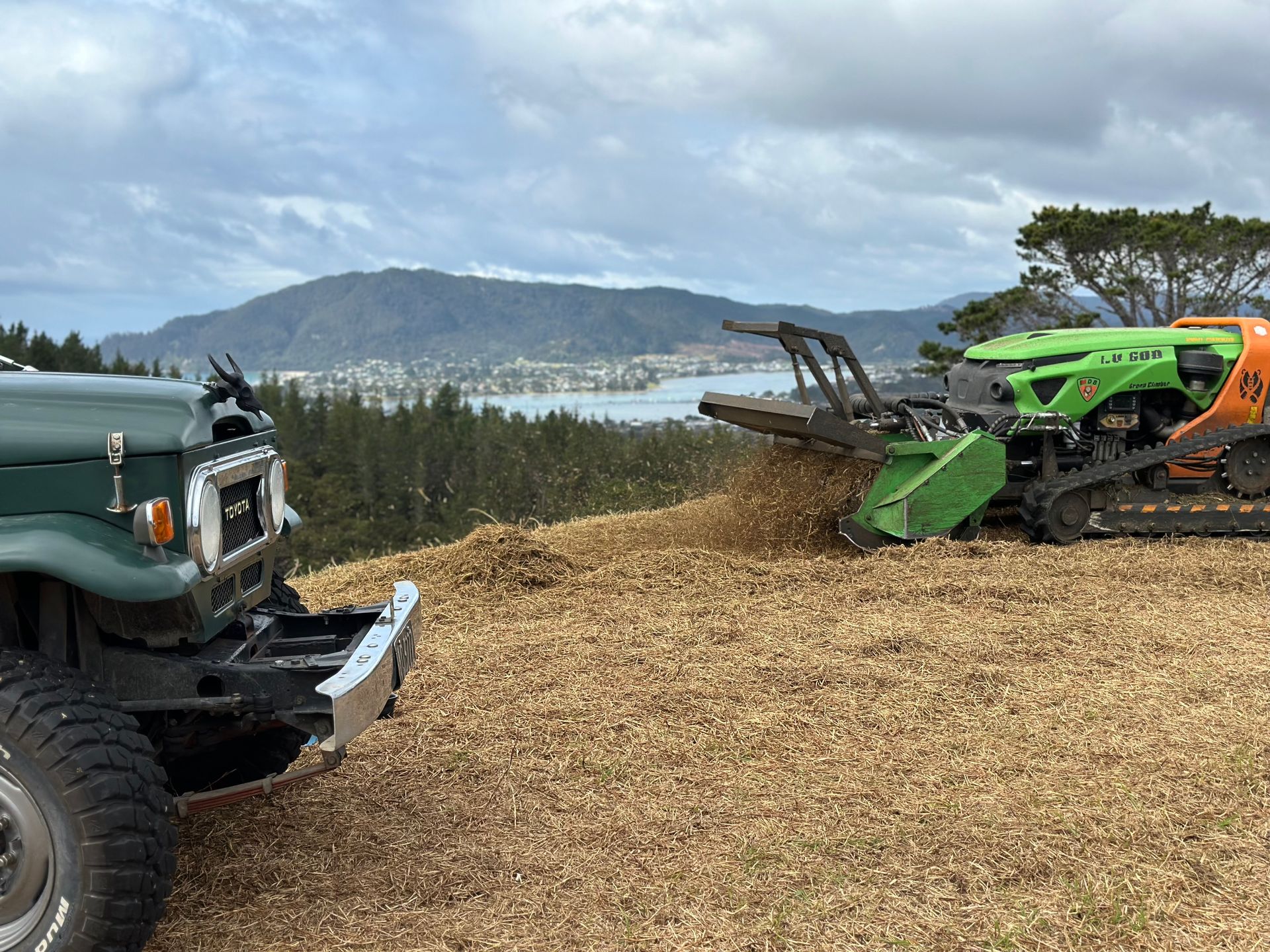
Steep Rotorua banks are hard to mow with a ride-on, especially after October rain. Here is what drives the cost and when remote-controlled mulching makes more sense.
Hedgerow removal on a steep fence line means finding the wire and isolating the energiser before any machine goes in. Regrowth needs a plan too.
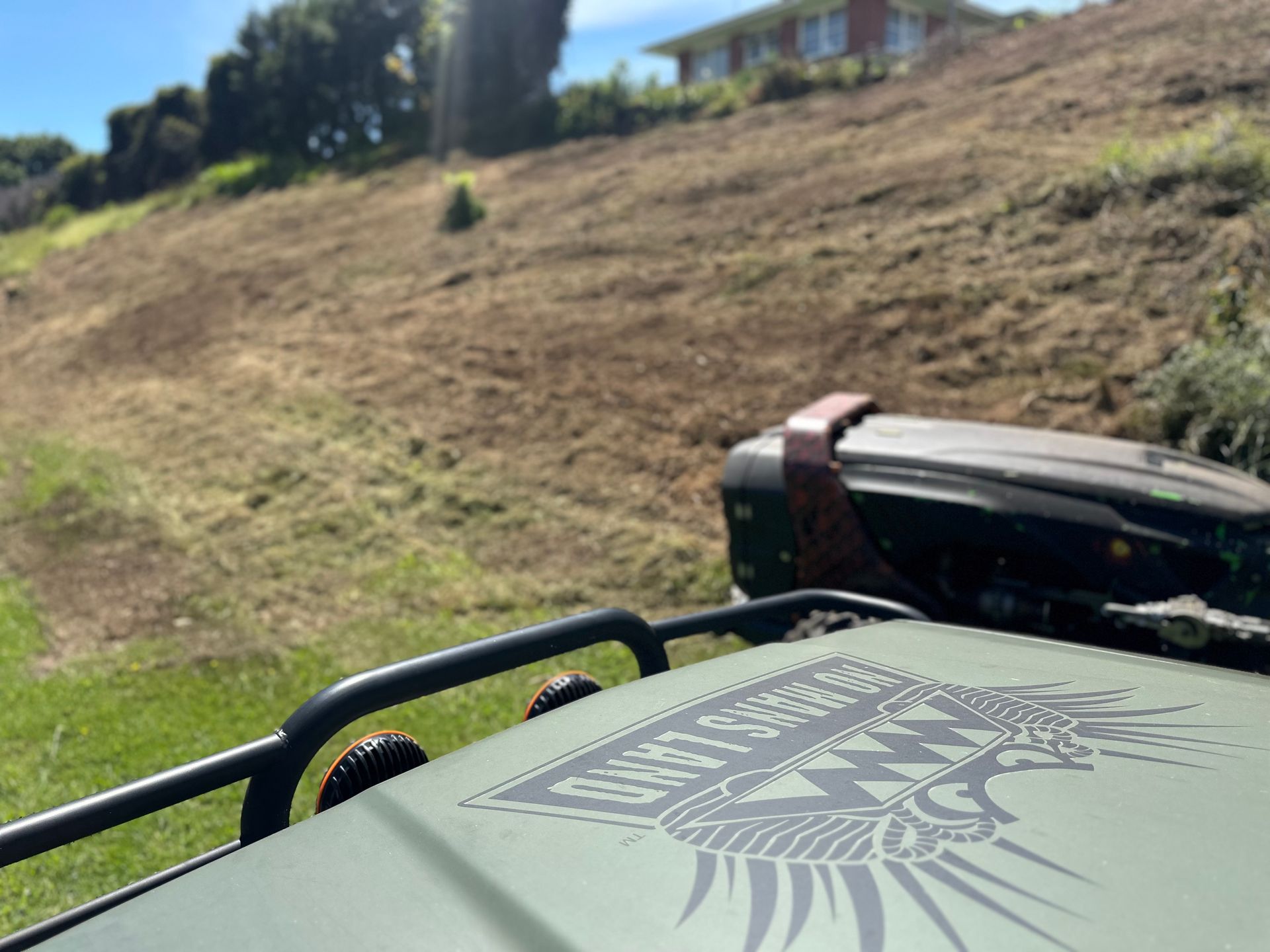
Grinding a tree stump below ground on a steep slope is usually safer than digging out its roots. The ground needs checking first, and the stump size alone does not settle the job.
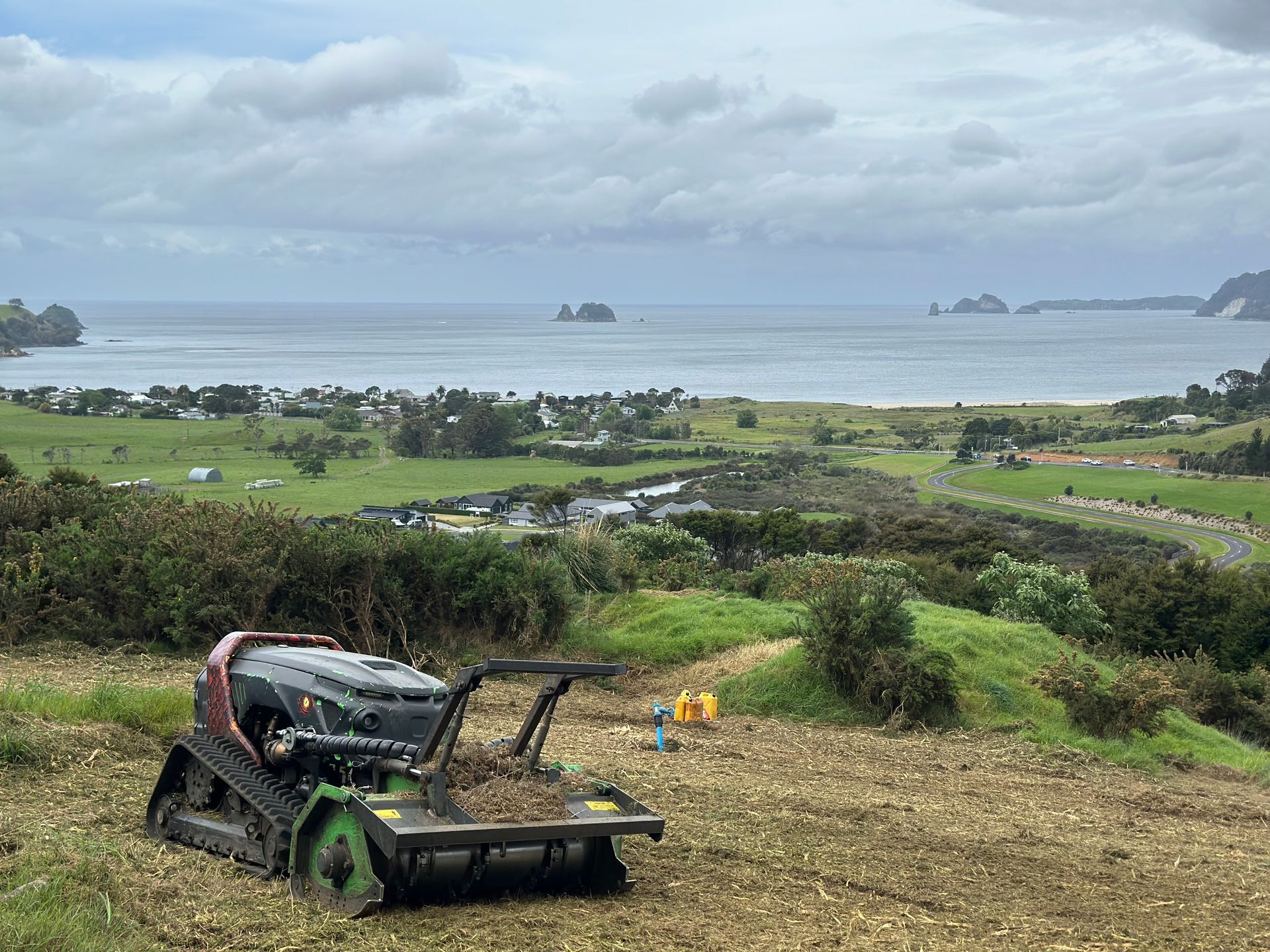
Mechanical mulching clears gorse and blackberry on steep slopes without herbicide, and the ground and follow-up decide how well the clearing holds.
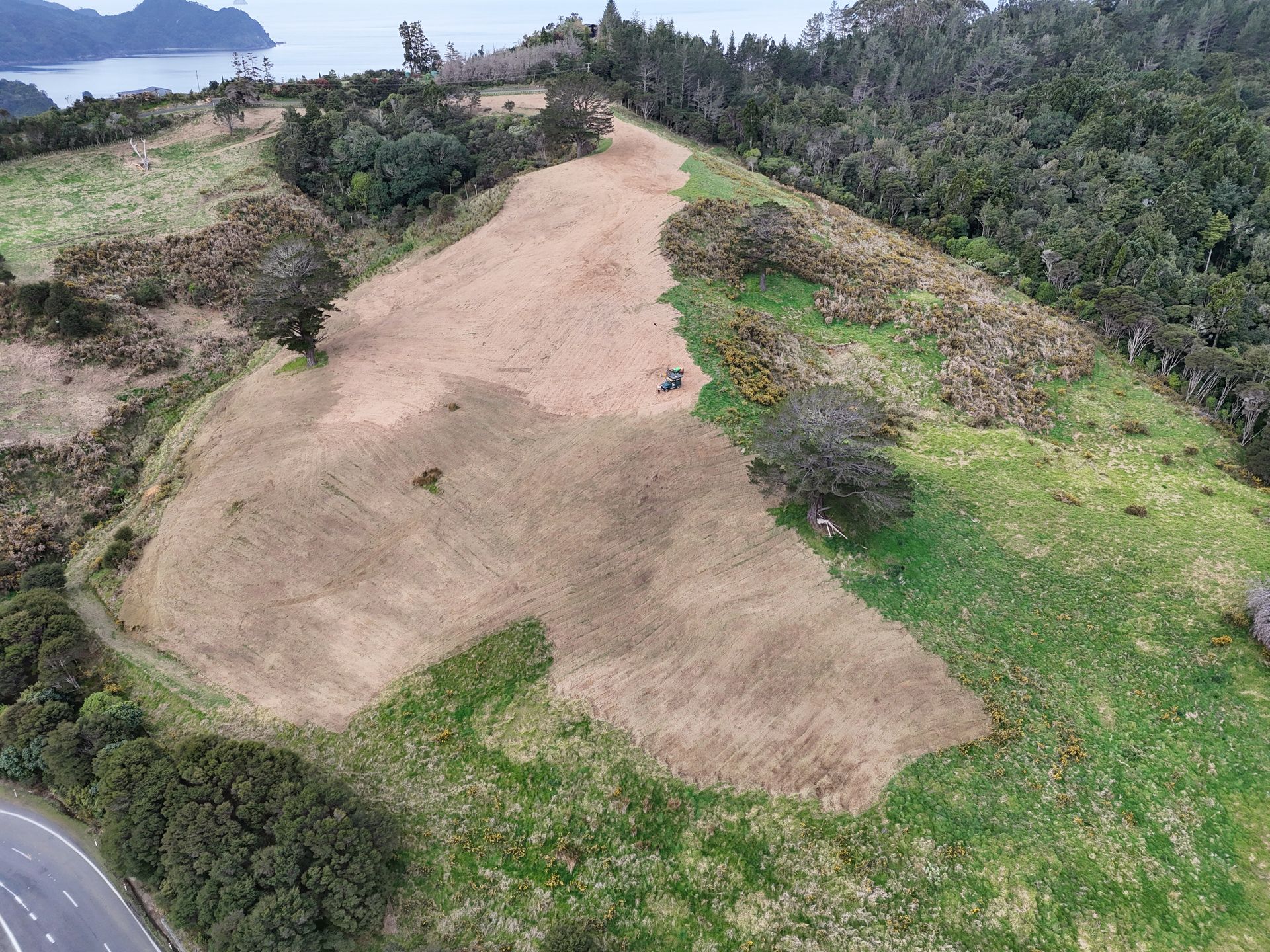
Published NZ price guides put tree felling at $350 to $5,000+ including GST, and steep banks often sit higher. Here is what changes the price and what to confirm in a quote.