
Hedge Trimming Services vs Mulching: Which Your Boundary Needs
No Mans Land Mowing • October 23, 2026
Hedge trimming services suit a maintained hedge with light annual growth. If a boundary has become mature gorse or tangled blackberry, it needs an assessment for mulching rather than a cutter bar forced through woody stems. What decides it is the vegetation and safe access, not height alone.
At No Mans Land Mowing, we clear invasive scrub across Western Bay of Plenty and Waikato, with coverage extending to Coromandel and Auckland. Around avocado and kiwifruit blocks, spray drift is the main concern.
How do you tell a hedge from scrub?
Assess the boundary from safe ground. Identify the species and thickness of growth first, then check access. A tall hedge may still suit trimming from suitable equipment; mature woody scrub needs a different assessment. Our steep slope mulching and weed clearing services cover boundaries that have grown beyond routine maintenance.What does a standard hedge trimmer do well?
Regular light trims keep a hedge in shape without cutting deeply into old wood. For a maintained boundary, a standard trimmer is generally the cheaper choice, and the cost climbs once the job turns into clearing woody growth. A hard cut-back does not suit every species and can stress the plant. Being overgrown does not automatically make a hedge a mulching job, particularly if the aim is to retain it.How does a mulching head handle a thick boundary?

Our remote-controlled MDB LV600 tracked machines use tungsten-tooth mulching heads to break down woody vegetation without chemical sprays. We have 4,500 hours of operating experience on these machines, with capability on slopes of 50+ degrees where ground conditions allow.
Mulching breaks down stems rather than clipping the outer growth. It does not guarantee that gorse will die: some surviving crowns and seed in the ground can produce further growth. Follow-up weed control remains part of reclaiming the boundary. Our invasive weed control information
covers this type of clearing.
What happens to the debris after trimming and after mulching?
Trimming leaves cut material to collect or remove. Heaped woody scrub can become a fire hazard as it dries, particularly heading into summer. Mulched material lies low and breaks down over time, but dry mulch still burns. Keeping firebreaks clear is recommended whichever method is used, and it is worth checking the expected finish with the operator before work starts, particularly along access routes. Slashing woody weeds leaves large, sharp debris that stock will not walk over, so the ground stays unusable and weeds regrow quickly through it. Agree on the finish before work starts rather than just asking for the standing growth to be cut.How steep a boundary can a machine work?
Ground conditions decide the safe working limit. Firm, compact soil and grass allow steeper work than sandy, muddy or clay ground does, and soft spring conditions in October call for particular caution while the ground is still soft. Our machines can work slopes of 50+ degrees where the ground supports them. That is a capability, not approval for every slope. Remote control keeps the operator off the machine, but does not remove the risk of it slipping or rolling. Beside an avocado or kiwifruit block, mechanical mulching avoids spray drift. It also avoids chemical runoff near waterways, though the site still needs assessing before work starts.What needs checking before the machine goes in?
The recommended starting point is a boundary check, including anything hidden beneath the growth:- Confirm the boundary line and permission to clear it.
- Establish who owns the fence.
- Possibly check if any obligations under the relevant regional pest management plan with Bay of Plenty Regional Council or Waikato Regional Council if you have any reservations.
- Mark any fence wire or irrigation line you can see.
Which job does your boundary need?
For a hedge still in shape, routine trimming is recommended. Mulching is heavier clearing work and generally costs more than a maintenance trim. For mature gorse or dense woody scrub, a mulching assessment is the recommended next step. Professional assessment matters most on unstable slopes or where power lines run through the growth. Mulching equipment does not make work near power lines safe by itself. For a scrub-covered boundary, request a clearing quote from No Mans Land Mowing or call 021 994 891 to discuss the vegetation and access. Our hedgerow removal information also covers boundary clearing.
Frequently asked questions
Can a standard hedge trimmer cut through mature gorse?
A standard hedge trimmer is generally unsuitable for thick, mature gorse. Woody stems can jam the bar and damage blades, so the cutter’s rated capacity matters more than how thin a stem looks.
Does mulching stop gorse growing back straight away?
No. Mulching removes standing growth, but some surviving crowns, and seed in the soil can produce regrowth. Follow-up control is recommended rather than treating one cut as permanent removal.Do you have to haul away brush after mulching?
Mulched material can remain low on the ground to break down, rather than being hauled away as whole branches. Confirm the expected finish with the operator, particularly around access routes and firebreaks.Can a mulcher work near an avocado or kiwifruit boundary without spray drift?
Mechanical mulching uses no chemical sprays, so it does not create spray drift. Work near orchard boundaries still requires checks for irrigation lines, fences and plants that are to remain.Does No Mans Land Mowing hold PreQual certification?
No Mans Land Mowing holds Tōtika PreQual, SHE PreQual and SiteWise PreQual. We also have 4,500 hours of operating experience on MDB LV600 machines.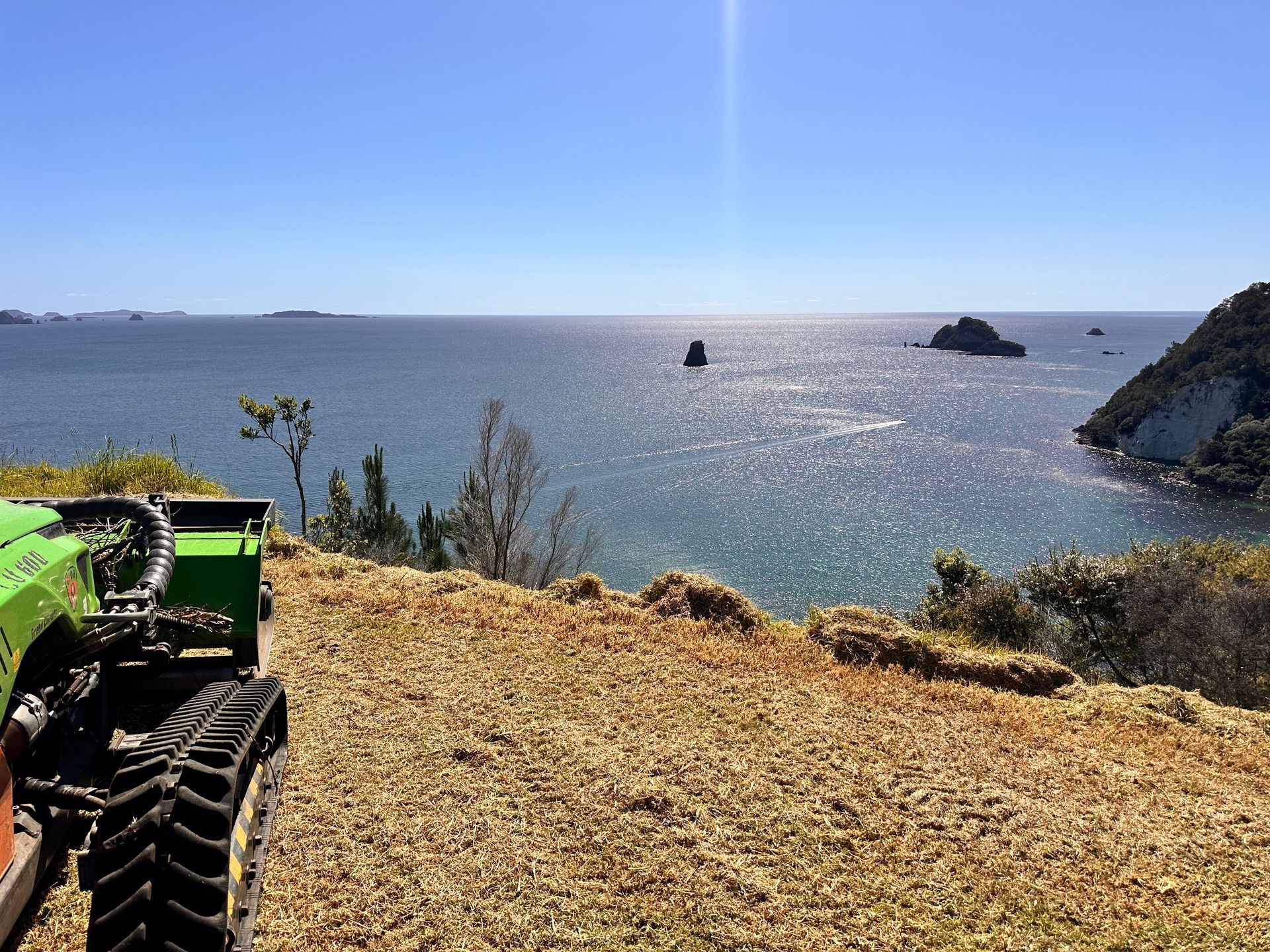
Access, ground and slope decide whether a tracked remote grinder can clear a stump on an Auckland bank, and what to send for a fair quote.
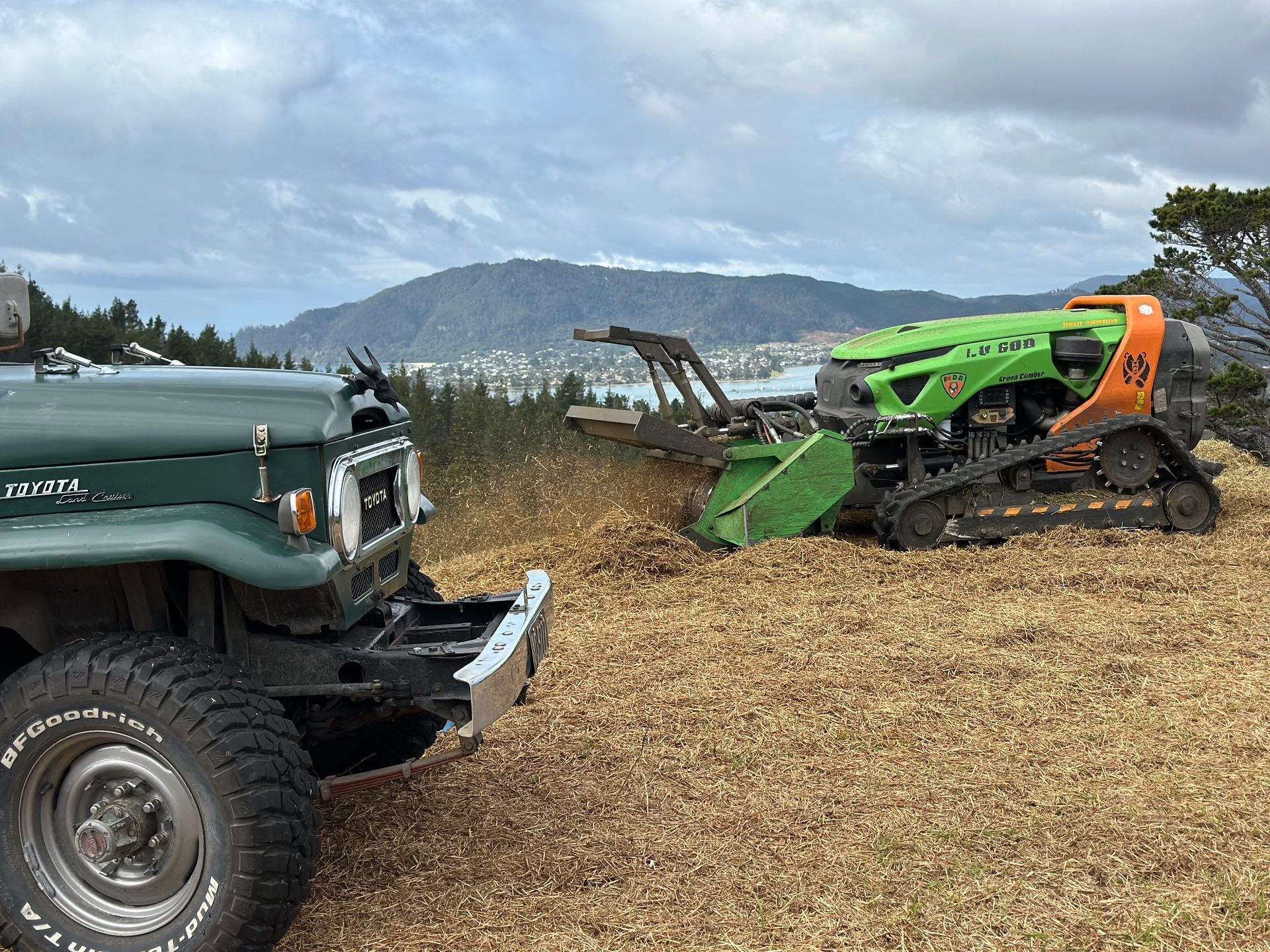
Mulching clears the standing growth of couch grass on steep hills, but its underground rhizomes regrow. Here is how to identify it, check the ground and plan the follow-up.
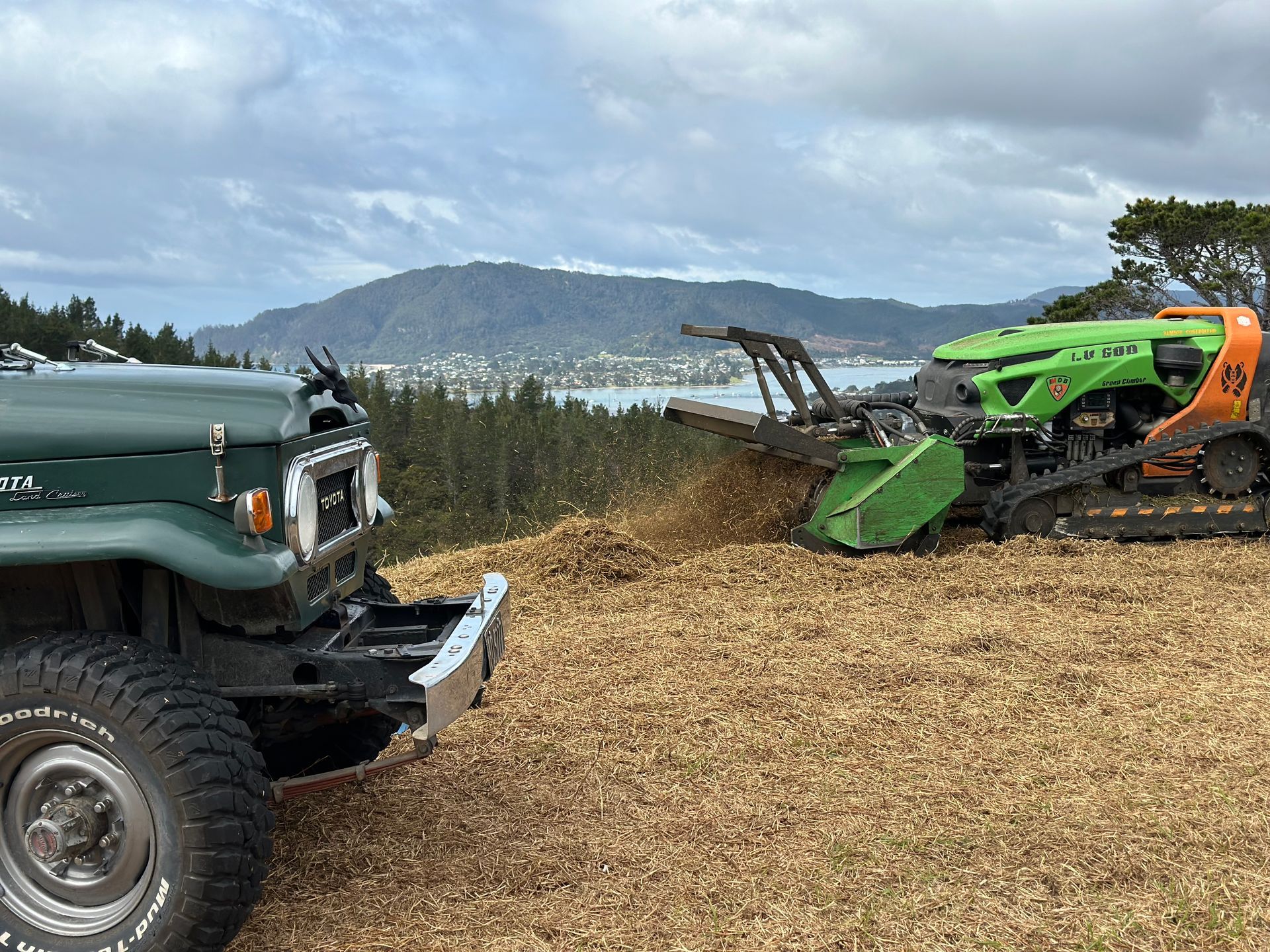
Kikuyu grass forms mats that mowing alone cannot clear. Here is why it spreads, what to check before the first pass, and how follow-up keeps it in check.
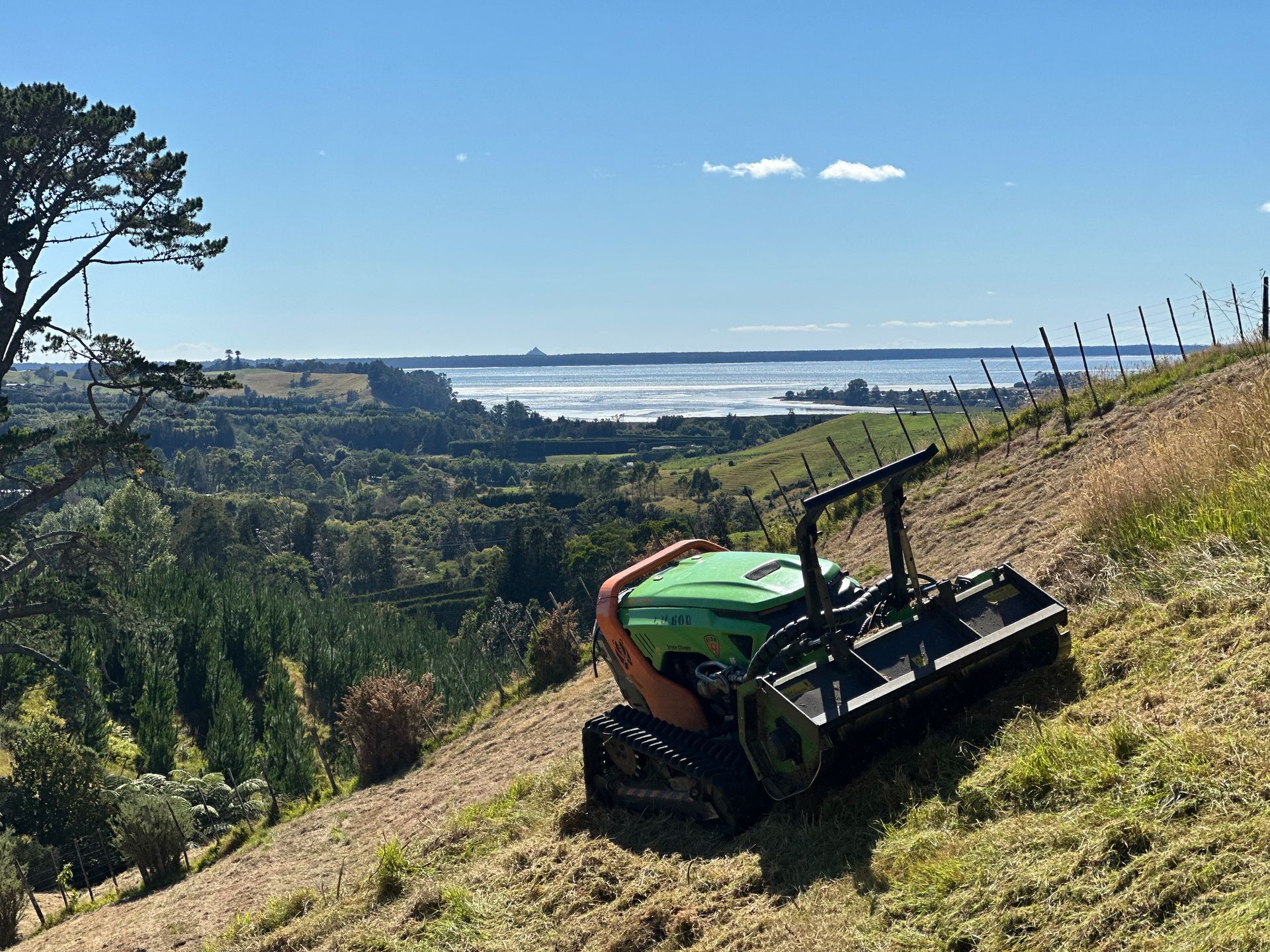
Ag contractors for steep hill country: the machine, pre-qualification and written plan to check before you hire. Ground conditions set how steep a job can safely be.
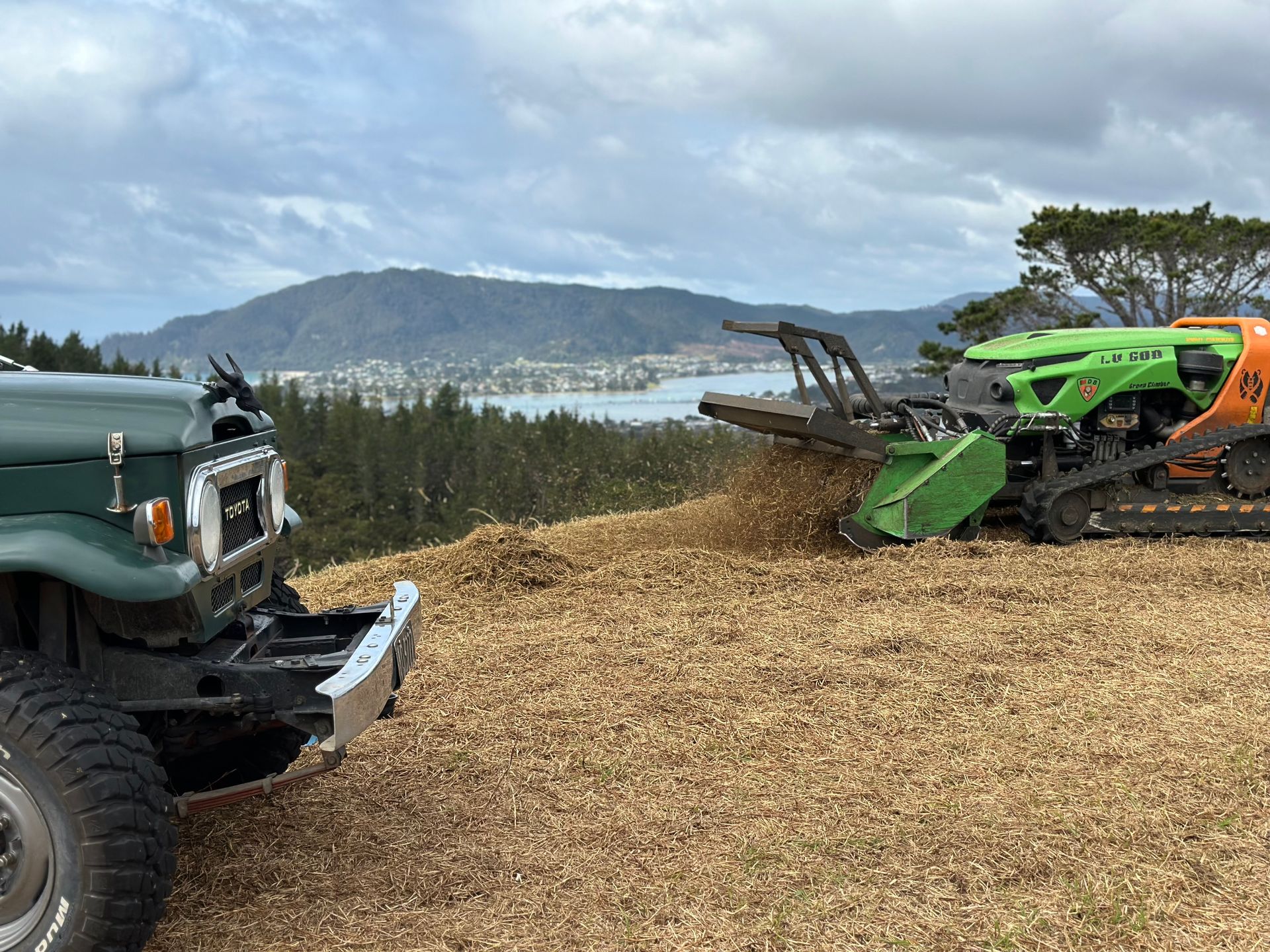
Steep Rotorua banks are hard to mow with a ride-on, especially after October rain. Here is what drives the cost and when remote-controlled mulching makes more sense.

Hydrocotyle includes native New Zealand pennyworts as well as weeds, so identify it before clearing a damp bank near water. Here is what to check first and when to call a professional.
Hedgerow removal on a steep fence line means finding the wire and isolating the energiser before any machine goes in. Regrowth needs a plan too.
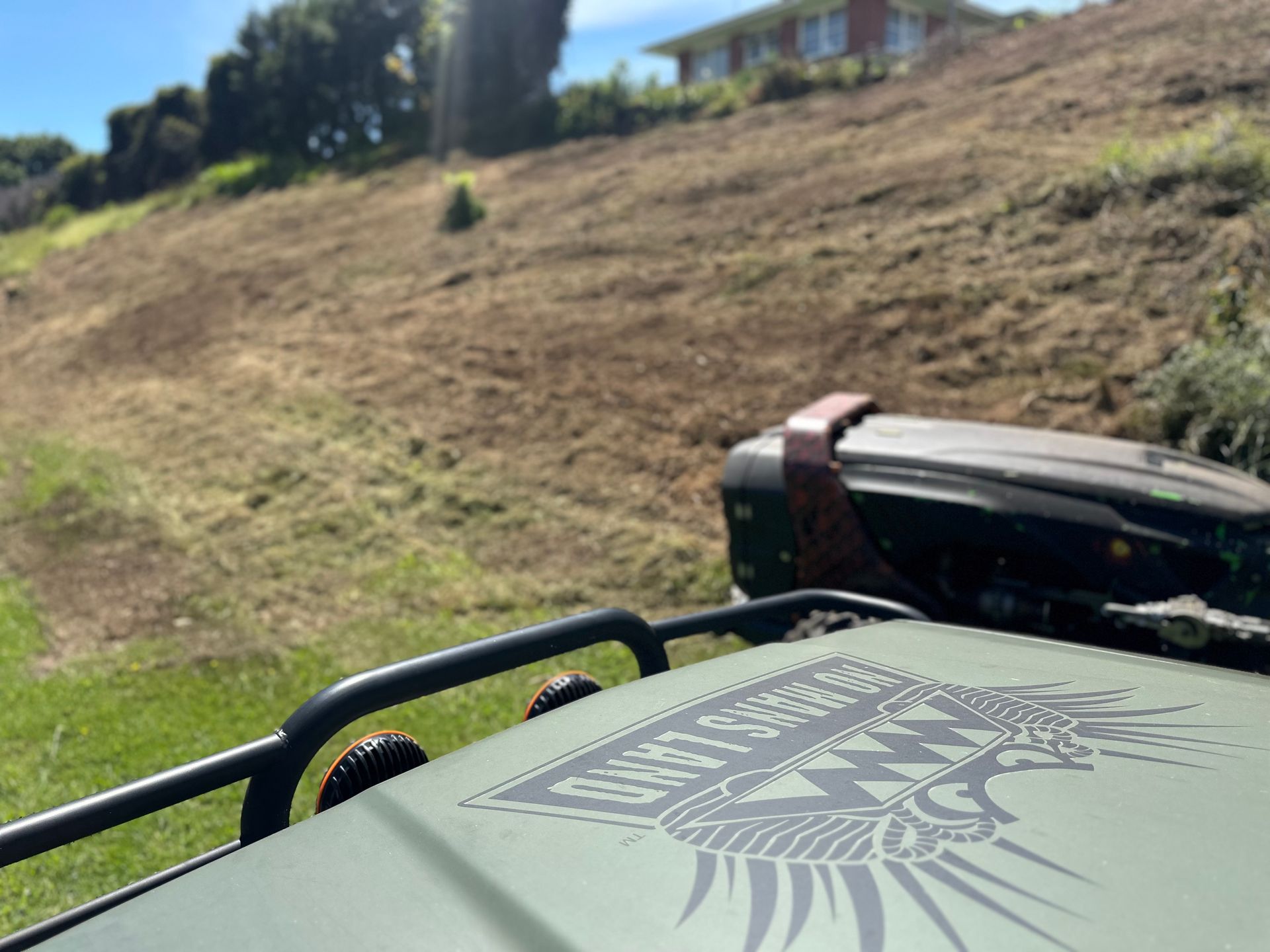
Grinding a tree stump below ground on a steep slope is usually safer than digging out its roots. The ground needs checking first, and the stump size alone does not settle the job.
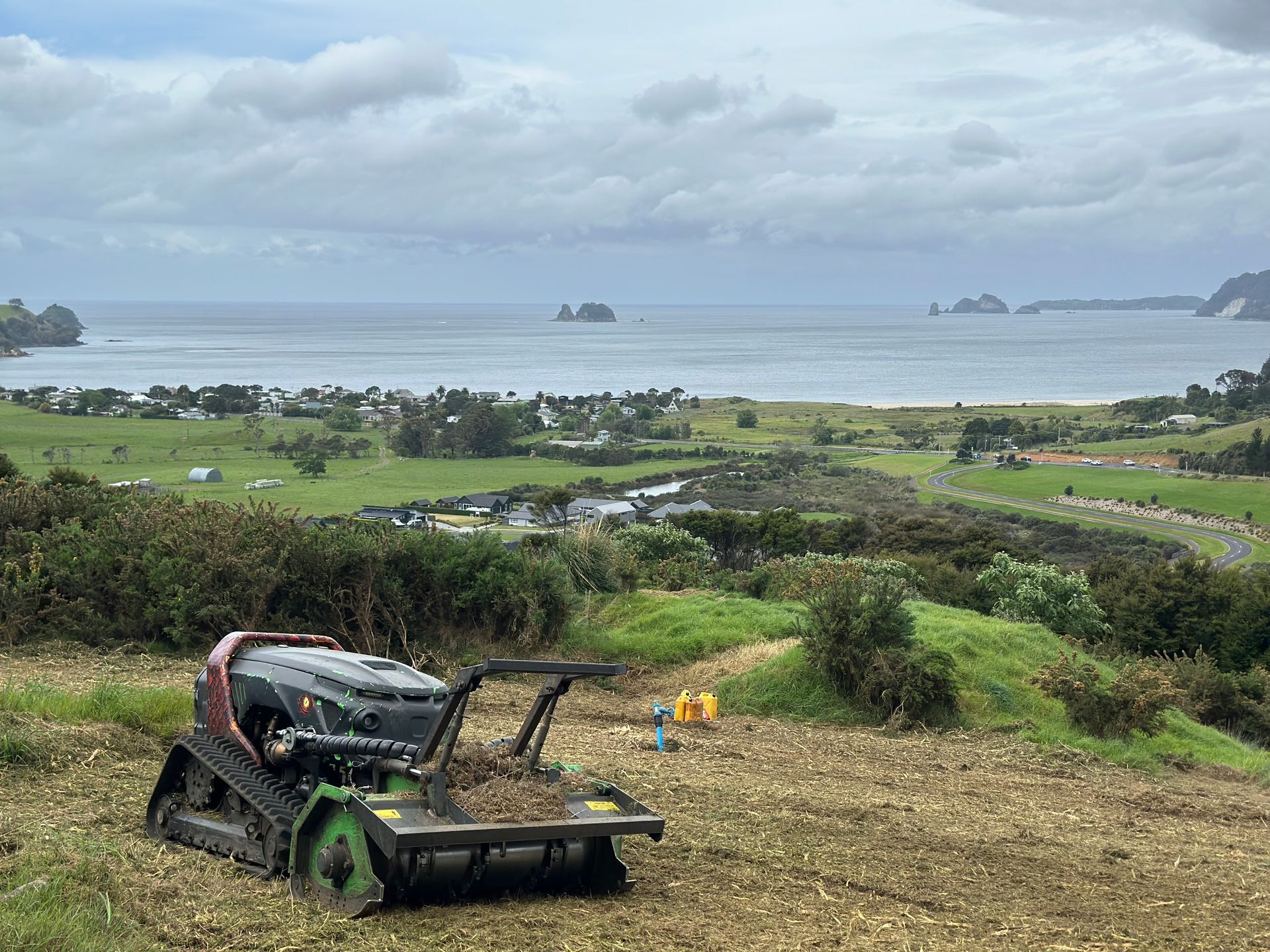
Mechanical mulching clears gorse and blackberry on steep slopes without herbicide, and the ground and follow-up decide how well the clearing holds.
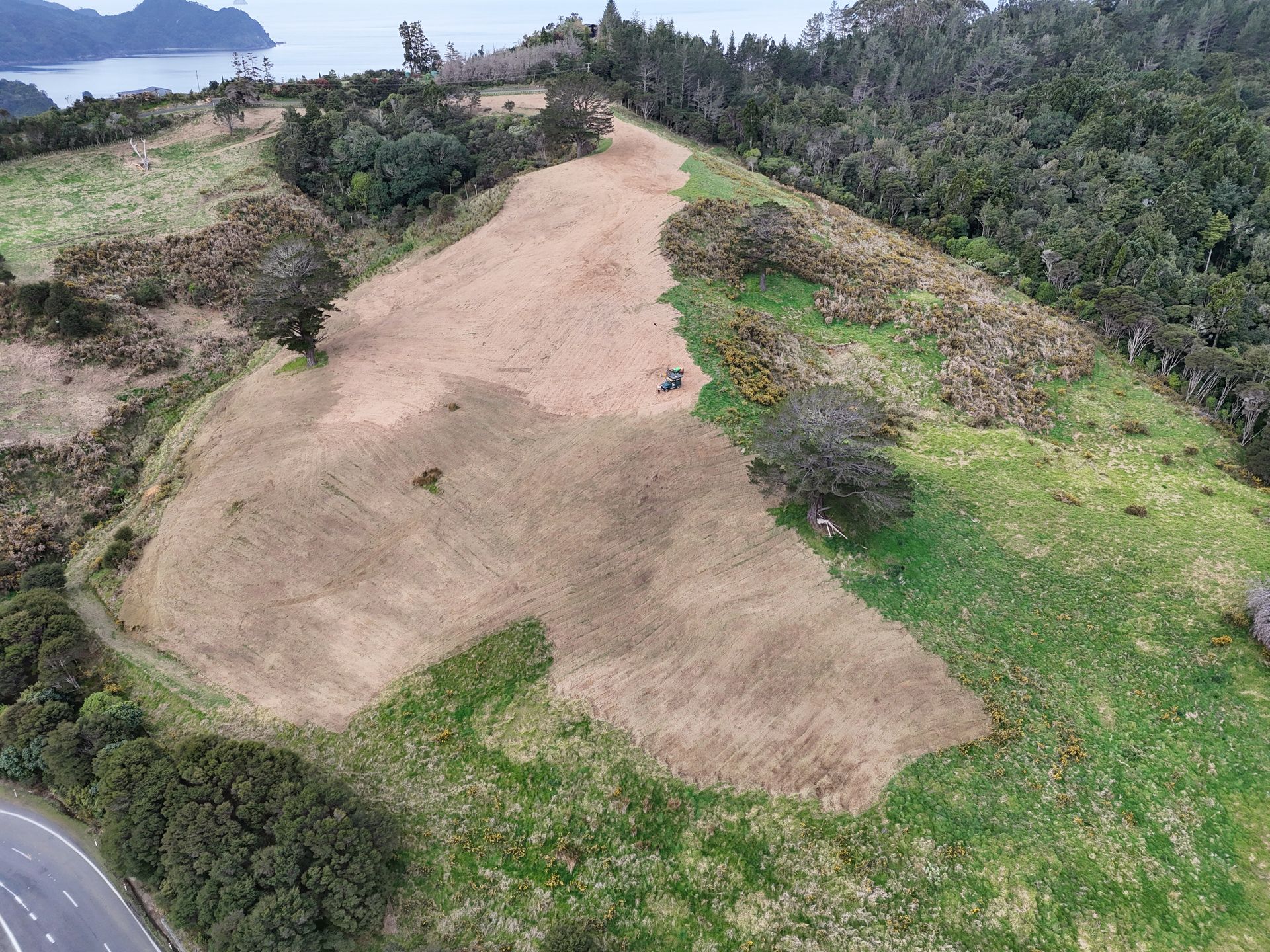
Published NZ price guides put tree felling at $350 to $5,000+ including GST, and steep banks often sit higher. Here is what changes the price and what to confirm in a quote.