
Kikuyu Grass NZ: Why It Forms Mats and How to Suppress It
No Mans Land Mowing • October 23, 2026
Kikuyu grass in New Zealand is a creeping perennial that forms thick mats and grows across the northern half of the country. On a steep bank, mulching can cut back the growth, but one pass will not kill the runners left behind. Lasting suppression takes follow-up control and dense planting that limits regrowth.
At No Mans Land Mowing, we provide remote-controlled mulching across Western Bay of Plenty, Waikato, Coromandel and Auckland. For a kikuyu-covered slope, the planting plan matters as much as the first machine pass.

Why does kikuyu form a thick mat on North Island slopes?
Warm, moist conditions favour kikuyu growth. Weedbusters describes it as a creeping perennial with dense, long-lived mats that smother low-growing plants and prevent native seedlings establishing. Its runners root along the ground, while underground rhizomes keep growth going beneath the surface. Regular cutting also shapes the mat. Tropical Forages describes kikuyu's much-branched runners lying close to the ground and forming turf under repeated defoliation. Mowing keeps the growth short; it does not remove the network underneath. This matting also creates a severe fire risk. Overgrown kikuyu creates a dense layer of dry, dead thatch trapped beneath the live green surface, allowing fire to creep rapidly underneath with very few visual cues, making it dangerous and difficult for firefighters to locate the actual fire front. No Mans Land removes that fire risk by Mulching down all the potential dry fuel and thus stopping the spread of fires “hopping” across coastal property’s especially in Urban areas.
What should you check before the first pass?
A recommended starting point is to assess access and ground firmness before deciding how the slope can be worked:- Clean equipment before moving onto uninfested ground. Weedbusters identifies fragments carried on machinery and in moved soil as routes of spread. Kikuyu rarely spreads by seed.
- Inspect for hidden hazards, particularly wire. Not everything can be found, and debris strikes are part of this work. Fixes and liability for damage should be discussed before work starts.
- Check ground conditions on the day. Firm, compact ground permits steeper work than soft ground. Rain can change what is workable, especially on clay.
How does shredding the mat work?
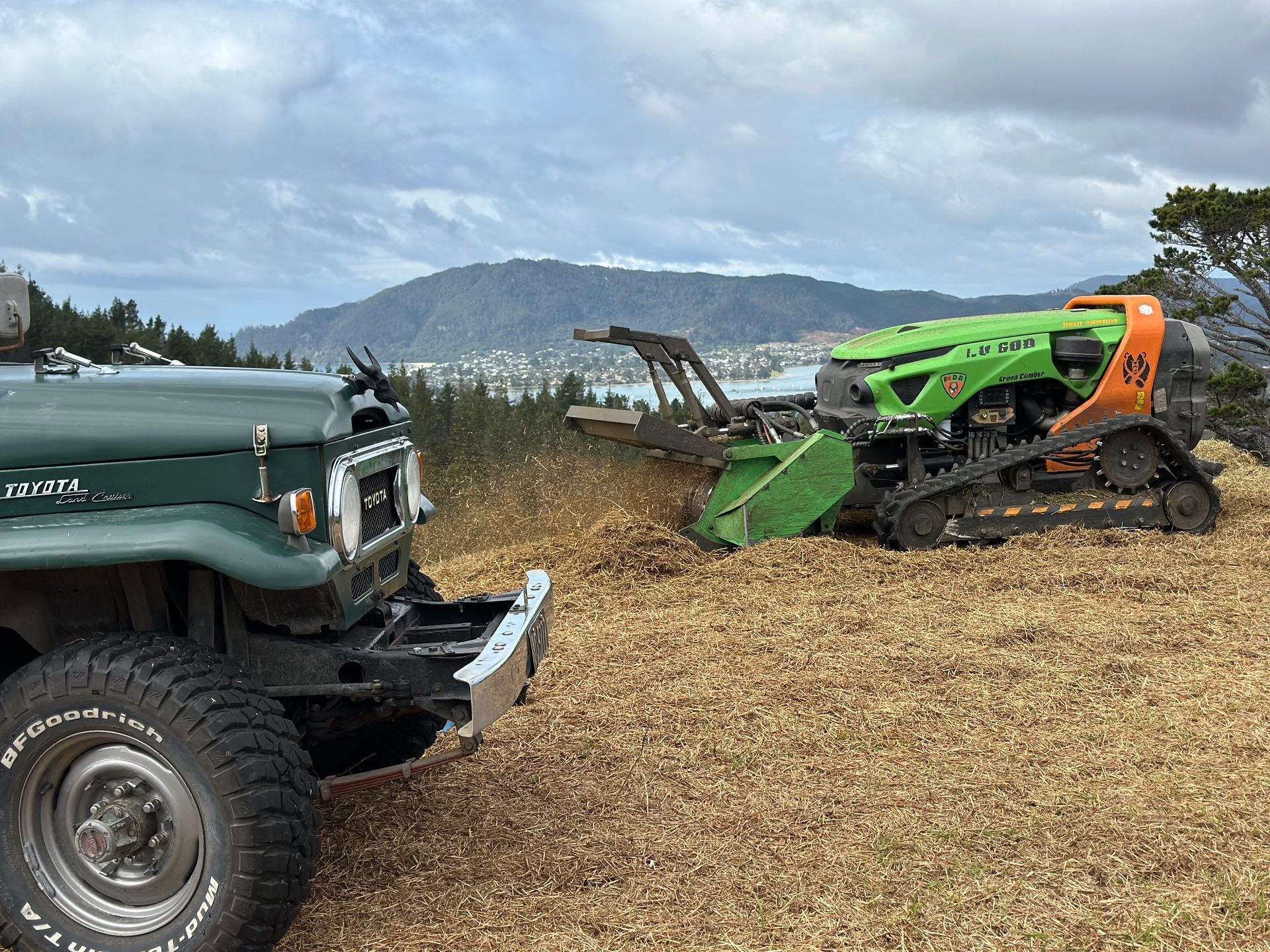
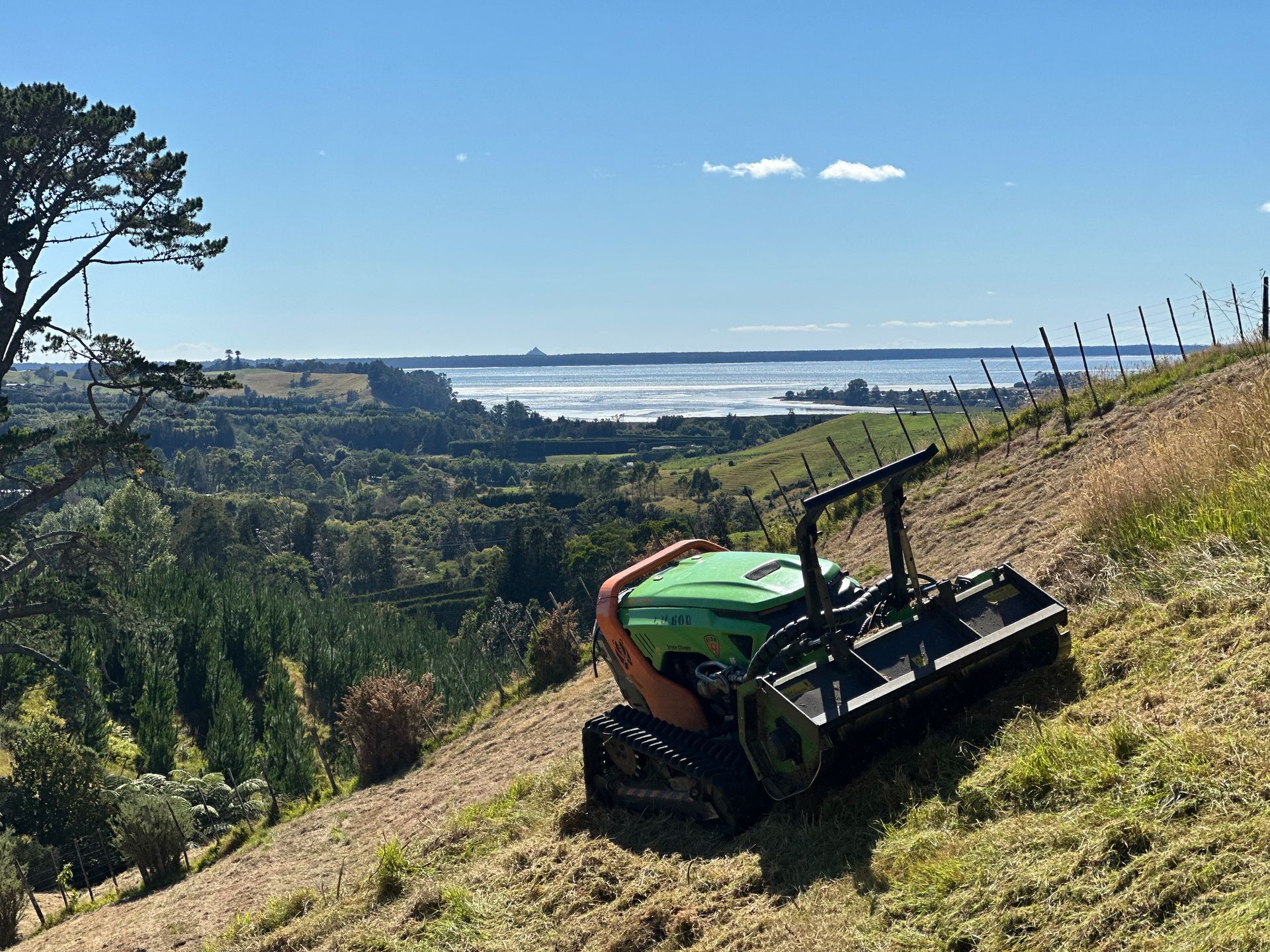
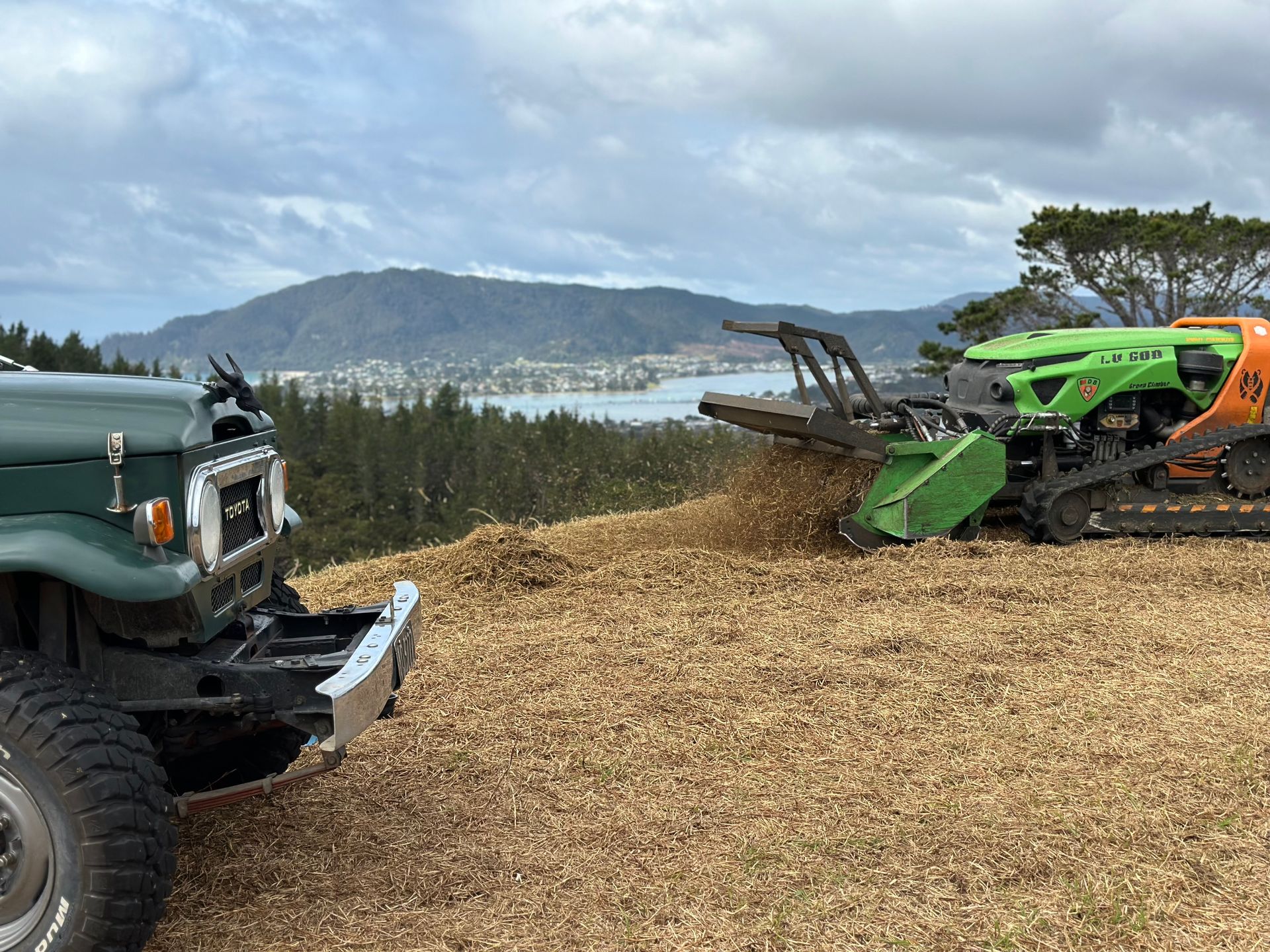
A tracked, remote-controlled mulcher cuts back the above-ground mat without chemical sprays. We operate MDB LV600 machines and have 4,500 hours of operating experience on them. They can work on slopes of 50+ degrees where ground conditions permit, without putting a driver on the machine. Mulching does not remove every underground rhizome. Weedbusters describes physical removal as “largely ineffective” and warns that it creates disposal problems. Mechanical clearing is a first step in suppression, not proof that kikuyu has been eradicated. A thick layer of shredded material can smother new planting. Removing it from a steep bank means extra handling and more disturbed ground. On slip-prone ground, avoid treating vegetation clearance as a separate issue from slope stability. Removing cover can expose soil, whatever control method is used. Our steep-slope mulching services cover the mechanical clearing part of the work.How often should you follow up?
Regrowth from surviving fragments is likely, particularly in warm, moist weather. Auckland Council's Tiaki Tāmaki Makaurau recommends following up treated areas three times per year. That means checking and controlling regrowth, not automatically putting a mulcher over every area three times. A single pass knocks back the standing growth, but rhizomes and runner fragments below ground can send up new shoots. Plan the follow-up visits from the start, not after regrowth shows.When should you replant?
Tiaki Tāmaki Makaurau recommends replanting after two to three treatments to establish dense ground cover and minimise reinvasion. Treatment progress and suitable planting conditions are better guides than waiting for the first cold snap. University of Auckland research published in March 2026 identifies low-fertility sites, including clay soils, as places where kikuyu removal can allow more varied vegetation to establish. That supports planning the replacement cover before clearing an Auckland clay hillside. Before clearing near existing native vegetation, mark what should stay.How do you stop kikuyu creeping back from the edges?
Shade alone will not stop an advancing edge. Weedbusters reports that kikuyu can extend runners and rhizomes three metres or more into heavy shade from a well-lit area. It recommends dense belts of shrubby plants at least two metres tall to block spread into vulnerable habitats. Check the edge between open grass and new planting at every follow-up visit. Where the slope runs down to water, identify existing ground cover before clearing it. Our guide to hydrocotyle on stream banks helps with that identification. Call No Mans Land Mowing on 021 994 891 to talk through your slope, or send the location and job details through our quote request page.
Frequently asked questions
What are the disadvantages of kikuyu grass?
Kikuyu forms dense mats that smother low-growing vegetation and prevent native seedlings establishing. Its runners spread beyond the area being mown. Auckland Council also identifies infrastructure damage and increased fire risk among its impacts.What kills kikuyu grass permanently?
One mowing or mulching pass will not eradicate established kikuyu because underground rhizomes and runner fragments can survive. Weedbusters warns that physical removal alone is largely ineffective. Auckland Council recommends repeated follow-up and replanting to reduce reinvasion, rather than treating initial clearance as permanent control. If kept under control Kikuyu is actually a great grass for kids to play and run on and it can suppress dust and sand on otherwise fairly harsh coastal ground in backyards also is quite “padded” for falls and impacts. The key is “control” though.Is kikuyu a declared pest in Auckland?
Kikuyu is not a legally declared pest under Auckland's Regional Pest Management Plan, according to Auckland Council's Tiaki Tāmaki Makaurau page. It can still invade native vegetation and suppress seedlings. That status applies to Auckland; other regions' requirements should be checked with the relevant council.Can you clear kikuyu on a steep bank without chemical sprays?
Yes. Remote-controlled mulching can cut back kikuyu on suitable steep ground without chemical sprays, but surviving runners require follow-up control. Ground firmness sets how steep the work can be, and soft or wet soil narrows that.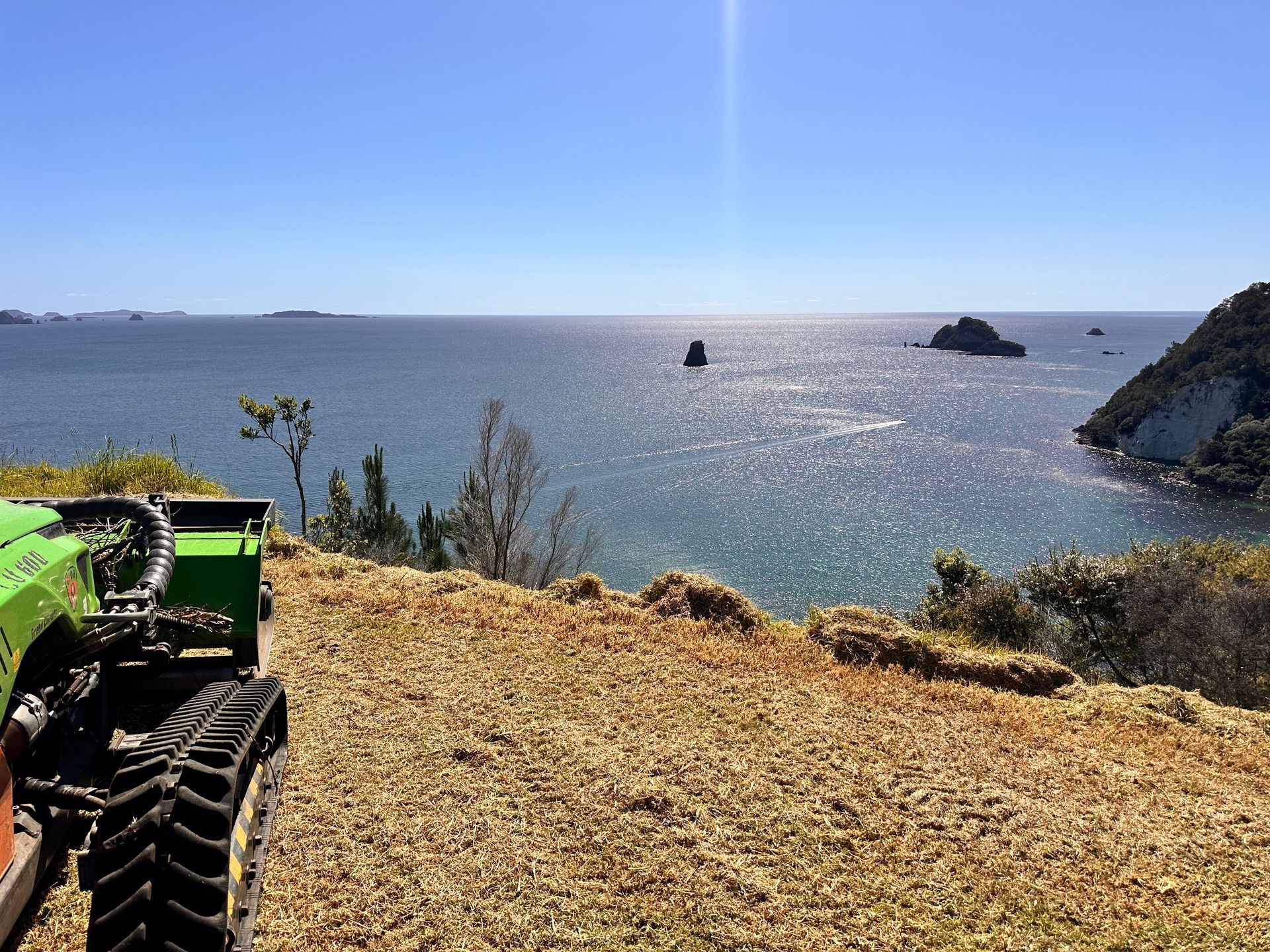
Access, ground and slope decide whether a tracked remote grinder can clear a stump on an Auckland bank, and what to send for a fair quote.
Mulching clears the standing growth of couch grass on steep hills, but its underground rhizomes regrow. Here is how to identify it, check the ground and plan the follow-up.
Hedge trimming services suit light annual growth on a maintained boundary. Gorse, blackberry and dense woody scrub need a mulching assessment instead, and this piece shows how to tell them apart.
Ag contractors for steep hill country: the machine, pre-qualification and written plan to check before you hire. Ground conditions set how steep a job can safely be.
Steep Rotorua banks are hard to mow with a ride-on, especially after October rain. Here is what drives the cost and when remote-controlled mulching makes more sense.

Hydrocotyle includes native New Zealand pennyworts as well as weeds, so identify it before clearing a damp bank near water. Here is what to check first and when to call a professional.
Hedgerow removal on a steep fence line means finding the wire and isolating the energiser before any machine goes in. Regrowth needs a plan too.
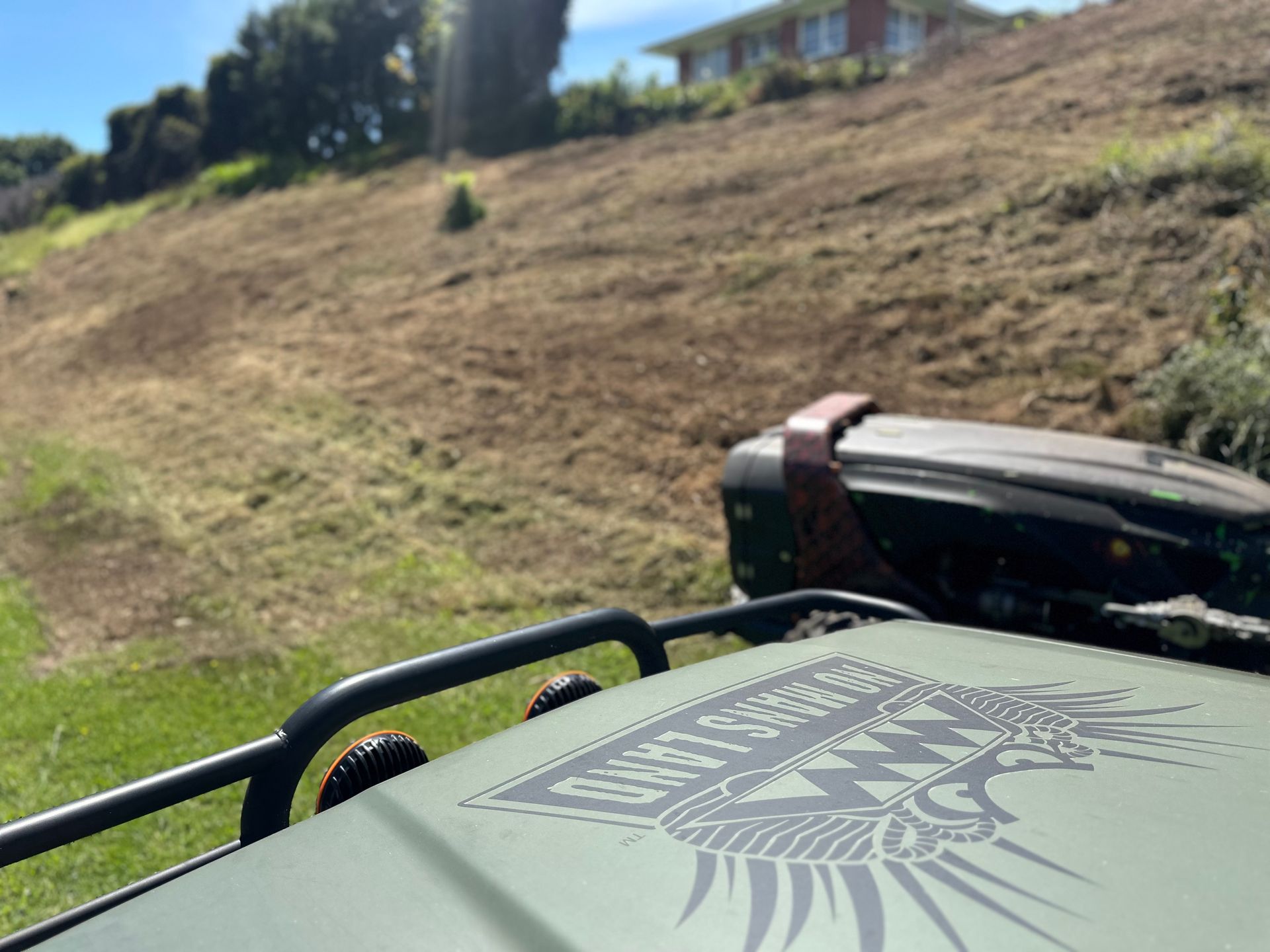
Grinding a tree stump below ground on a steep slope is usually safer than digging out its roots. The ground needs checking first, and the stump size alone does not settle the job.
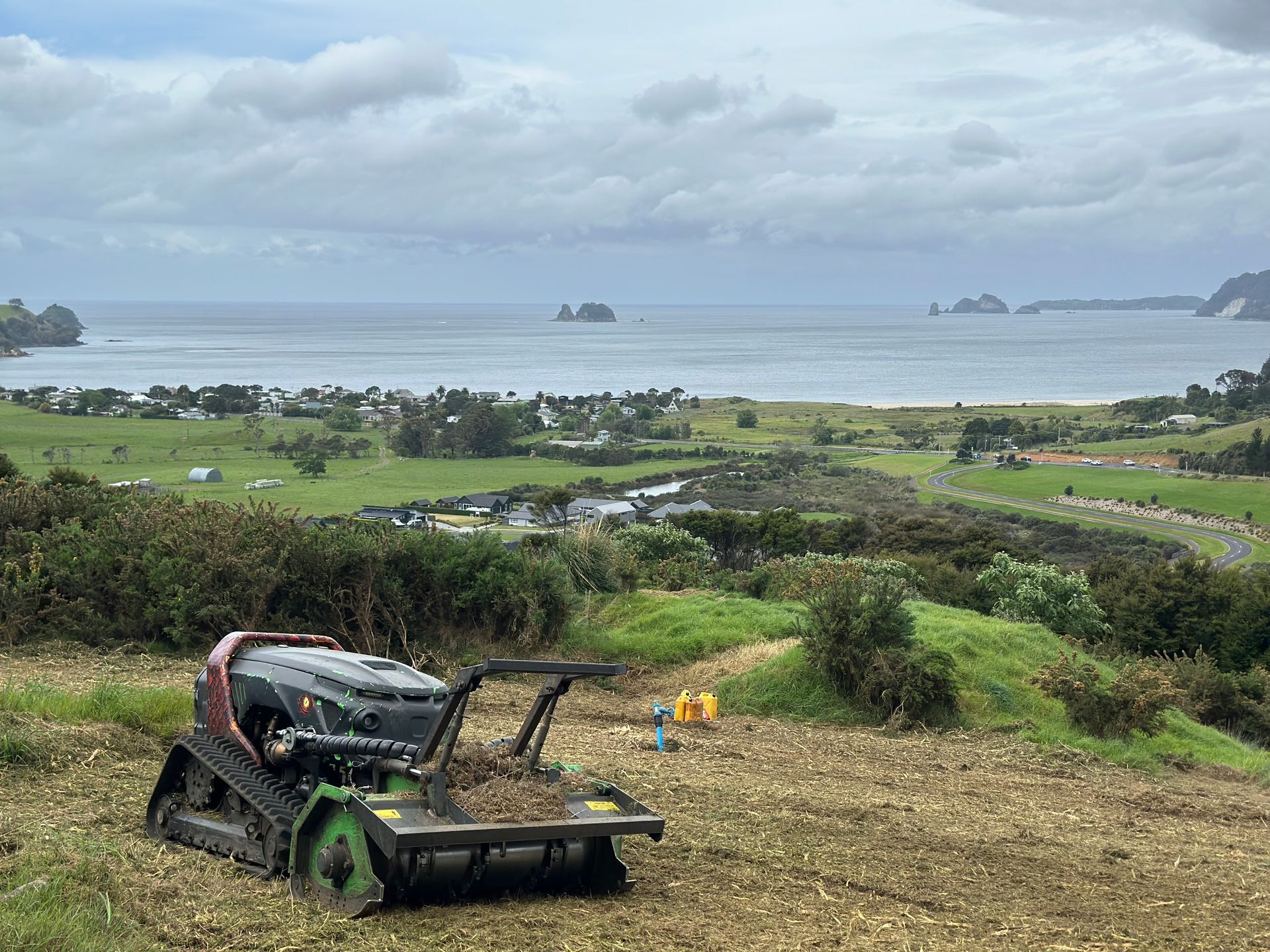
Mechanical mulching clears gorse and blackberry on steep slopes without herbicide, and the ground and follow-up decide how well the clearing holds.
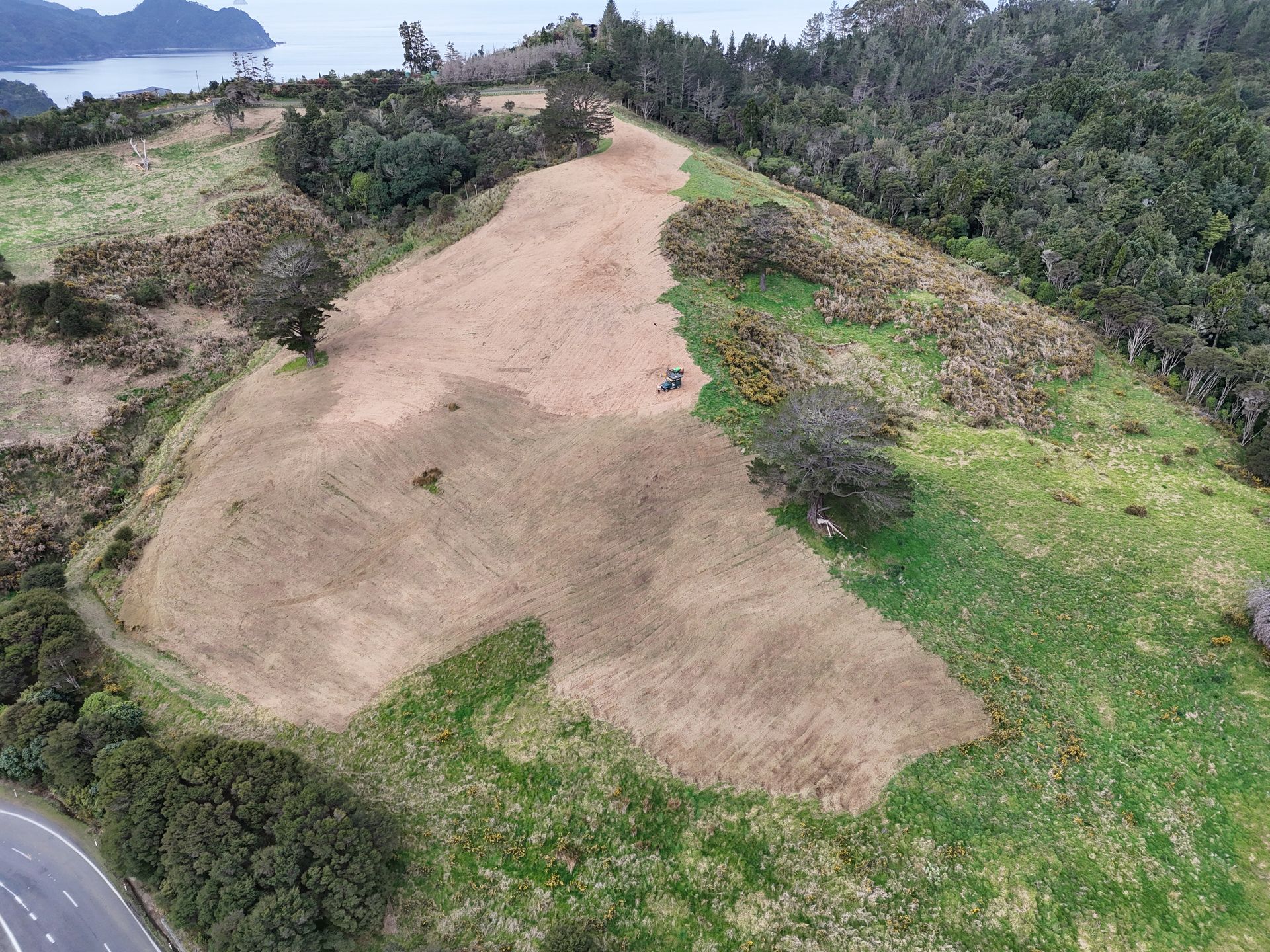
Published NZ price guides put tree felling at $350 to $5,000+ including GST, and steep banks often sit higher. Here is what changes the price and what to confirm in a quote.