
Tree Stump Removal on Steep Slopes: Grinding vs Digging Out
No Mans Land Mowing • October 17, 2026
Tree stump removal on a steep slope is usually safer by grinding the stump below ground level than by digging out its root plate. The ground needs checking first. At No Mans Land Mowing, our remote-controlled stump grinding service
reduces the stump while leaving most roots in place, avoiding the excavation that can destabilise a bank.
Flat-ground advice does not transfer safely to hillsides. Digging around a stump and levering it out may work in a garden; above a track on steep Bay of Plenty or Waikato ground, disturbing the roots can undermine the slope.
Why does digging a stump out of a steep slope cause slips?
The root plate helps bind the soil. Pulling it out disturbs that support and can leave the bank vulnerable to movement during the next wet spell. Grinding leaves most roots underground, although it does not guarantee long-term slope stability as those roots decay. An excavator also has a moving centre of gravity and may be working on ground that cannot carry its weight. It is recommended that excavation on a steep slope stays off the table unless a geotechnical engineer has assessed the ground. Chemical rotters avoid excavation but are slow and introduce leaching concerns near waterways.What should you check on the slope before any machine goes on it?

A ground inspection comes before machinery. From a safe position, look for:
- Tension cracks above or around the stump.
- Bulging at the foot of the slope or beside the track.
- Seepage or unexplained wet patches.
- Leaning trees , particularly where the surrounding ground has moved.
How do ground, native trees and buried hazards change the job?
The ground. Firm, compact soil with grass cover can permit steeper work than loose or waterlogged ground. Clay also needs careful assessment. The same machine may work safely on one hillside but not the next, so photographs alone cannot establish access or traction. Native trees. Nearby roots help hold the bank too. Grinding around them calls for an on-site judgement about which roots could be damaged and what that means for the tree and slope. Buried hazards. Inspections cannot find everything. Wire and old fence posts can disappear beneath vegetation; stones may sit inside the root mass. Debris strikes are part of this work, so discuss the fix and liability for any damage before the first pass. Our Tauranga stump grinding guide covers further access and site considerations.Do you need council approval before clearing?
It is recommended that you check with the regional council before clearing erosion-prone land. In the Bay of Plenty and Waikato, the relevant regional council can explain which vegetation and earthworks rules apply to your property. Regional pest plans can place obligations on landowners to manage pest plants along boundaries, so confirm the species and the rules that apply. Confirm these before booking work.How does a remote tracked grinder bring the crown down?
A rotating cutting wheel shaves away the stump to an agreed depth below ground level. It does not extract the full root system. For a track, the required clearance depends on its intended use, subject to what the ground and nearby roots allow. We operate MDB LV600 remote-controlled tracked machines, with 4,500 hours of operating experience. Our steep-terrain capability extends to 50+ degrees where ground conditions permit, not every slope at that angle. Remote control keeps the operator off the machine, but it does not remove traction or ground-stability hazards. Access and ground conditions affect the work as much as stump size. Ground conditions set how steep a slope can safely be worked: firm, compact soil with grass cover permits steeper work than sandy, muddy or clay ground. Our stump grinding cost guide explains the factors to discuss when requesting a quote.
Why do eucalyptus and pine need different planning?
Dense eucalyptus is a much harder wood. Resinous pine can gum up the cutting wheel. Those differences affect tooth checks and cleaning during the job; stump diameter alone does not tell an operator how much work is involved. So quotes may vary as different speeds for different species is commonplace.What to do with the chips and the ground afterwards
Loose chips can wash downhill, so heaping them above a track or waterway is a poor finish. Spreading them thinly, or using them as track surfacing where suitable, reduces that problem. The slope determines where they can safely stay. Surface reinstatement may require topsoil and seed, but loose fill is not a repair for an unstable bank. Remaining roots can also alter soil conditions as they decay, so immediate replanting in the grinding hole is not always suitable. Agree on chip handling and reinstatement before work starts.When should you stop, and what should you bring to a site visit?
If you see any sign of ground movement, an engineer’s assessment is the recommended next step. Avoid walking onto suspect ground to get a closer photograph. For a site assessment, call 021 994 891 or use the quote form on our contact page. Useful details include:- The stump locations, marked on photographs if practical.
- Your estimate of the slope angle.
- The track that needs to remain open.
- Any signs of ground movement.
Frequently asked questions
How deep below ground level can a remote stump grinder reach?
The achievable depth depends on the stump and the ground beneath it. Grinding removes the crown below ground level but leaves most roots behind. For a track, the intended use helps determine the required clearance.Can you grind pine and eucalyptus stumps on hazardous hillsides?
Both can be ground where access and ground conditions permit. Dense eucalyptus increases cutter-tooth wear, while pine resin can gum up the wheel. Neither species makes an unstable slope suitable for machinery.Is Epsom salt or a chemical rotter a quicker way to get rid of a stump?
Neither is a quick substitute for grinding. Natural decay can take years, and chemical treatments raise leaching concerns near waterways. On steep ground, grinding is generally preferable to excavation after the slope has been assessed.How much does stump grinding cost on a steep slope?
There is no reliable flat rate until someone has looked at the slope and the stump. Our stump grinding cost guide explains what affects the work. Send the stump locations and safe access details when requesting a quote.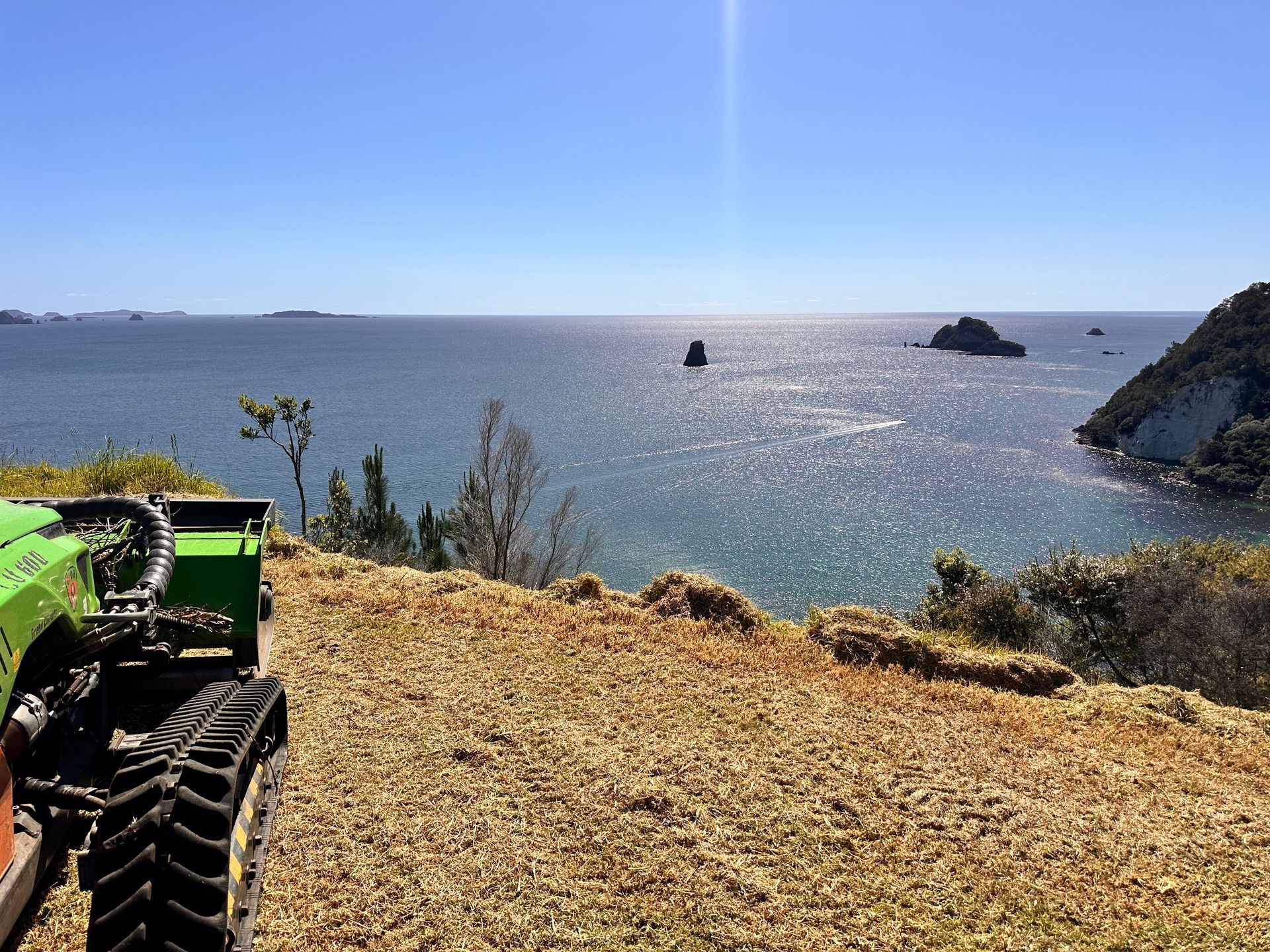
Access, ground and slope decide whether a tracked remote grinder can clear a stump on an Auckland bank, and what to send for a fair quote.
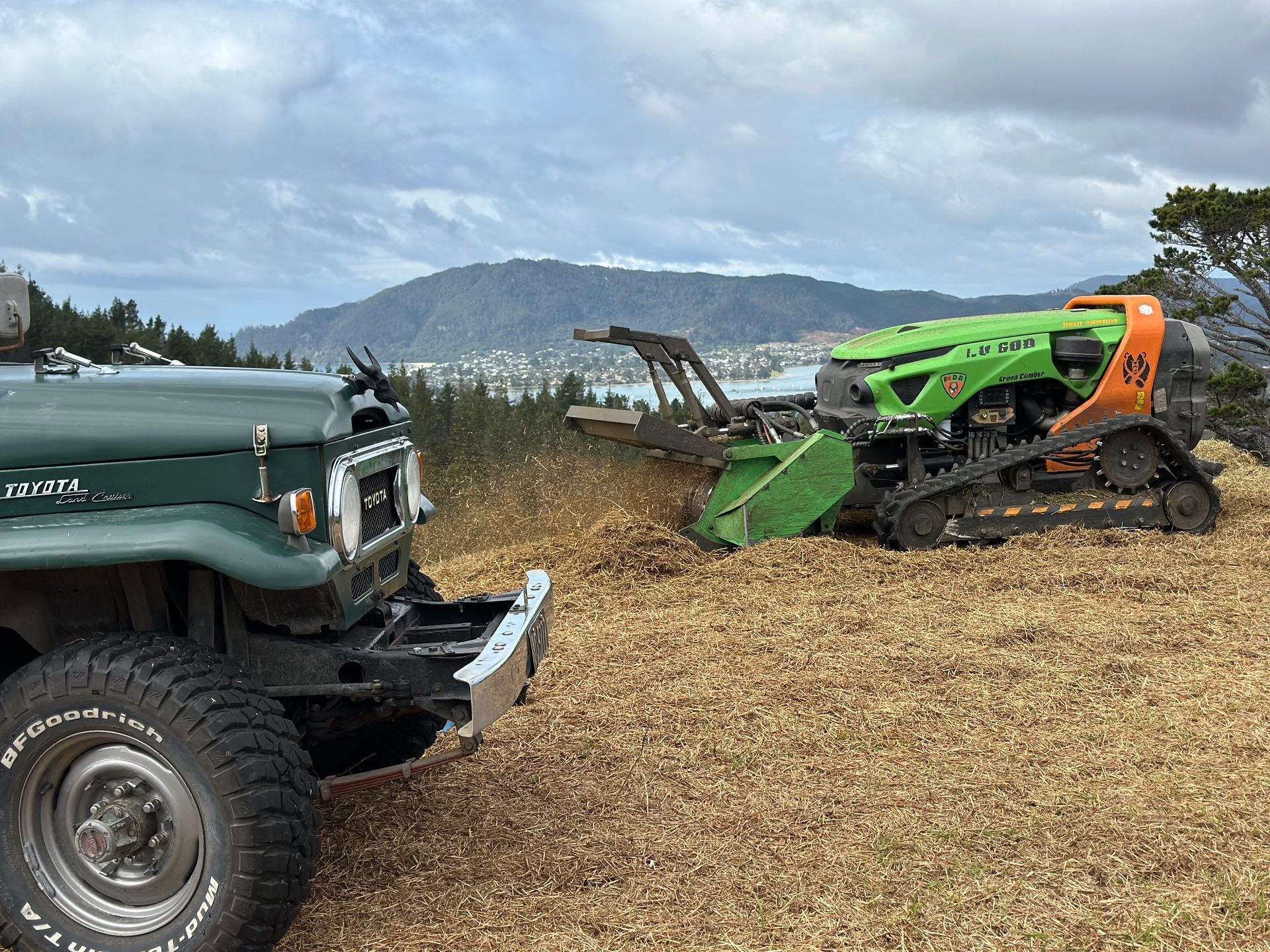
Mulching clears the standing growth of couch grass on steep hills, but its underground rhizomes regrow. Here is how to identify it, check the ground and plan the follow-up.
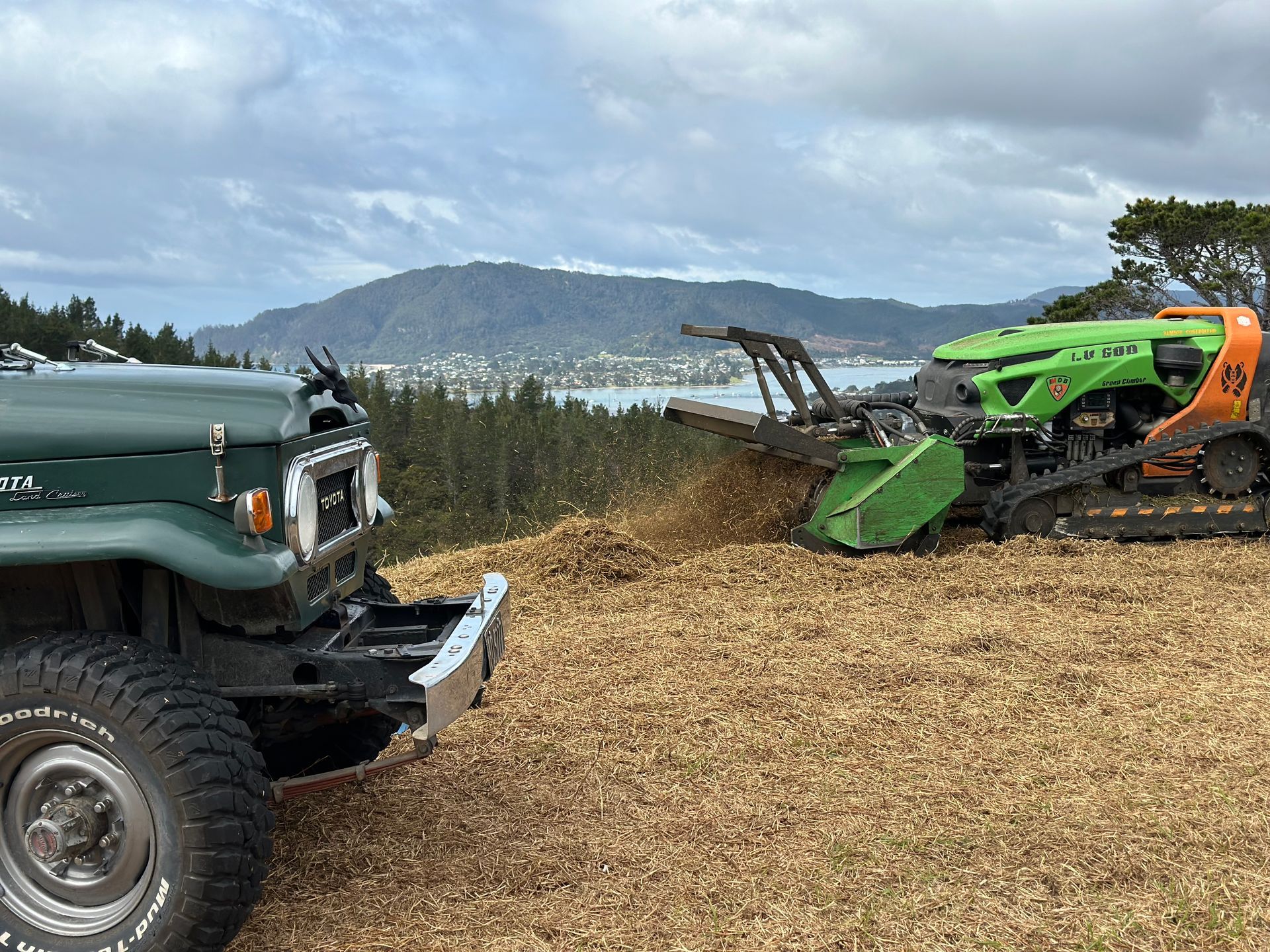
Kikuyu grass forms mats that mowing alone cannot clear. Here is why it spreads, what to check before the first pass, and how follow-up keeps it in check.
Hedge trimming services suit light annual growth on a maintained boundary. Gorse, blackberry and dense woody scrub need a mulching assessment instead, and this piece shows how to tell them apart.
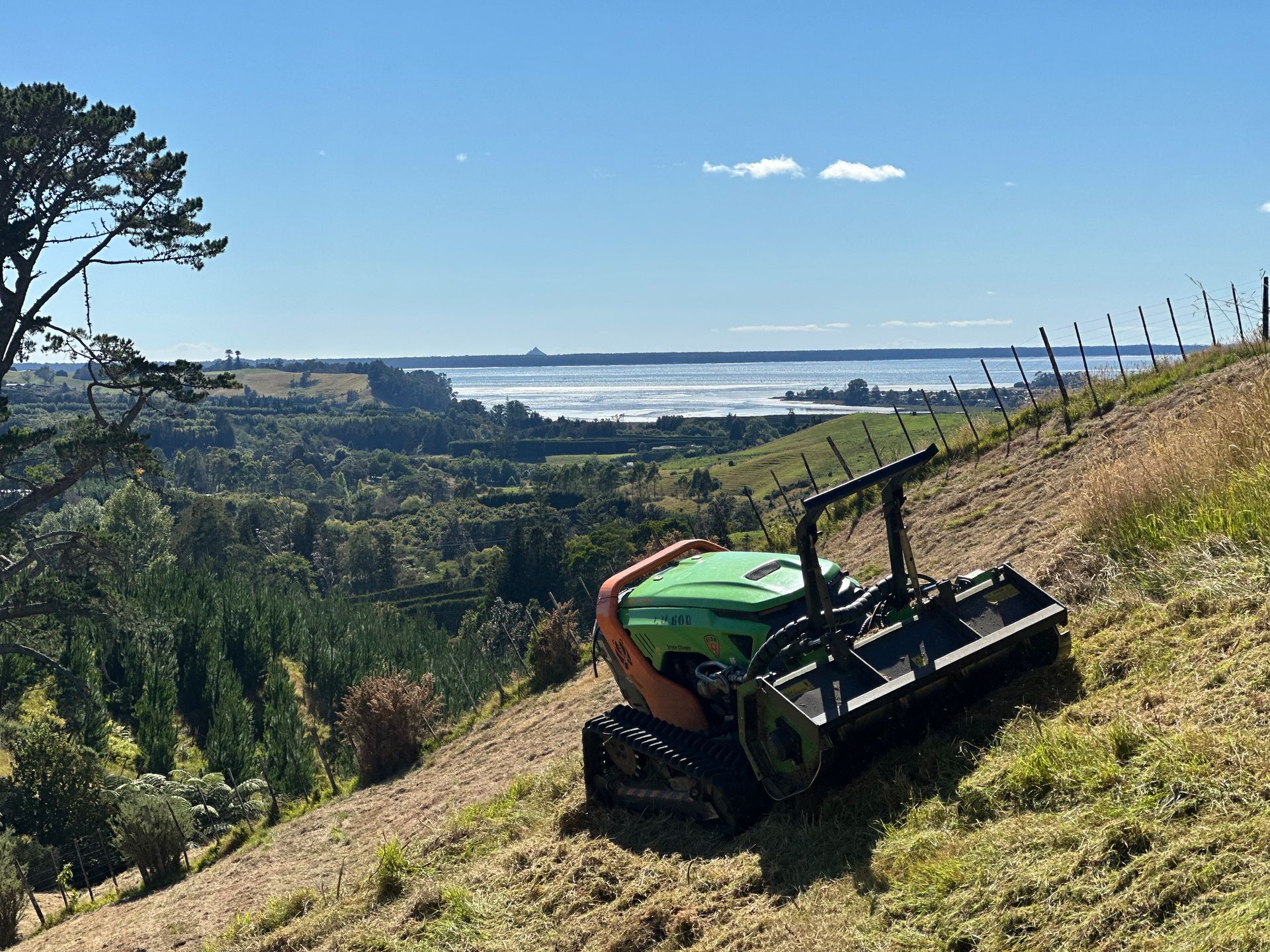
Ag contractors for steep hill country: the machine, pre-qualification and written plan to check before you hire. Ground conditions set how steep a job can safely be.
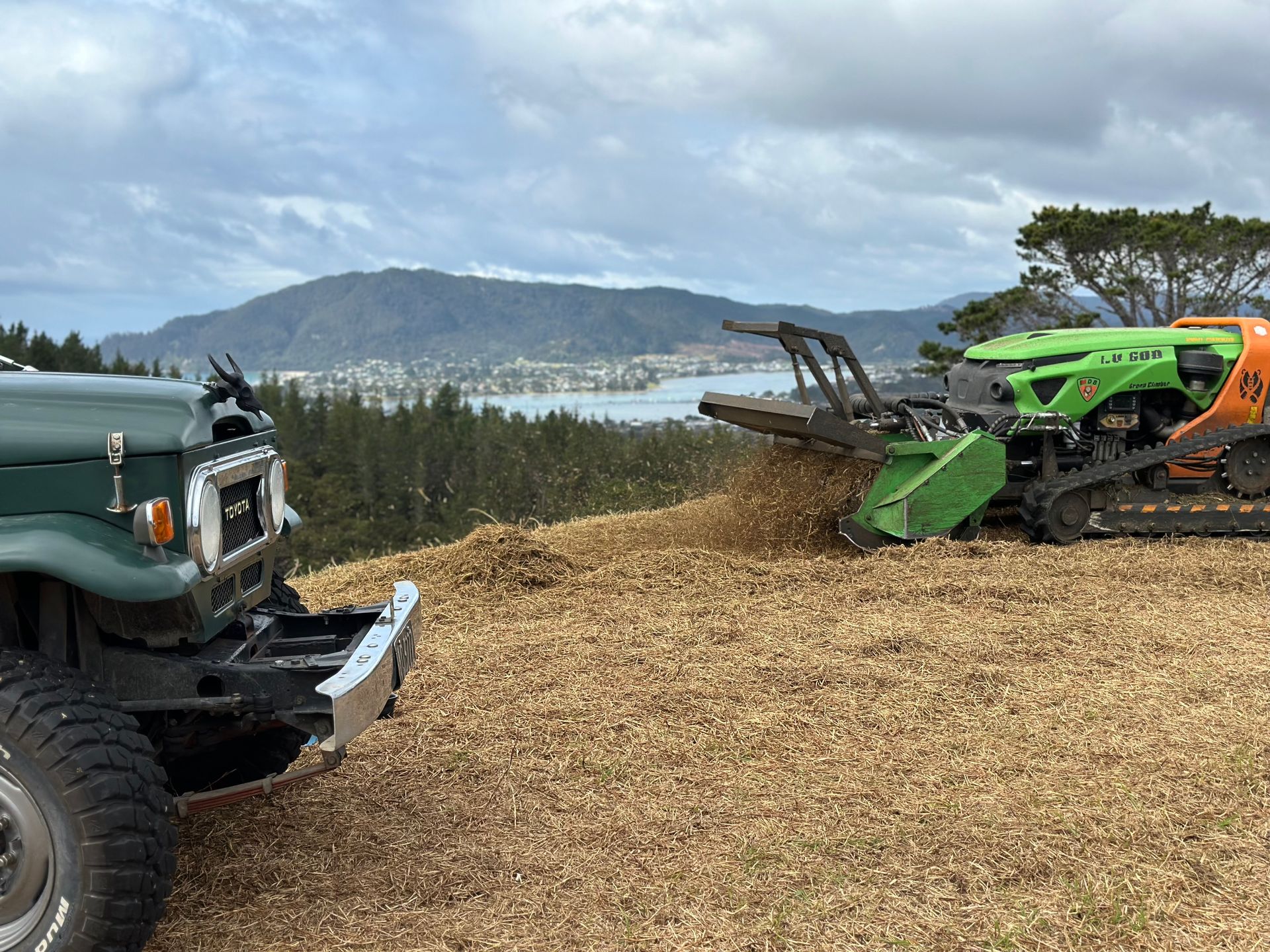
Steep Rotorua banks are hard to mow with a ride-on, especially after October rain. Here is what drives the cost and when remote-controlled mulching makes more sense.

Hydrocotyle includes native New Zealand pennyworts as well as weeds, so identify it before clearing a damp bank near water. Here is what to check first and when to call a professional.
Hedgerow removal on a steep fence line means finding the wire and isolating the energiser before any machine goes in. Regrowth needs a plan too.
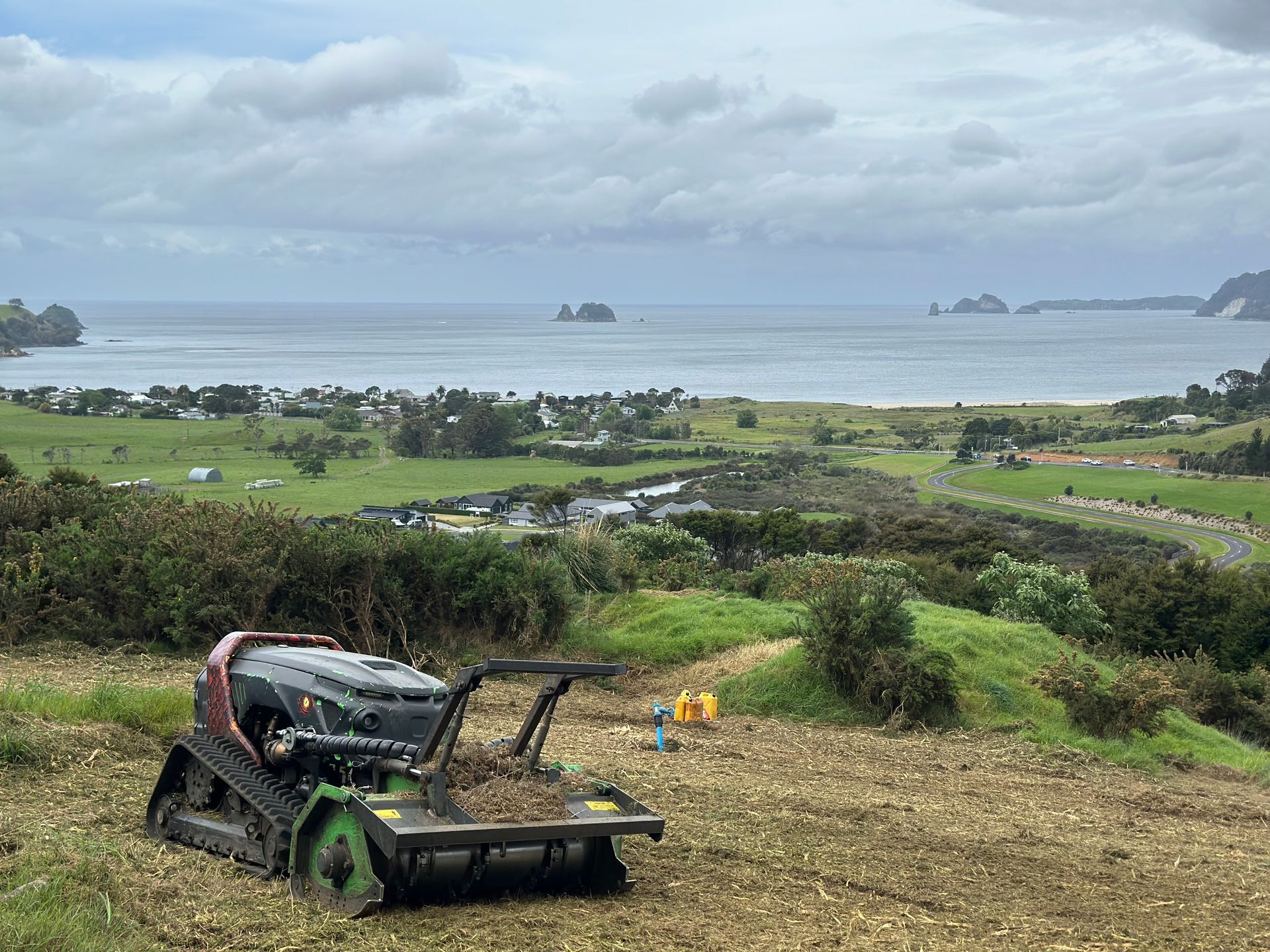
Mechanical mulching clears gorse and blackberry on steep slopes without herbicide, and the ground and follow-up decide how well the clearing holds.
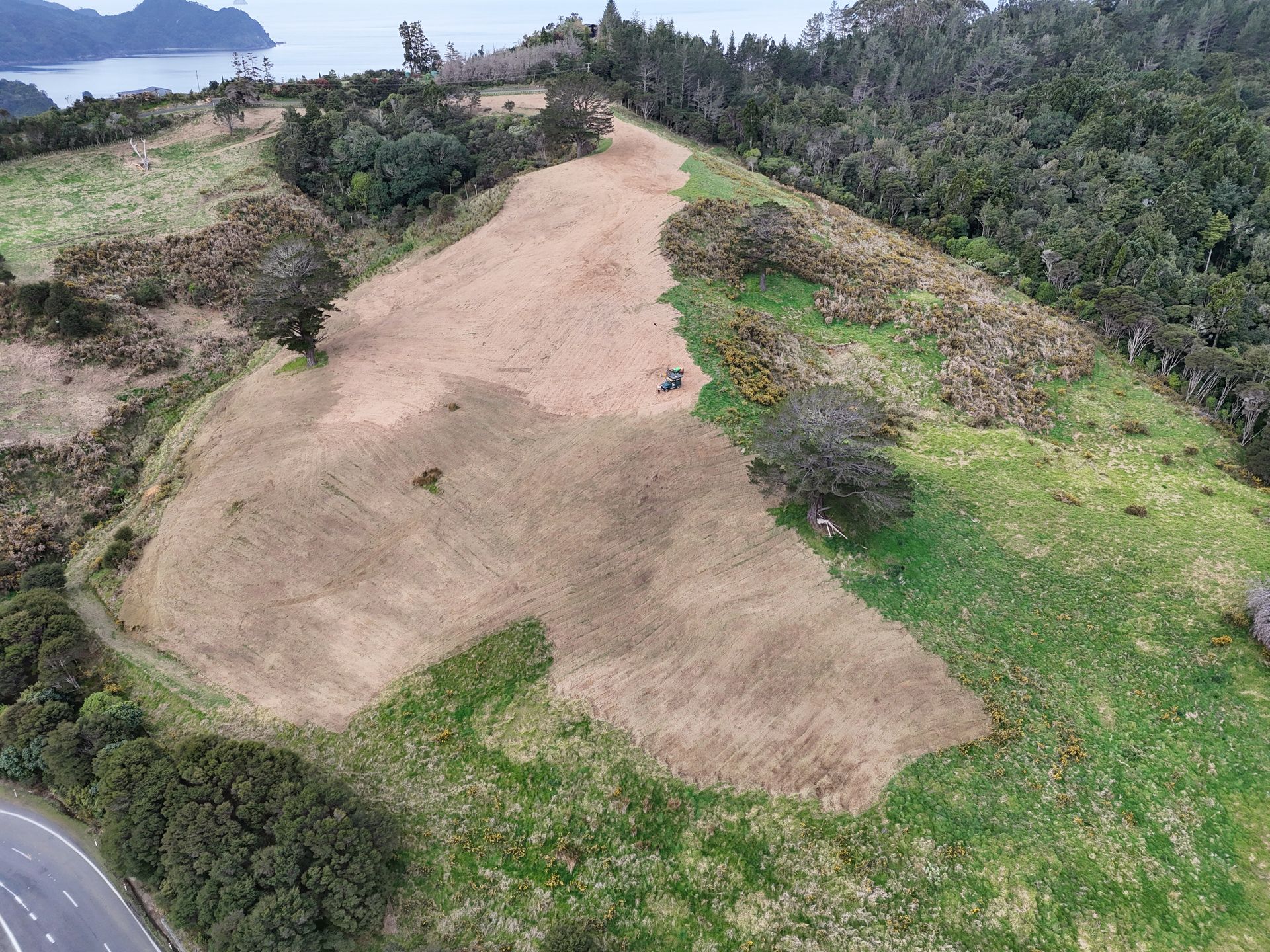
Published NZ price guides put tree felling at $350 to $5,000+ including GST, and steep banks often sit higher. Here is what changes the price and what to confirm in a quote.