
Rotorua Lawn Mowing on Steep Slopes: What Drives the Cost
No Mans Land Mowing • October 20, 2026
Lawn mowing a steep, overgrown Rotorua bank with a ride-on is often unsafe, and remote-controlled tracked mulching is the alternative. Wet pumice can lose grip under wheels, so ground conditions matter more than the slope angle alone. No Mans Land Mowing's steep slope mulching service
uses MDB LV600 machines to clear difficult ground without putting a driver on the machine.
A lake-facing escarpment or boundary gully needs a different approach from a suburban lawn. After October rain, a slope that carried a mower in summer may no longer support the same work safely.
Why does a wet pumice bank lose its grip?

Pumice soil drains quickly, but loose, saturated ground can offer little grip under a wheel. A dry-looking surface does not prove that the ground underneath will carry a machine. On a steep bank, loss of traction can become a rollover hazard.
October and November growth in the Rotorua lakes district thickens the cover just as spring rain softens the ground. Around Ngongotahā, Hamurana and the lake margins, that growth can hide soft patches on already difficult slopes. A fresh ground assessment is recommended rather than relying on how the bank behaved in February.
Does a degree rating tell you if a slope is safe?

Not on its own. Firm, compact soil with grass cover permits steeper work than sandy or clay ground. A gentler bank with poor traction can be more difficult than a steeper bank with firm footing.
Our MDB LV600 remote-controlled machines have 50+ degree capability, subject to ground conditions. That figure is not approval to work every slope at that angle more “what is the condition of the ground to be worked on, rather than judging suitability from a degree rating.
How does remote tracked mulching handle a steep bank?

Remote control lets the operator stand away from the machine rather than ride it on a hazardous slope. Tracks provide traction, but they do not make unstable ground safe. If the machine starts to lose grip you are safe in the knowledge that all personal involved are safe.
We have 4,500 hours of operating experience on our MDB LV600 machines. Their mulching heads reduce woody growth to ground level without chemical sprays, an option worth considering above waterways and near orchards.
Slashing gorse or blackberry leaves large, sharp debris that stock will not walk over, and regrowth comes back quickly. Ground-level mulching produces a different finish, the mulching effect causes the majority of roots to rot, though follow-up weed control may still be required. For machinery limitations on this terrain, our work on steep sidlings
is safer and the best option when standard tractors have reached their limits.
Why clear steep scrub before the summer dry sets in?
Dense scrub becomes a rural fire fuel load as it dries through summer. Planning clearance before the dry season gives you time to assess access and ground conditions rather than attempting machinery work when the vegetation is already dry. Spring growth makes October and November a practical time to assess overgrown slopes, although wet ground can delay the work. Regional pest management plans also place obligations on landowners to manage pest plant spread, including along boundaries. Requirements vary by location and plant, so checking your council's current rules is recommended before clearance. For boundary weeds, our approach to clearing gorse without spray covers what mechanical mulching can and cannot do.What does steep-slope mulching cost on a Rotorua block?
Area alone is a basic guide to cost. Dense large invasive weeds and trees takes more work than open grass, while difficult access adds set-up time. Slope conditions and travel also affect the job, and so can debris hidden in the growth. We serve the Bay of Plenty, Waikato, Coromandel and Auckland, with travel further afield for large jobs. Travel to your Rotorua block is worth confirming when discussing a quote. We also operate an in-house repair facility, which keeps repair costs low. A useful quote explains the access requirements and what could change the scope once clearing starts. To have an estimate on your block send us the details through the contact page. or call us 021 994891 for a chat to make a plan.What should you check before the machine arrives?
Parts of the Rotorua district have geothermal features and soft ground. Identifying those areas before machinery arrives is recommended, along with checking access and marking anything hidden by the growth.- Identify known thermal features and soft ground without walking onto unsafe slopes.
- Flag damp areas near waterways. Where groundcover needs identifying, identifying hydrocotyle on stream banks can help distinguish the vegetation, but it does not establish whether the bank will support machinery.
- Check current council requirements (if needed) for pest plants and vegetation clearance near lake catchments.
- Confirm machine access, including gate widths and any overhead obstructions.
- Mark hidden fencing and native trees to be retained.
Frequently asked questions
Can a remote tracked mulcher work on 50+ degree slopes without rolling?
Our MDB LV600 machines have 50+ degree capability, but no angle rating guarantees against rollover. Ground conditions determine what is workable, and remote control keeps the operator off the machine. A site assessment is recommended before deciding how to tackle the slope. Operator experience (over 4500hrs) also plays its part in the safe use of remote vehicle.Can steep ground be mulched when it is wet in spring?
Some wet slopes may be unsuitable until conditions improve. Saturated pumice can lose traction, and clay ground can limit safe operation. The decision depends on the ground at the time of work, not how it looked during a dry-weather visit. Best to “Have a crack” and see how the ground behaves. Often what looks “sketchy” turns out to be fine after 30min of sunshine on it.What does steep slope mulching cost in Rotorua?
The price depends on access and the work required, not just the area. Dense vegetation, difficult slopes and hidden debris can increase the time involved. A site-specific quote is needed for a useful figure. A call or text can confirm our hourly rate at said time.Do contractors travel to Rotorua from outside the district?
We serve the Bay of Plenty from our Western Bay of Plenty base, as well as Waikato, Coromandel and Auckland. For a Rotorua block, call or text No Mans Land Mowing on 021 994 891 to discuss the slope and access, and confirm travel as part of the quote.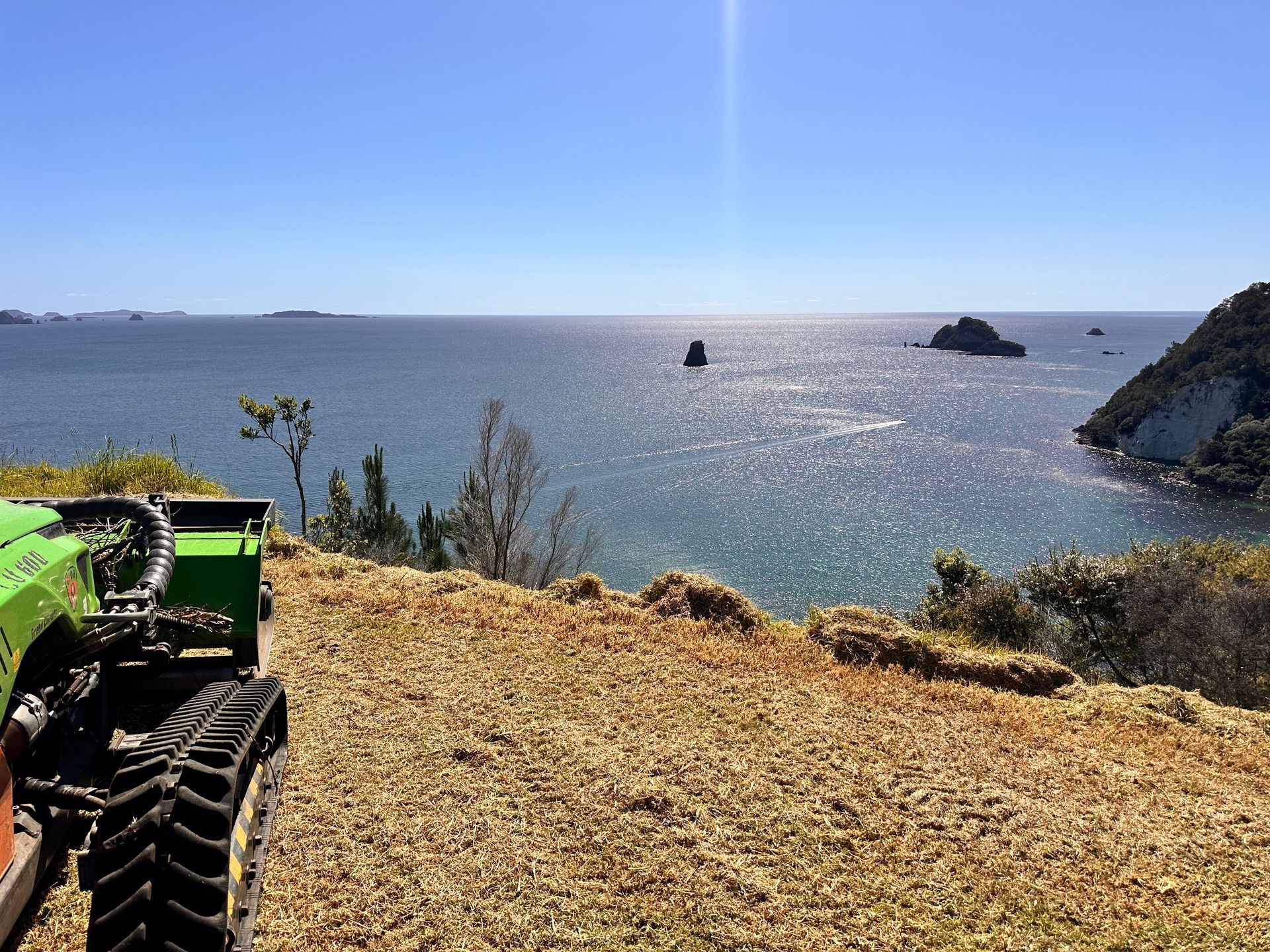
Access, ground and slope decide whether a tracked remote grinder can clear a stump on an Auckland bank, and what to send for a fair quote.
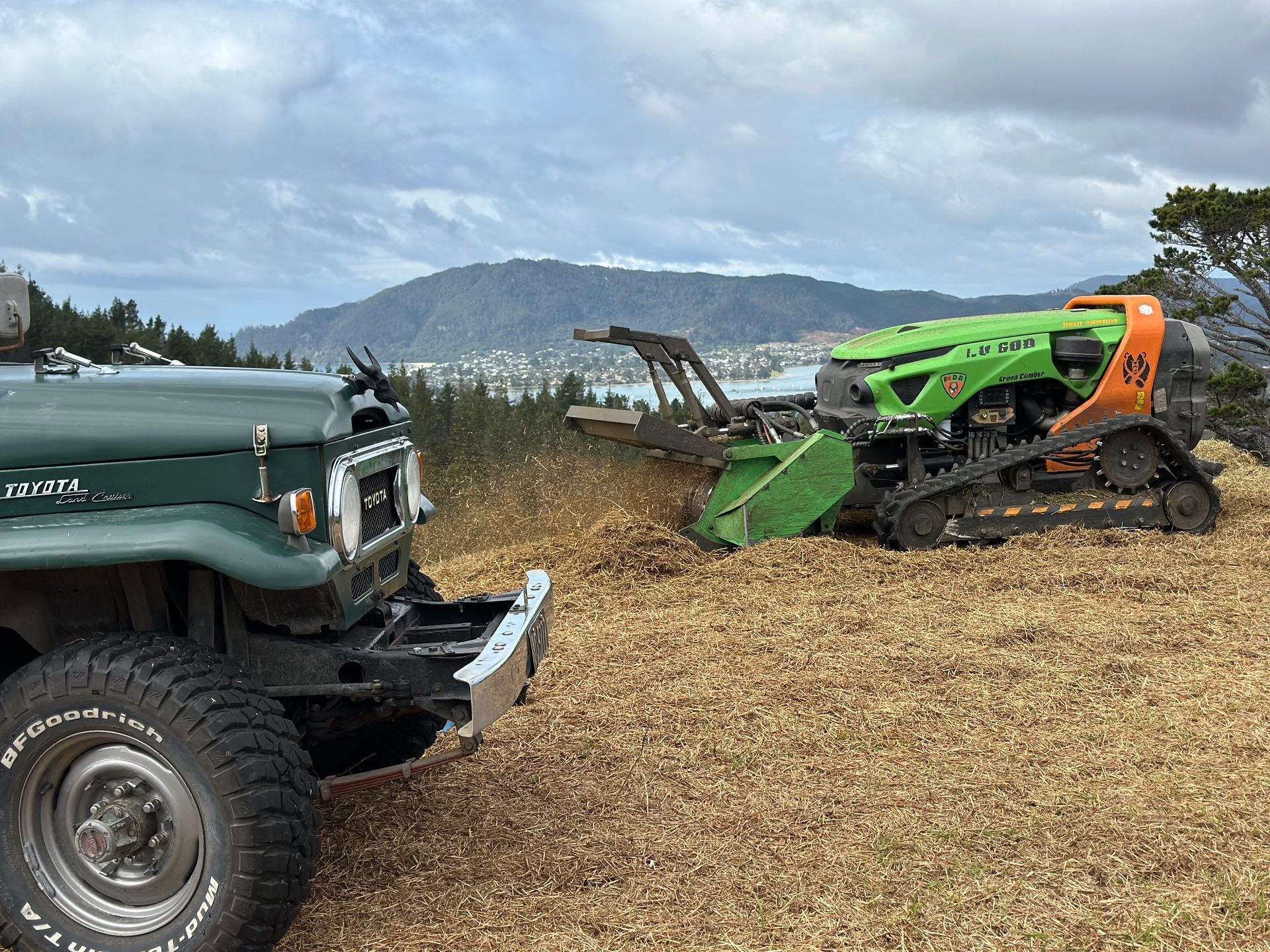
Mulching clears the standing growth of couch grass on steep hills, but its underground rhizomes regrow. Here is how to identify it, check the ground and plan the follow-up.
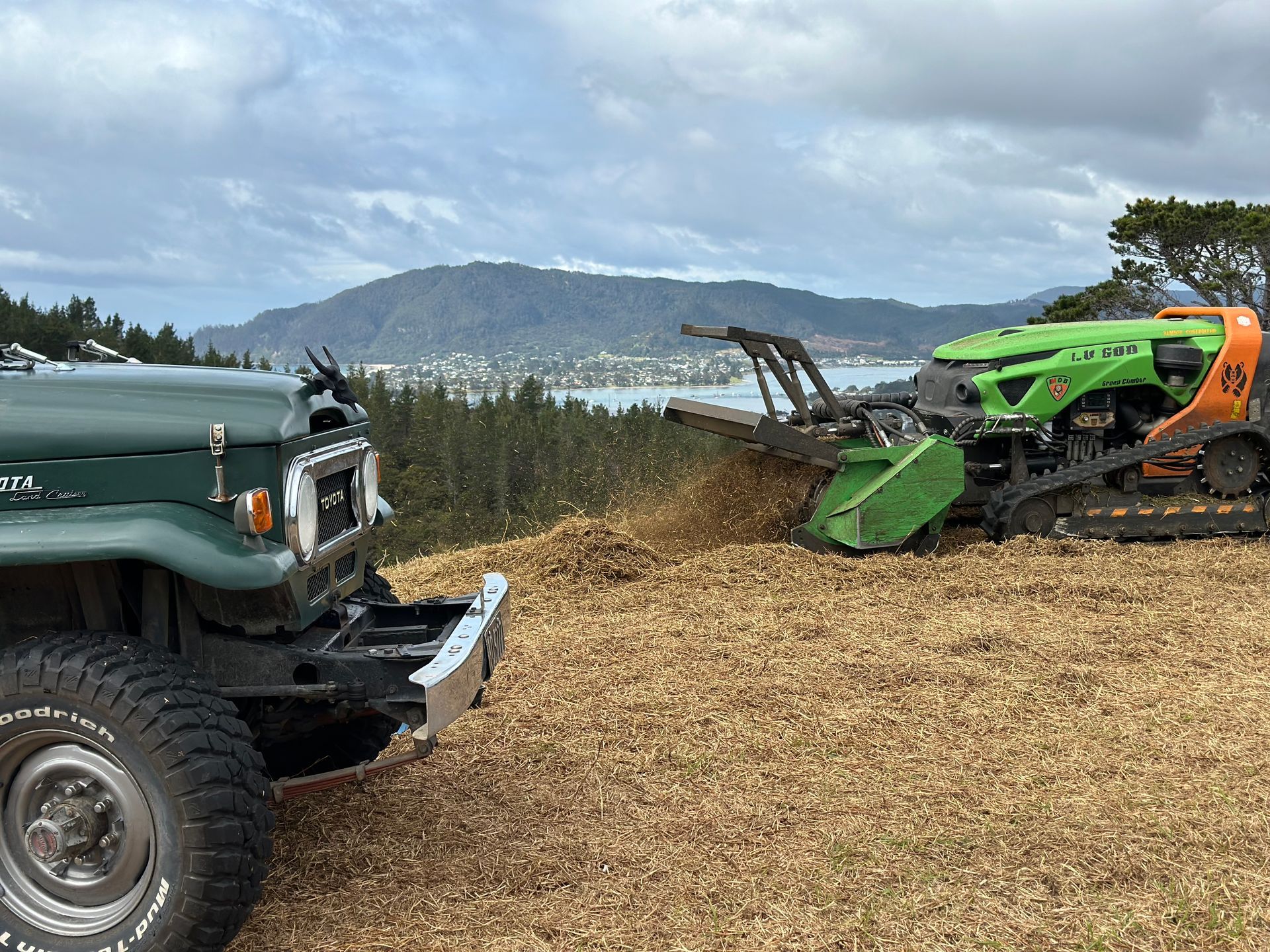
Kikuyu grass forms mats that mowing alone cannot clear. Here is why it spreads, what to check before the first pass, and how follow-up keeps it in check.
Hedge trimming services suit light annual growth on a maintained boundary. Gorse, blackberry and dense woody scrub need a mulching assessment instead, and this piece shows how to tell them apart.
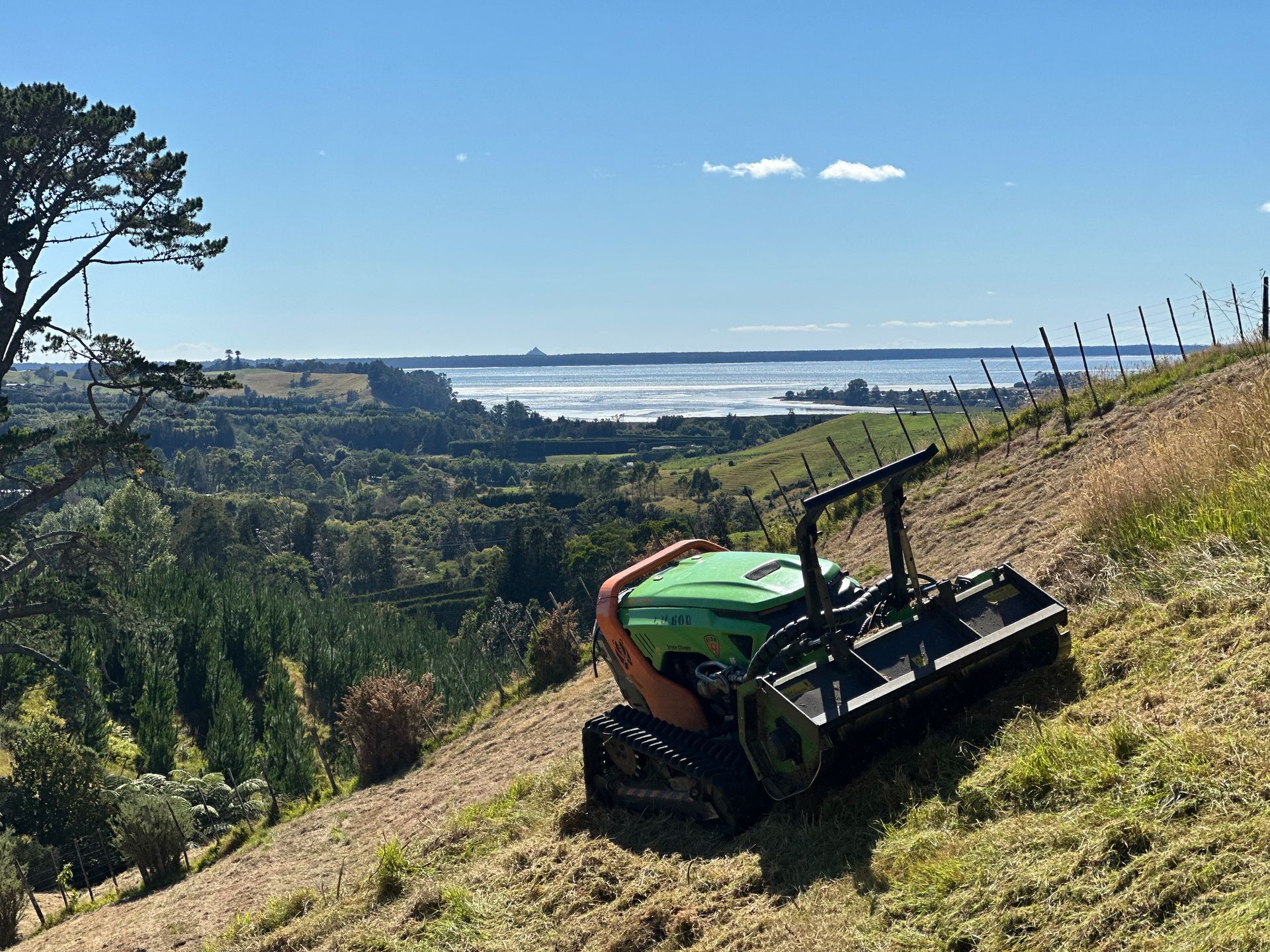
Ag contractors for steep hill country: the machine, pre-qualification and written plan to check before you hire. Ground conditions set how steep a job can safely be.

Hydrocotyle includes native New Zealand pennyworts as well as weeds, so identify it before clearing a damp bank near water. Here is what to check first and when to call a professional.
Hedgerow removal on a steep fence line means finding the wire and isolating the energiser before any machine goes in. Regrowth needs a plan too.
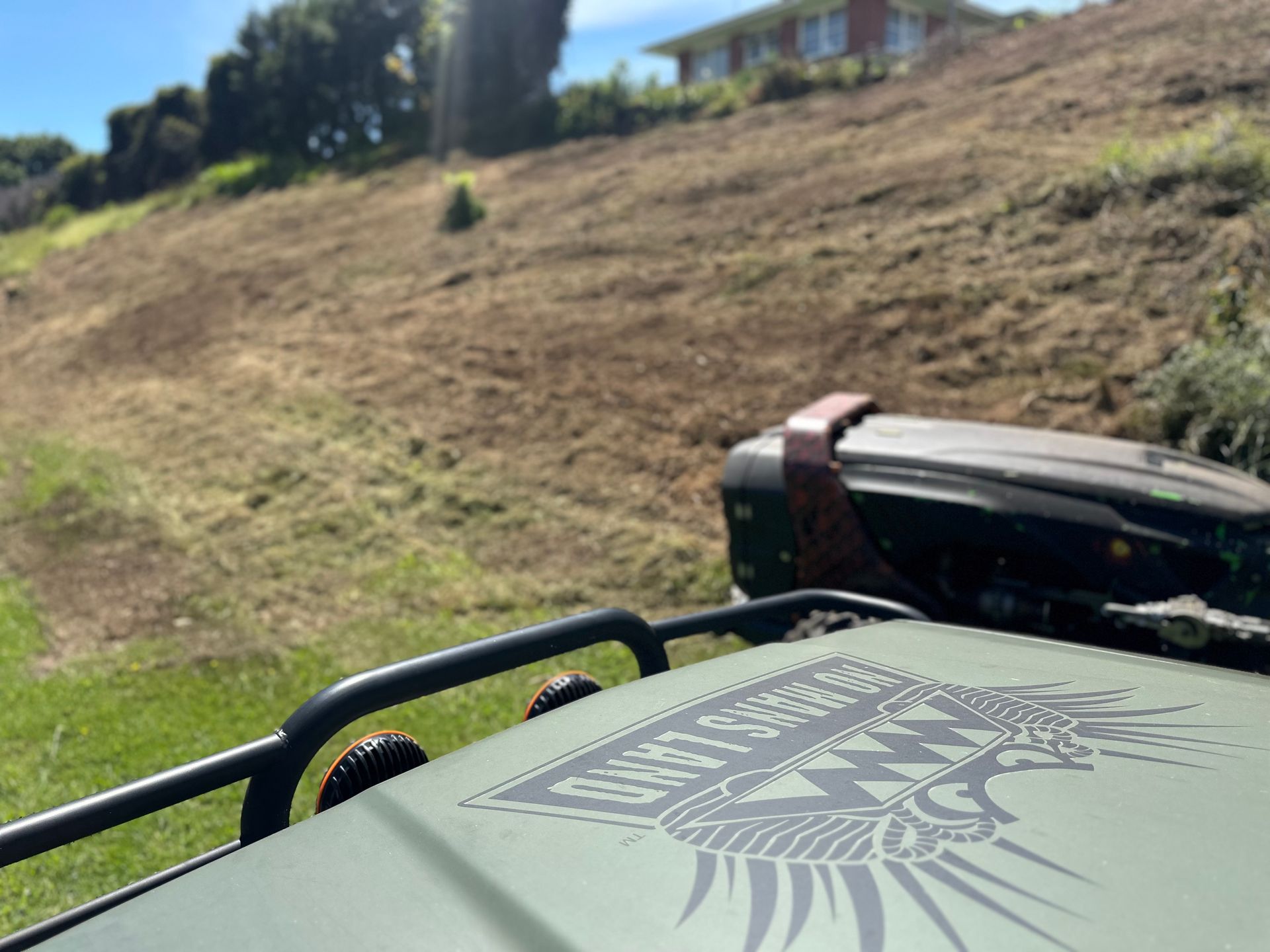
Grinding a tree stump below ground on a steep slope is usually safer than digging out its roots. The ground needs checking first, and the stump size alone does not settle the job.
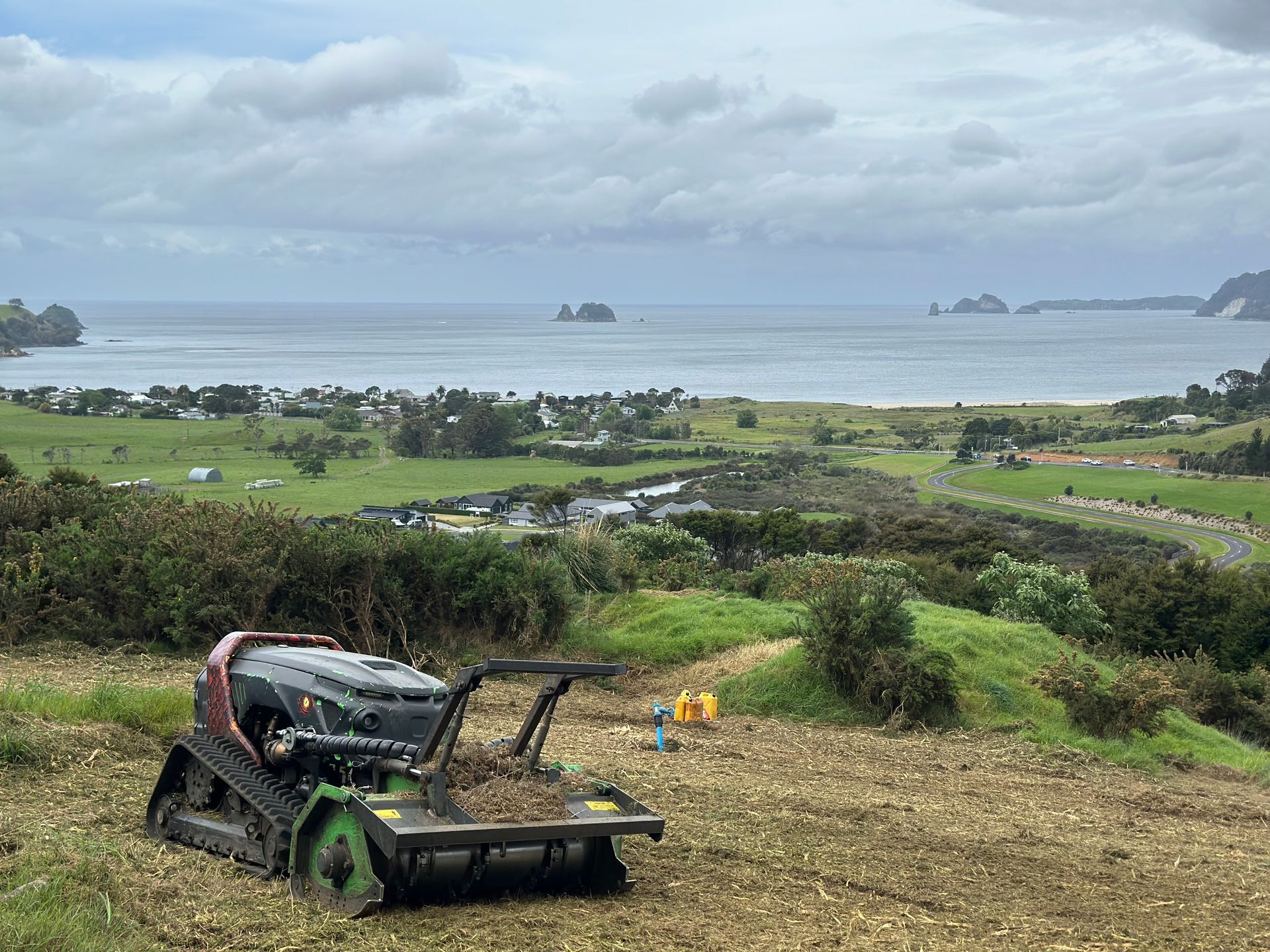
Mechanical mulching clears gorse and blackberry on steep slopes without herbicide, and the ground and follow-up decide how well the clearing holds.
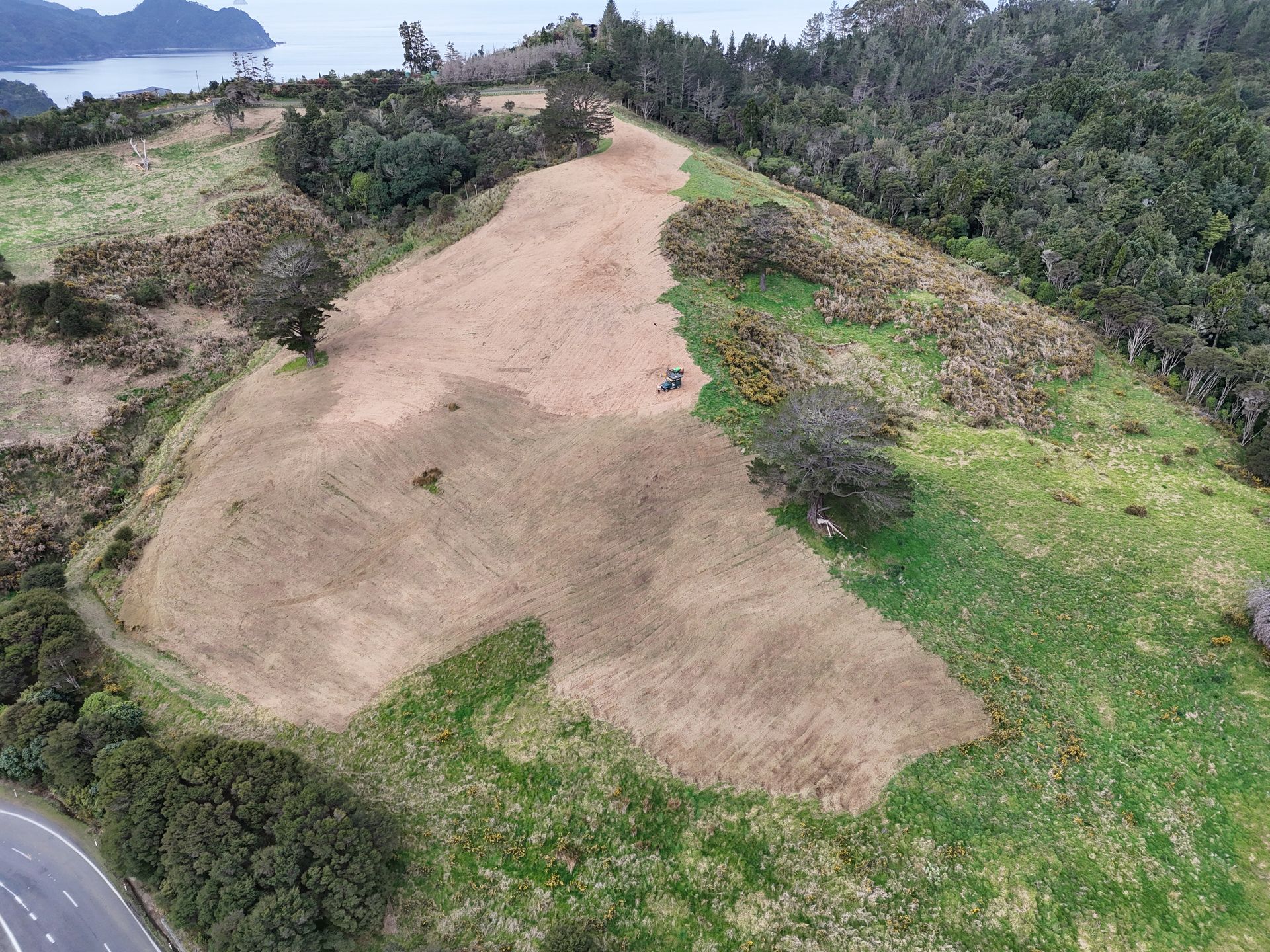
Published NZ price guides put tree felling at $350 to $5,000+ including GST, and steep banks often sit higher. Here is what changes the price and what to confirm in a quote.