
Tree Felling Cost in NZ: Planning Ranges and Steep-Bank Factors
No Mans Land Mowing • October 15, 2026
Published NZ price guides put tree felling and removal at $350 to $5,000+ including GST in October 2026. On a steep bank, access can drive the price higher. The main question is whether the tree can fall into clear space or must come down in roped sections.
For hillside scrub and small trees, mulching may avoid the cost of carrying material off the slope. Our No Mans Land Mowing services page
covers remote-controlled clearing for this work, rather than dismantling large mature trees.
Height alone cannot price the job. Restricted access or a tree that needs dismantling can push the cost well beyond what its size suggests.
What does tree felling cost in NZ on ground a crew can reach?
Published NZ price guides summarised in October 2026 give these planning ranges. They are not site-specific quotes.| Tree size | Planning range including GST |
|---|---|
| Small, under 5 to 6m | $350 to $900 |
| Medium, 6 to 15m | $800 to $2,000 |
| Large, 15 to 25m | $1,500 to $5,000 |
| Very large or technical, 25m+ | $5,000 to $10,000+ |
Why does a steep bank quote sit above the published bands?
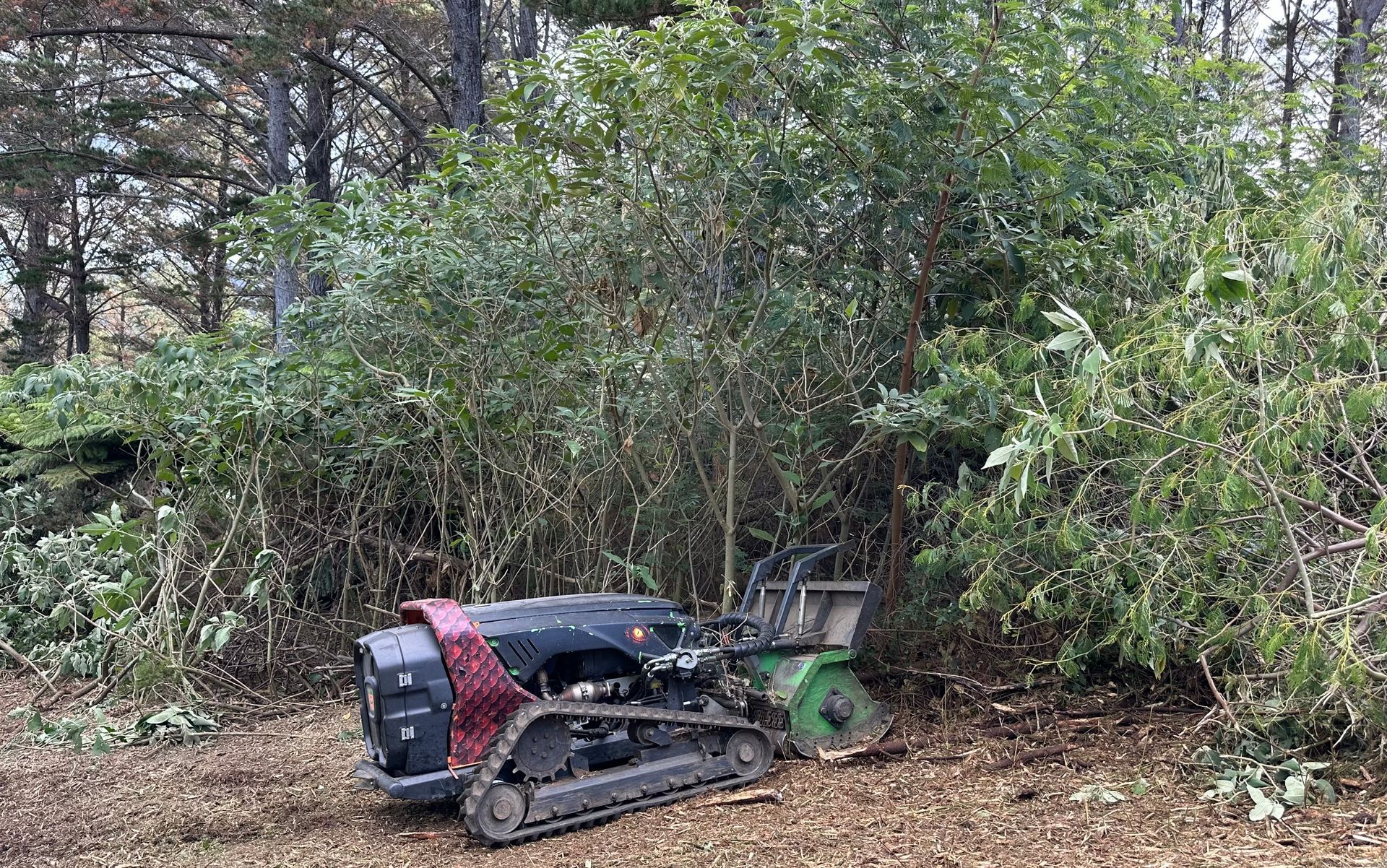
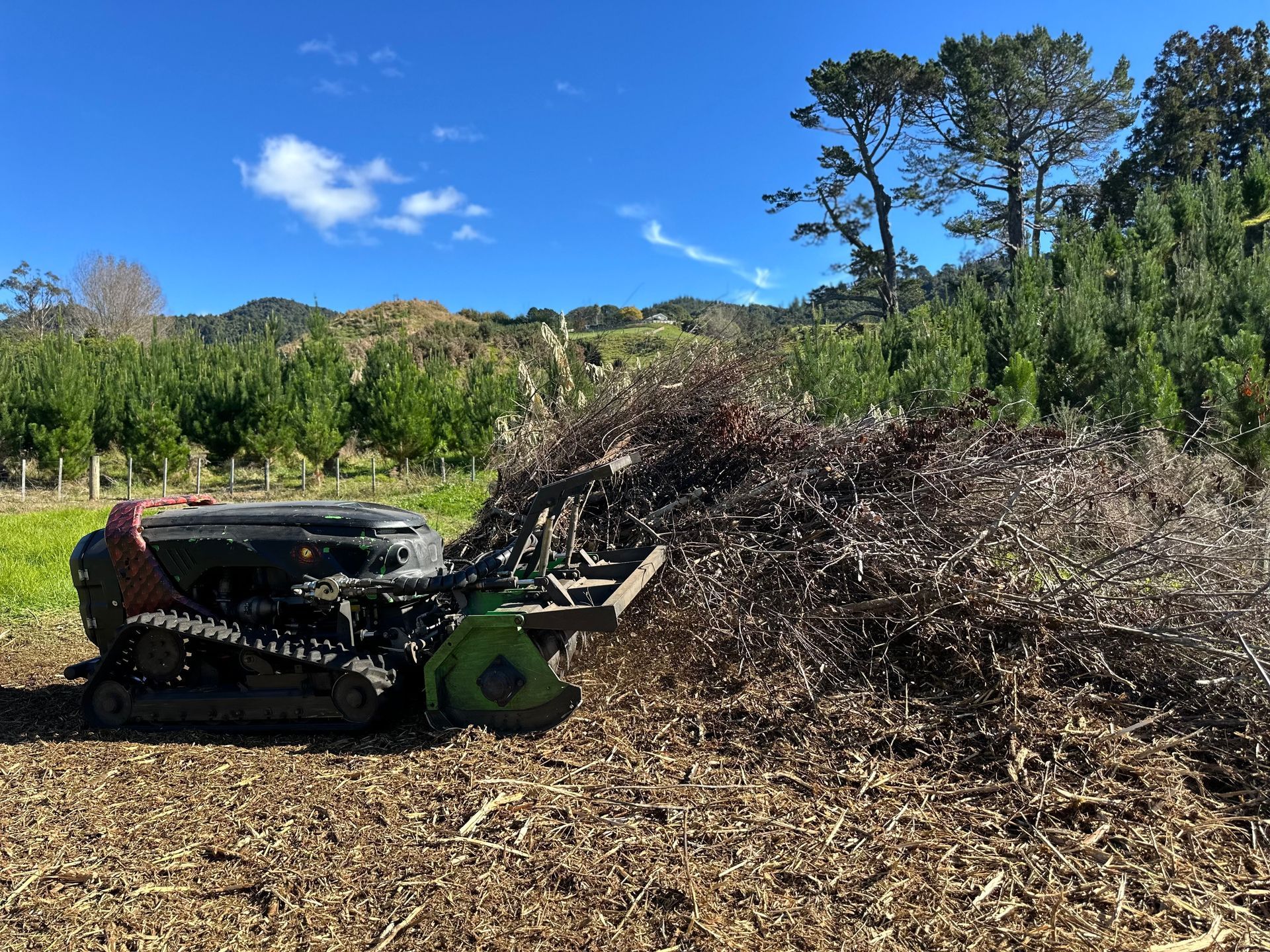
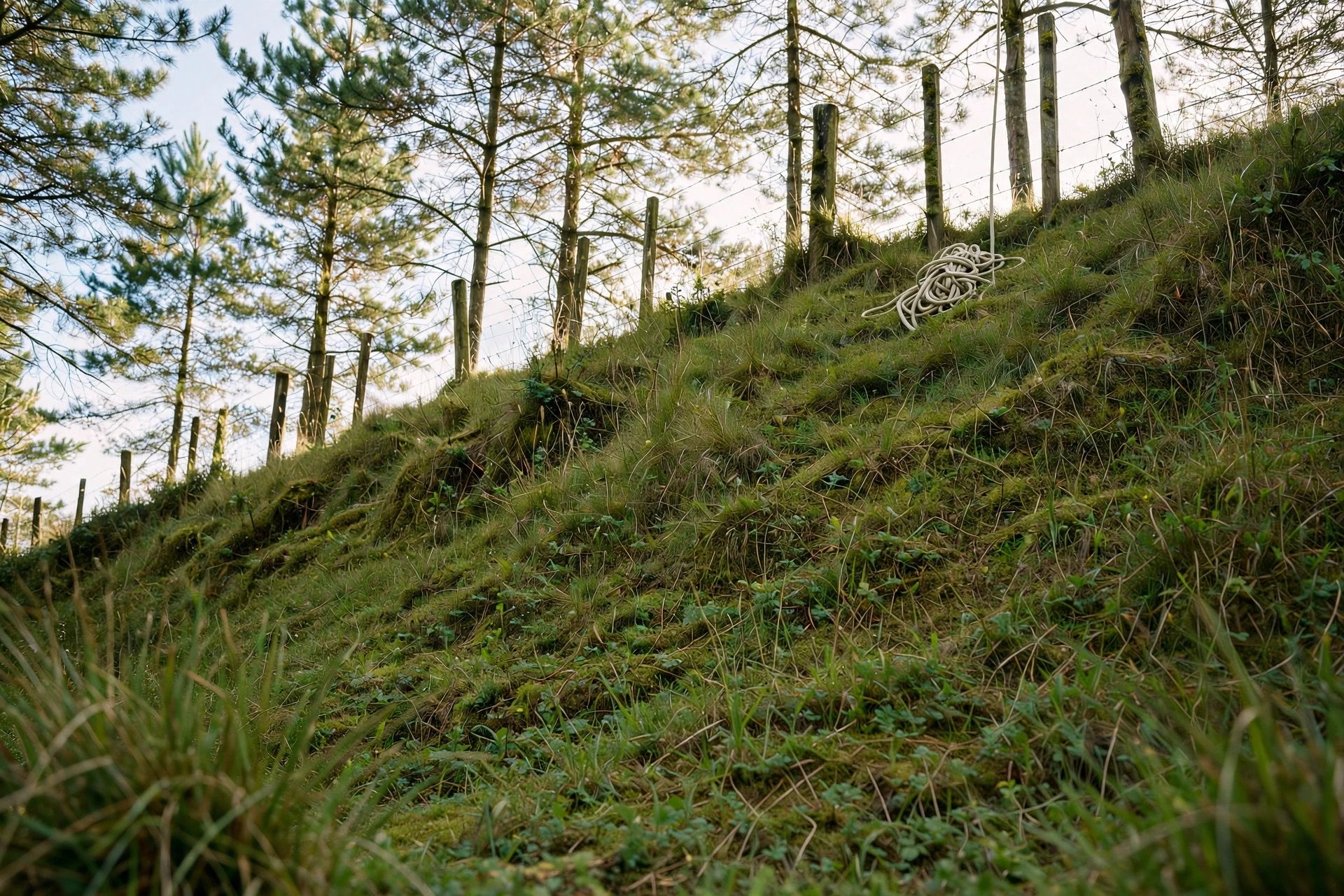
Where machinery cannot reach, more of the work falls to the crew. Lowering sections by rope takes longer than dropping a tree into clear fall space.
Felling and dismantling are different jobs. A tree beside a house may need careful dismantling even on flat ground; a tree on a slope may be felled if there is safe clearance. The surroundings matter as much as the slope.
These are different methods, not interchangeable quotes. Mulching does not replace an arborist removing a large tree over a building.
Where does the money go after cutting?
Removing the material can be a substantial cost. A Northern Arizona University Ecological Restoration Institute study, reported by The NAU Review on 6 April 2026, found that cutting and trucking accounted for more than 90% of total sale cost in mechanical forest thinning. That is US forestry, not NZ residential tree removal, so the percentage is not a pricing rule for your block. For your quote, check whether green-waste removal is included. Logs left beside the stump are a different scope from a cleared site.How does mechanical mulching remove the handling lines?
Mulching grinds suitable stems where they stand, avoiding separate handling when the mulch stays on site. We operate remote-controlled MDB LV600 remote-controlled tracked mulchers and have 4,500 hours of operating experience. For regional work, see our Waikato contractors guide.| Cost line | Felling or dismantling | Tracked mulching of suitable stems |
|---|---|---|
| Cutting | Felled whole or dismantled in sections | Stems ground by the mulching head |
| Rigging | Needed where sections must be lowered | No rope dismantling of suitable stems |
| Chipping | May be included or quoted separately | Material ground on the slope |
| Hauling and disposal | Confirm what leaves the site | Avoided where mulch remains on site |
| Stump work | Commonly quoted separately | Confirm the required finish separately |
Which job are you buying? Stem size decides it
Scrub and suitable small to mid-sized stems can suit a tracked mulching head. A thick trunk or heavy lean needs assessment, not a promise made from a photograph. A crowded stand of young wilding pines is different from a mature macrocarpa. Bigger stems change the equipment needed and how the crew handles them.Why does the bank need an inspection before the price is final?
Ground conditions determine allowable slope steepness. Firm, compact soil with grass permits steeper work than loose, wet ground. Our machines work on slopes of 50+ degrees where conditions allow, but that is not a guarantee for every slope. An inspection cannot find everything hidden in the vegetation, so some surprises are possible. Debris strikes are part of mulching work. Before work starts, we talk through any damage, how it would be repaired and who carries the liability.How do you read the quote and save without cutting corners?
It is recommended you ask for enough detail to compare the same work:- Ask how the tree will come down, either felled whole or dismantled in sections.
- Check whether controlled lowering by rope is included in the price.
- Establish what happens to branches and logs once they are cut.
- Confirm who removes the waste and who pays any disposal charges.
- Ask about stump work separately, since grinding is commonly quoted apart. Our stump grinding cost guide covers that work.
Why consider spring clearing before summer?
Dead scrub and dry gorse add fuel as conditions dry out. Clearing before summer can be practical, but wet spring ground can restrict machinery access. Ground conditions take priority over a calendar deadline. We clear gorse without chemical sprays. Our woolly nightshade guide covers that weed in more detail.How do you compare your quote with a mechanical option?
Send photographs and approximate stem sizes, along with access details and your intended finish. A tree leaning over a house or across power lines calls for specialist arborist assessment, not a mulching estimate. We serve the Bay of Plenty, Waikato, Coromandel and Auckland, and hold Tōtika PreQual, SHE PreQual and SiteWise PreQual. To discuss suitable hillside clearing, call or text 021 994 891, or send the site details through our online quote form.Frequently asked questions
What is the cheapest time of year for tree removal?
There is no reliable cheapest season for every site. Planned work is generally less expensive than emergency work, while wet ground can make access harder. Ask whether scheduling flexibility changes the quote.How much does it cost to get a tree felled?
Published NZ price guides in October 2026 put small tree removal at $350 to $900 including GST, with very large or technical jobs reaching $5,000 to $10,000+. Access and dismantling requirements can matter more than height. Confirm whether waste removal and stump work are included.How much do arborists charge per hour in NZ?
We do not have a verified NZ hourly rate to quote here. An hourly figure alone also leaves out crew size and equipment, so a written scope is more useful for comparing the total job.Do I need to haul away brush after robotic mulching?
Usually not if the agreed finish leaves the ground material on site. Mulching processes suitable stems on the slope rather than carrying them out for chipping. Confirm where the mulch will remain before work starts.Can a mulcher take down a large mature tree?
A tracked mulcher is not a substitute for an arborist removing a large mature tree. Suitable stem size and safe access require assessment on site. Trees over buildings or power lines need specialist tree-removal planning.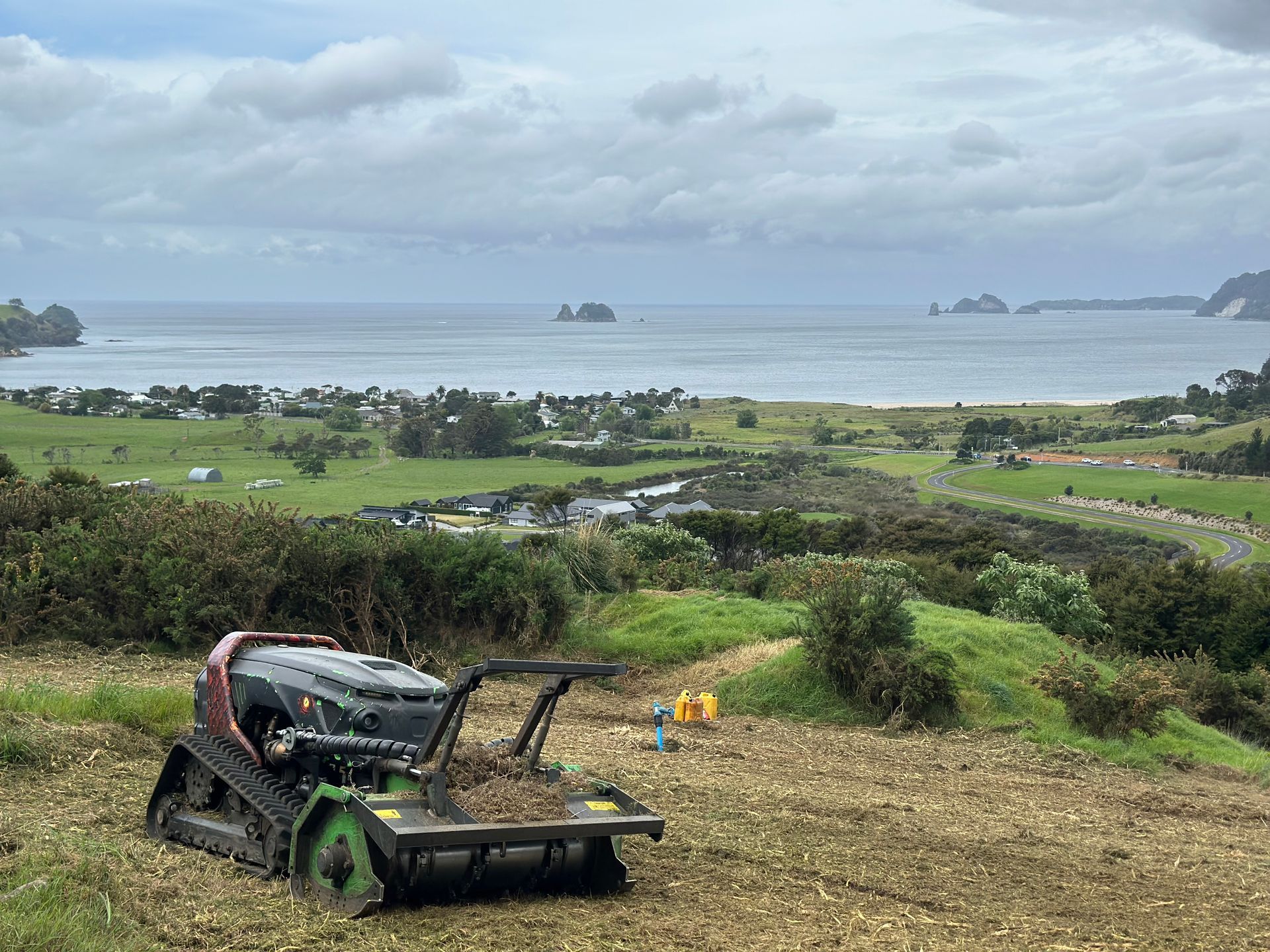
Mechanical mulching clears gorse and blackberry on steep slopes without herbicide, and the ground and follow-up decide how well the clearing holds.
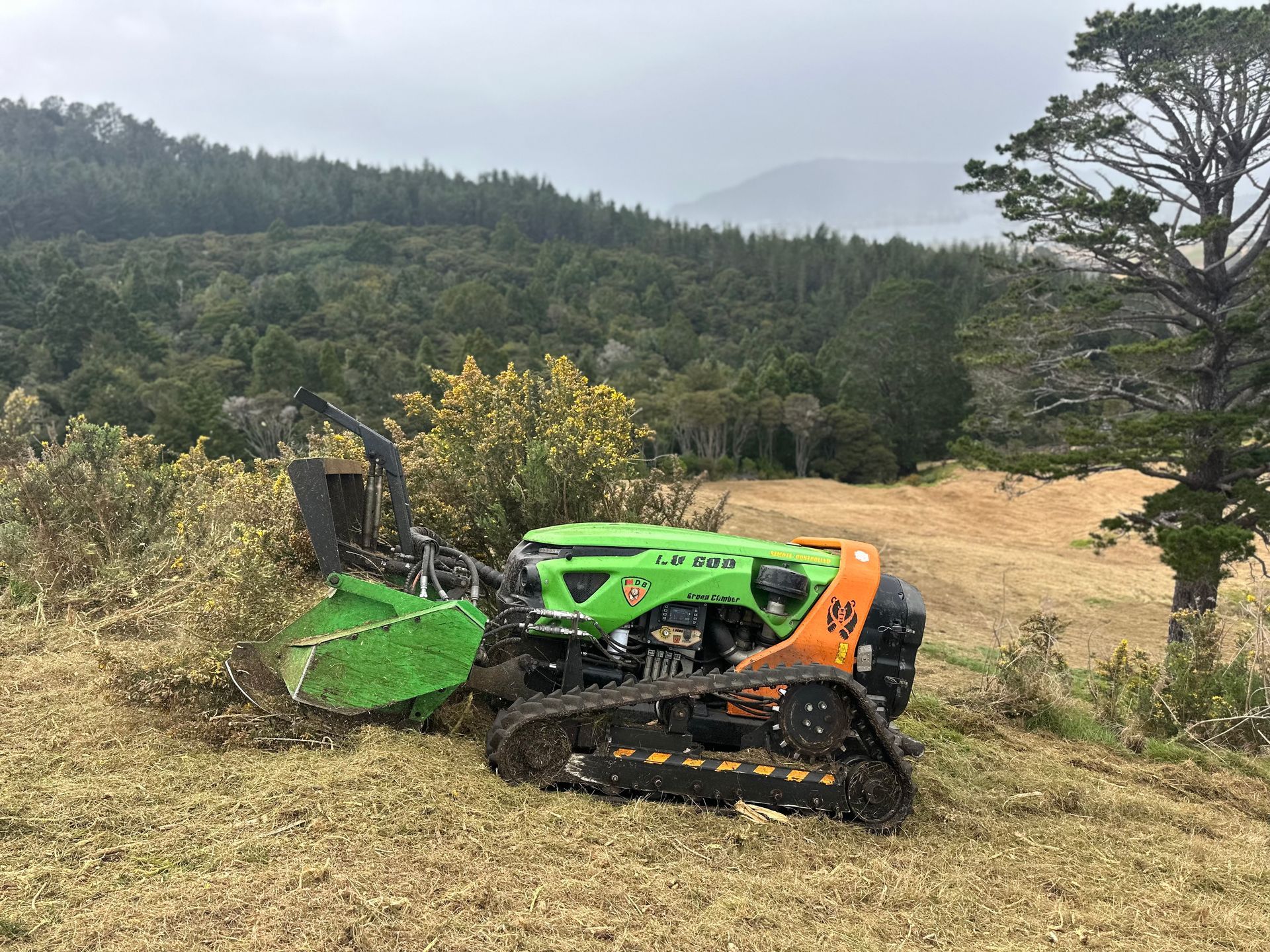
Understand when standard 4WD farm tractors reach dangerous slope limits and why tracked slope mulchers are needed for steep Waikato sidlings.
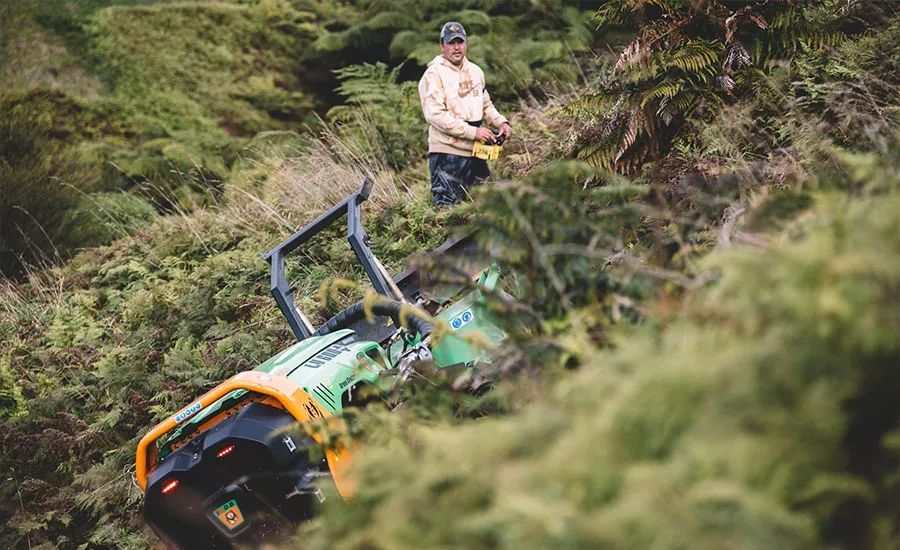
Learn how to protect vulnerable native tree ferns while clearing invasive gorse and blackberry across steep North Island gullies.
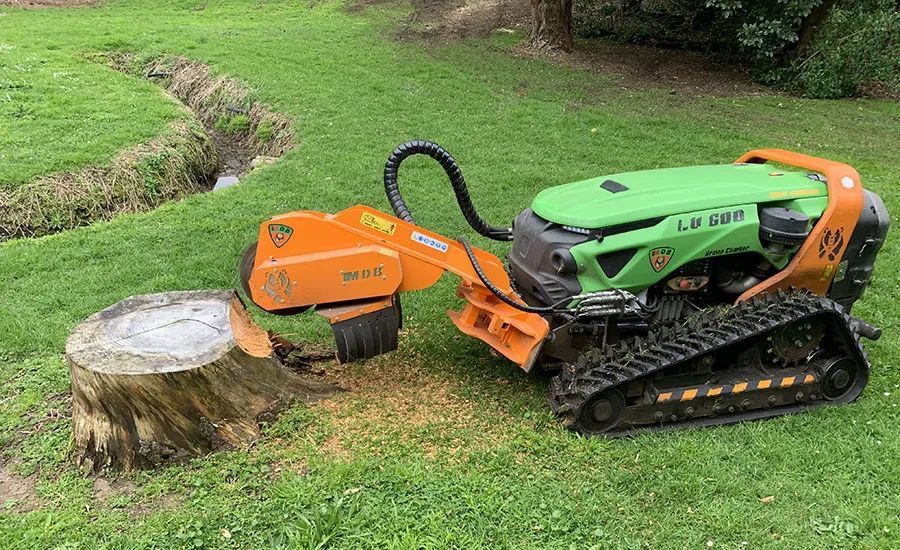
A practical guide to stump grinding costs, machine requirements, and site preparation for steep banks and gullies across Tauranga.
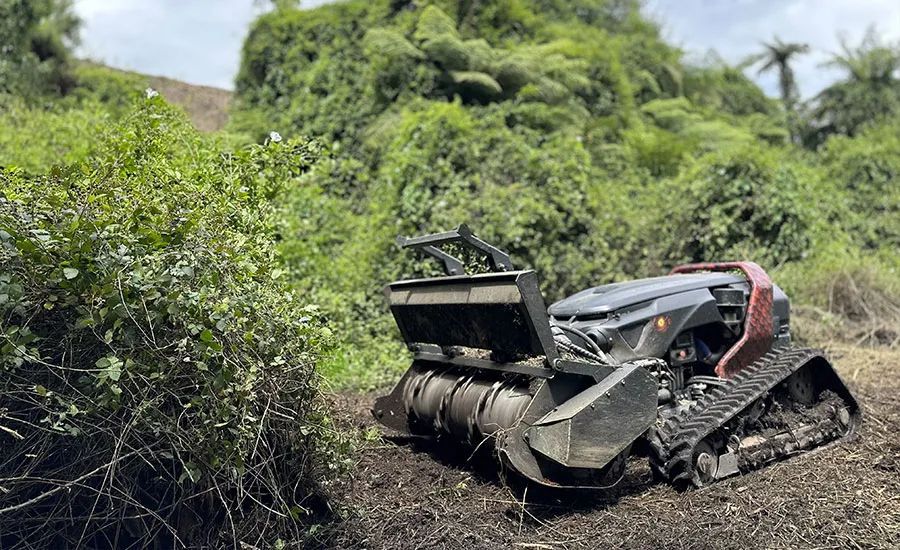
Stop invasive woolly nightshade from taking over steep gullies and risking spray drift into nearby orchards. Learn how remote mulchers shatter root plates flush to the ground.
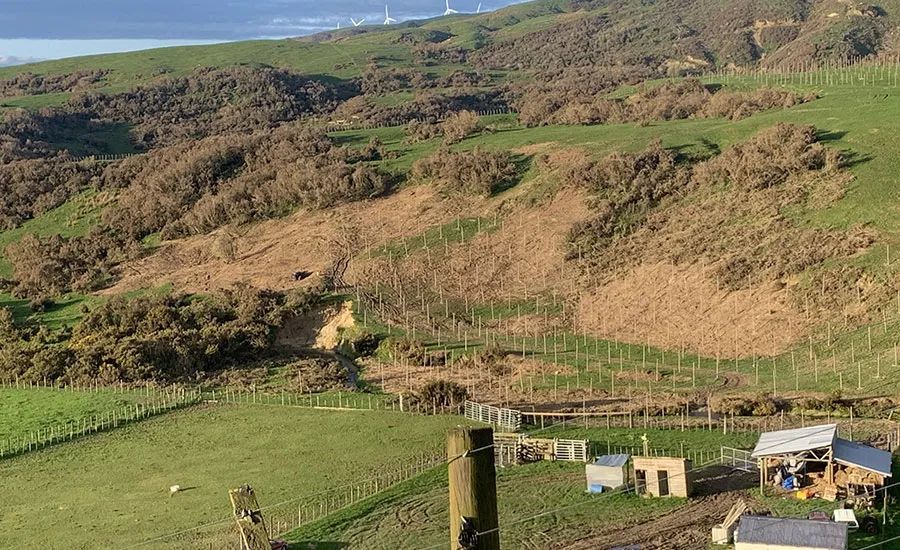
Standard tractors cannot safely mow slopes beyond 20 degrees. Here is how remote-controlled tracked mulchers pulverise gorse and rank growth to reclaim steep hill paddocks.
Standard Tauranga lawn mowers face severe rollover hazards on slopes over 20 degrees. Here is how remote-controlled tracked mulchers clear steep lifestyle banks safely.