
Woolly Nightshade Tree: Non-Chemical Hill Clearing
No Mans Land Mowing • October 10, 2026
A woolly nightshade tree (Solanum mauritianum) is an invasive perennial pest plant that grows up to 10 metres tall, choking out steep gullies and threatening neighbouring kiwifruit orchards with bird-spread seeds. Felling mature trees with chainsaws coats operators in irritating toxic dust, while foliar herbicides risk chemical drift into waterways and export crops. High-torque remote-controlled mulching grinds the standing timber and shatters the root plate flush to ground level, halting seed distribution without chemical sprays.
When woolly nightshade establishes on a 45-degree volcanic batter, conventional tractors cannot touch it without severe rollover risk. Hand crews struggle on loose spring soil, and cutting trunks off at waist height leaves stumps that coppice within four weeks. Managing mature stands requires destroying the root plate directly, stabilising fragile dirt, and clearing boundary lines before regional biosecurity deadlines hit.
Why Woolly Nightshade Infestations Demand Rapid Spring Action
Spring in the Bay of Plenty and Waikato brings a rapid flush of growth. For rural landowners, October and November are a great time to mulch Nightshade. Leaving trees alone past mid-spring lets dense flower heads mature into hard green berries that ripen yellow through summer. Birds then carry viable seeds across neighbouring gullies within a five-kilometre radius. The scale of this weed across our regions is massive. According to a Bay of Plenty Regional Council biosecurity report published in September 2026, woolly nightshade was the region's single largest plant pest programme, covering more than 335,000 square metres across 1,723 recorded properties. The infested area expanded by nearly 29,000 square metres during the 2025/2026 reporting year. Leaving a stand alone guarantees exponential spread across your boundary.The October Seed Production Window
While northern microclimates see intermittent flowering year-round, early spring drives peak flowering across the North Island. Each cluster yields dozens of berries packed with hard seeds. Pulverising trees in October stops this reproductive cycle before fruit drops. It keeps the soil seedbank from getting loaded with another decade of dormant weed problems.Allelopathic Soil Poisoning
Woolly nightshade does not simply shade out pasture; it poisons the ground. The root system and decaying leaves release allelopathic chemical compounds into the dirt. These exudates halt the germination of native seedlings and pasture grasses. Underneath a thick canopy, you will find bare dirt waiting to wash out in heavy rain. Pulverising the timber breaks this biochemical hold and lets the ground recover.Regional Council Pest Rules and Boundary Clearance Obligations
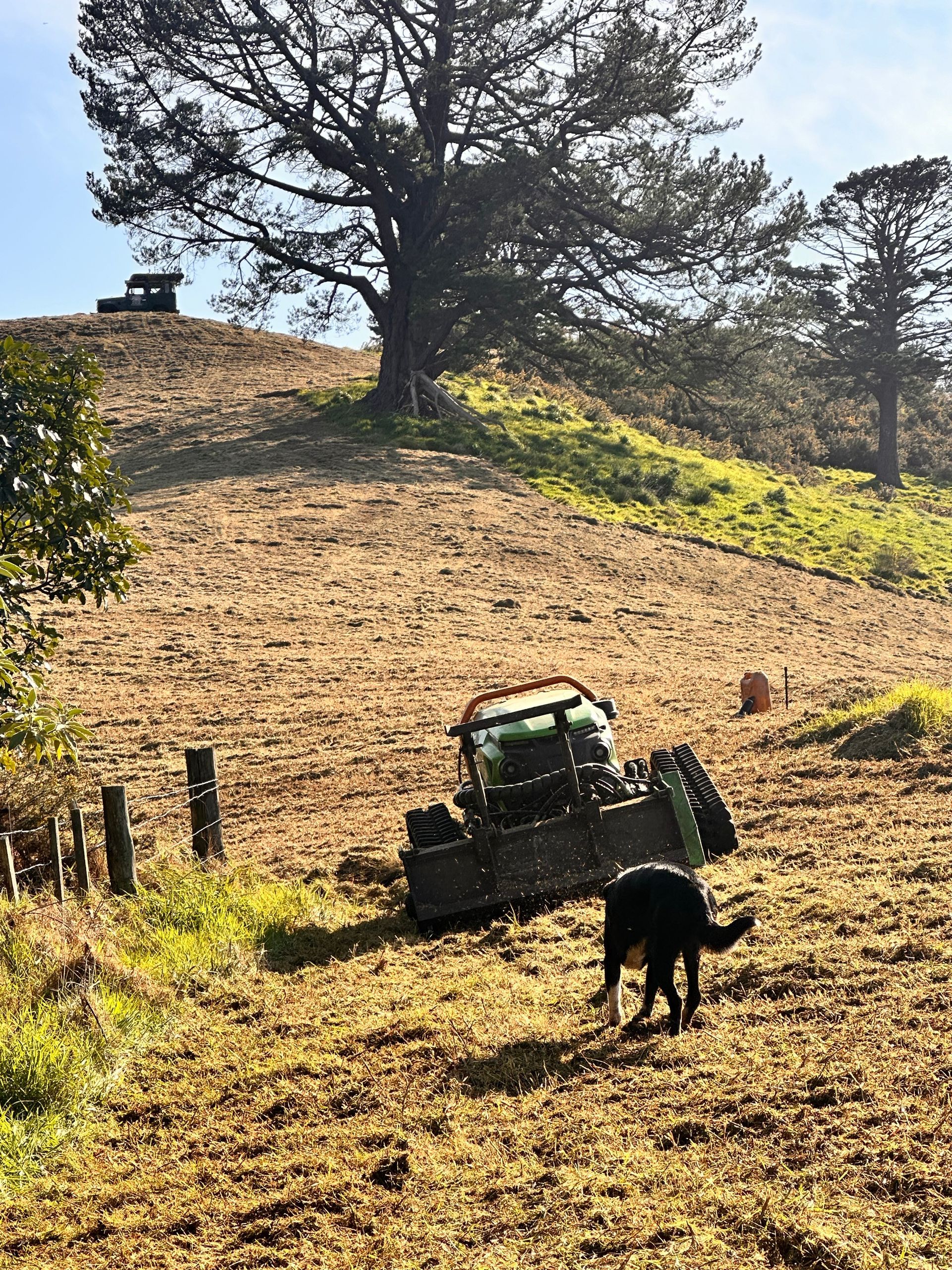
Toi Moana (Bay of Plenty Regional Council) and Waikato Regional Council enforce strict pest management rules on rural land. Under New Zealand's National Pest Plant Accord, woolly nightshade is banned from sale and commercial distribution nationwide. Landowners face mandatory boundary clearance and sustained control obligations to keep infestations from creeping onto adjoining agricultural land and public roads.
Meeting council rules does not require scraping hillsides down to raw dirt. A practical boundary strategy protects the soil while maintaining compliance:
- Verify the boundary buffer distance: Regional rules mandate clearance buffers along shared boundaries to stop outward seed spread. Landowners often ask how council rules affect gorse clearance along boundaries; the exact same buffer distances apply to woolly nightshade to keep adjoining farms and horticultural blocks clean.
- Target mature seed producers first: Prioritise trees over three metres tall sitting on gully crests where wind and birds disperse fruit across fence lines.
- Protect watercourses: Never drop whole tree trunks into running gullies, where rotting timber dams water flow and scours stream banks.
- Maintain soil cover: Satisfying council rules requires removing the weed without destabilising the batter. Using our mechanical invasive weed clearing services processes standing timber into a flat mulch carpet on site, preventing the bare-earth slips that invite council warnings.
Boundary Setback Requirements in the Bay of Plenty
Across the Western Bay of Plenty, rough boundary gullies frequently border intensive kiwifruit or avocado blocks. Regional council biosecurity officers inspect these interfaces closely. Overhanging woolly nightshade prompts formal notices requiring prompt clearance. Leaving mature trees standing along shared fence lines invites complaints and costly forced-clearing orders.Why Scraping Soil with Buckets Fails Compliance
Putting a 13-tonne excavator on a slope to pull trees out with an earthmoving bucket usually backfires. Digging teeth tear into fragile volcanic loam, churning up dormant seeds. The next downpour washes raw dirt down the gully, while light triggers an explosion of new weed seedlings across the slip. Council biosecurity teams look for effective weed suppression, not destabilised banks that silt up local waterways.The Severe Risks of Spray Drift and Manual Chainsaw Clearing
Faced with an overgrown gully, many landowners either hire a spray contractor or send in workers with chainsaws. On steep terrain near water or valuable crops, both methods carry serious operational hazards. Clearing Method Primary Hazards Impact on Stems & Roots Terrain & Safety Limits Foliar Herbicide Spraying Off-target drift damaging kiwifruit blocks; persistent chemical leaching near waterways. Leaves dead standing timber; does not break down root plates immediately. High wind drift risk; leaves dry, hazardous fuel loads across slopes. Manual Chainsaw Crews Severe throat irritation from airborne plant hairs; worker slips on steep volcanic faces. Cuts trunks above ground; untreated root plates coppice rapidly. Dangerous above 30 degrees; manual workers risk severe slips on loose soil. Remote Tracked Mulching Thrown debris managed by exclusion zones; hidden fence wire if unflagged. Pulverises trunks and shatters root plates flush to dirt, stopping regrowth. Operates on slopes up to 60 degrees; operator stands on stable ground with remote control.Herbicide Contamination Near Waterways and Kiwifruit Blocks
Foliar spraying of mature woody scrub relies on active ingredients like triclopyr or picloram. In the Western Bay of Plenty horticultural belt near Katikati, a light spring breeze easily blows herbicide mist into export kiwifruit blocks or flowering avocado canopies. Drift ruins crops and causes vine abort, also not the least angst and friction amongst neighbours. In addition, picloram carries persistent soil residual activity. Spraying it across gully headwaters risks chemical leaching straight into sensitive waterways, breaching regional water plans.Dust Hazards and Respiratory Irritation from Plant Trichomes
Woolly nightshade leaves and branches are coated in dense, star-shaped hairs called trichomes. When workers cut dry wood with chainsaws or scrub cutters, these hairs shatter into a fine, choking dust. Crews exposed to this dust suffer severe respiratory and skin irritation within an hour. Even with particulate respirators, running heavy power tools on a 40-degree bank in warm weather creates dangerous heat fatigue.How Remote Tracked Mulchers Grind Trunks and Root Plates to Ground Level
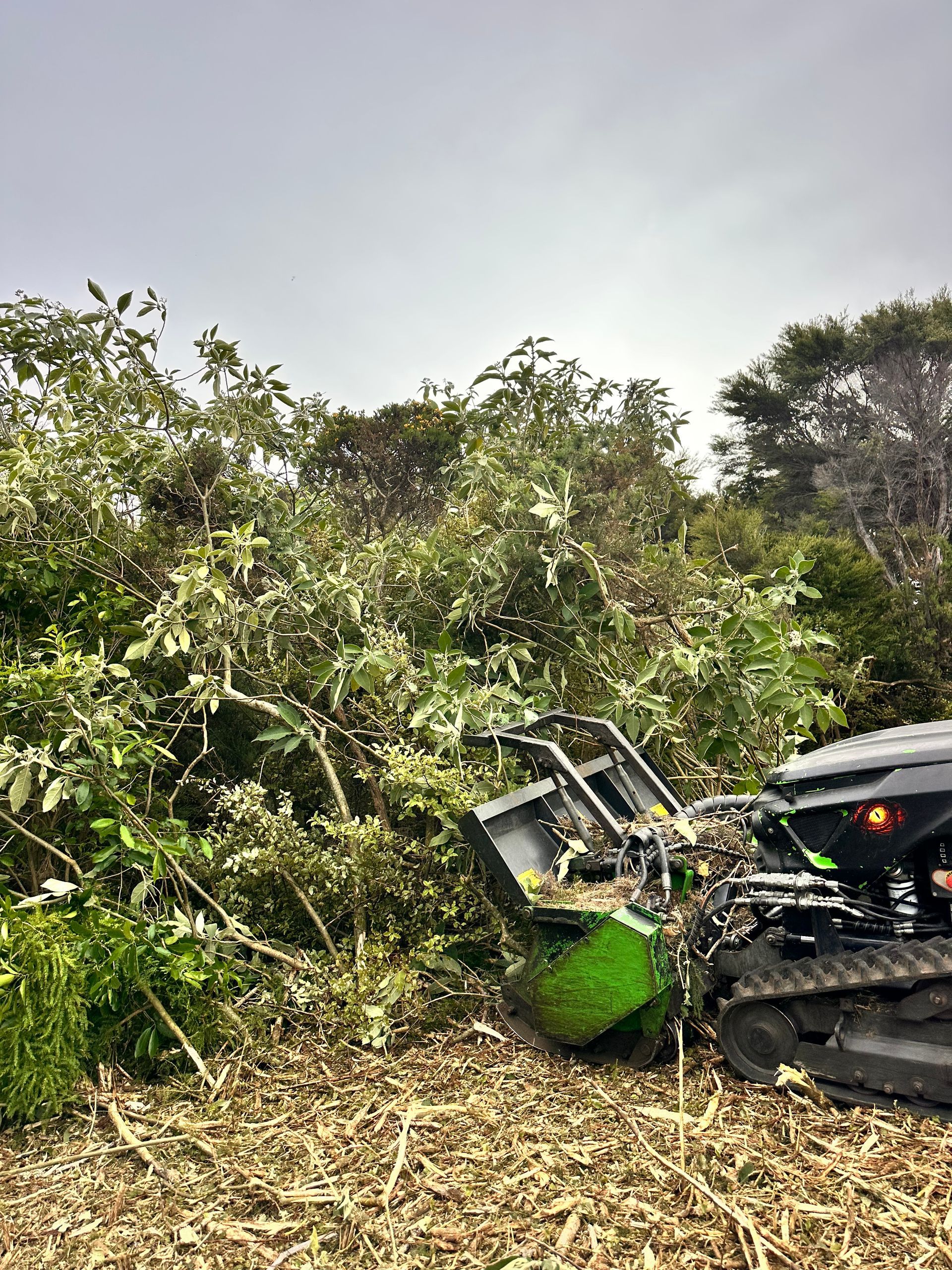
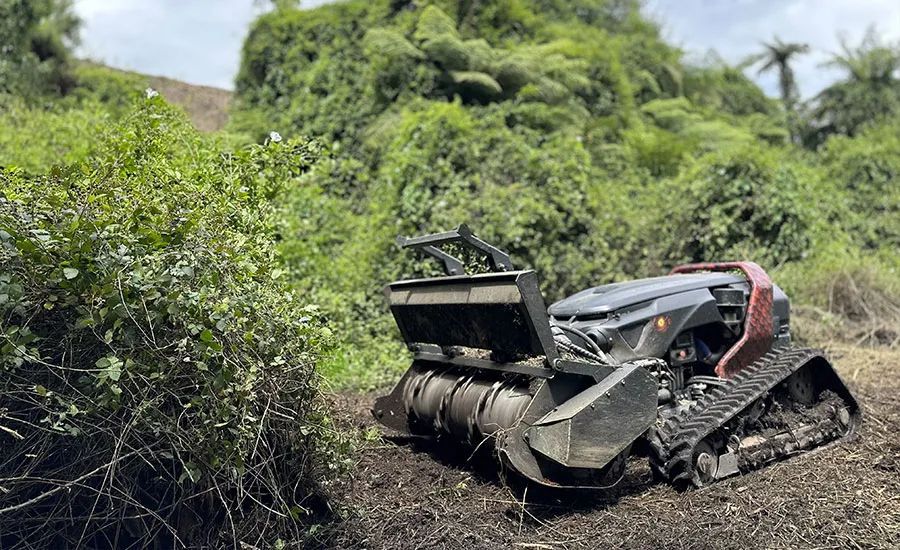
Mulching with tracked equipment eliminates chemical drift and removes manual felling hazards entirely. Rather than sending people into dangerous gullies or driving a tractor over a steep brow, we run remote-controlled machines designed for rough ground.
Our fleet includes two Italian-built MDB LV600 Green Climber remote-controlled machines. Backed by 4,500 hours of hands-on experience running these tracked mulchers on steep New Zealand terrain, we tackle dense scrub safely:
- Site survey and hazard mapping: We can walk or Drone the boundary first to locate hidden hazards.
- Canopy reduction: Machine fells large Nightshade trees easily it then grinds down the branches, converting green foliage and wood into coarse chips.
- Trunk processing: The machine easily mulches the main trunk, using heavy tungsten teeth to shatter the soft, fibrous wood in seconds.
- Shattering the root plate: mulching head operates flush to ground level with a roller as well, grinding the lignotuber and upper root system into small pieces in the topsoil layer.
- Mulch distribution: leaves an organic blanket that protects bare dirt.
Pulverising the Lignotuber to Stop Coppicing
Cutting a woolly nightshade tree with a chainsaw above ground height must be gel pasted. If not the plant forms a swollen root plate packed with dormant buds. Within four weeks of cutting a stem above ground height, that stump pushes out half a dozen aggressive coppice stems. Shattering the root plate at ground level crushes the plant's vascular system.Tackling 50+ Degree Ravines Safely from the Boundary
Steep ravine faces 50 degrees+ present fatal rollover hazards for standard tractors and skid steers. The MDB LV600 Green Climber features expandable rubber tracks, a low centre of gravity, and an engine lubrication system built to maintain oil pressure on extreme angles. Our operators stand safely on stable ground with a remote console, maintaining clear line of sight while staying well clear of the drop zone.Preventing Regrowth and Restoring Ground Cover Across Cleared Slopes
Grinding down standing timber is the first step. Because woolly nightshade seeds stay viable in topsoil for years, long-term control requires ground remediation. The mulch produced by an MDB LV600 creates an immediate protective shield. Grinding the trunk leaves a fibrous mat between 50 mm and 100 mm thick across the contour. Woolly nightshade seeds require light to germinate; burying them under heavy mulch blocks sunlight and stops them pushing through. Soft nightshade timber holds water like a sponge, decomposing into stable topsoil instead of leaving tangled heaps that harbour vermin. To suppress weed competition permanently, you may want to try these recovery steps:- Oversow: Within two to four weeks of clearing, broadcast tough pasture grasses over the mulch blanket to establish roots before weed seeds wake up.
- Hand-pull isolated seedlings: In late summer, walk the batter. Any lone seedlings that push through the mulch can be pulled easily while the ground is damp.
- Native revegetation: If the gully is being retired from grazing, plant hardy native species like mānuka and karamū directly through the mulch blanket to create shade.
Frequently Asked Questions
Can mulching heads grind mature blackberry and woolly nightshade down to soil level?
Yes. High-torque mulching heads equipped with fixed tungsten teeth easily shatter mature woolly nightshade trunks and thick blackberry brambles. The rotor grinds standing timber down to topsoil level, pulverising the lignotuber so the plant cannot push out coppice shoots.Does mechanical mulching prevent gorse from growing back immediately?
Mechanical mulching completely destroys standing plants and shatters the root collar, stopping immediate stump regrowth. Dormant seeds in the soil may germinate if light reaches the dirt, so establishing a thick mulch layer followed by aggressive grass oversowing is essential to suppress new seedlings.How do regional council pest management rules affect boundary clearance on rural properties?
Regional pest management plans across the Bay of Plenty and Waikato require landowners to clear declared pest plants within a set distance from shared boundaries. These rules stop invasive seeds from spreading onto neighbouring agricultural land and clean horticultural orchards.How do you clear gorse on steep terrain without using chemical sprays?
The safest non-chemical option is using remote-controlled tracked mulchers built for extreme slopes 50+degrees. The machine grinds scrub and root collars flat to the dirt, producing an organic mulch mat that protects the soil surface without risking chemical drift into waterways.What is the best time of year to mulch invasive weeds in the Bay of Plenty?
Anytime of year is a good time to clear your land. October/November is a great window for clearing woolly nightshade and gorse across the Bay of Plenty for a few reasons Mulching before spring flower clusters set seed breaks the reproductive cycle, removes summer fire hazards, and lets oversown pasture establish before dry weather arrives.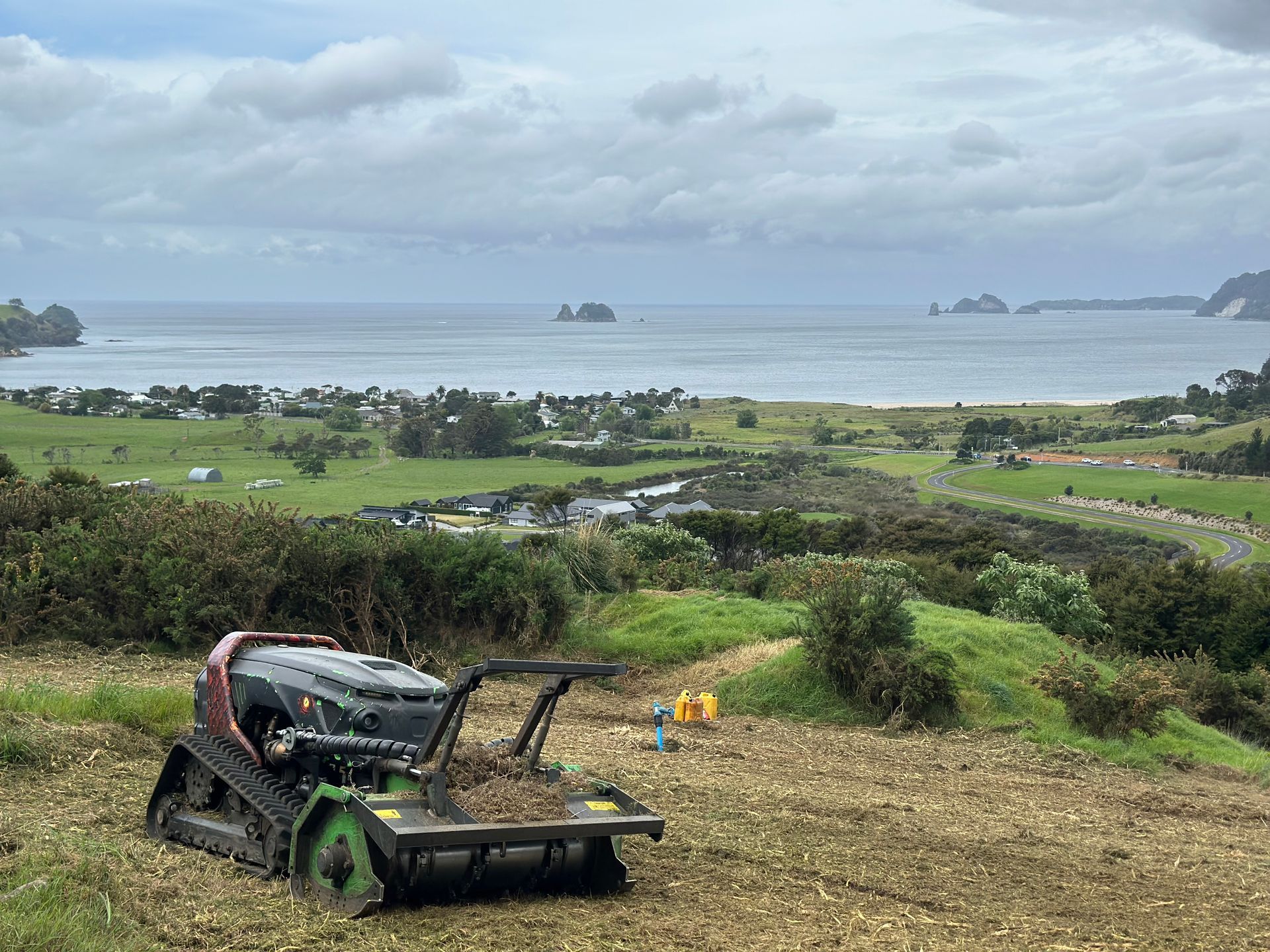
Mechanical mulching clears gorse and blackberry on steep slopes without herbicide, and the ground and follow-up decide how well the clearing holds.
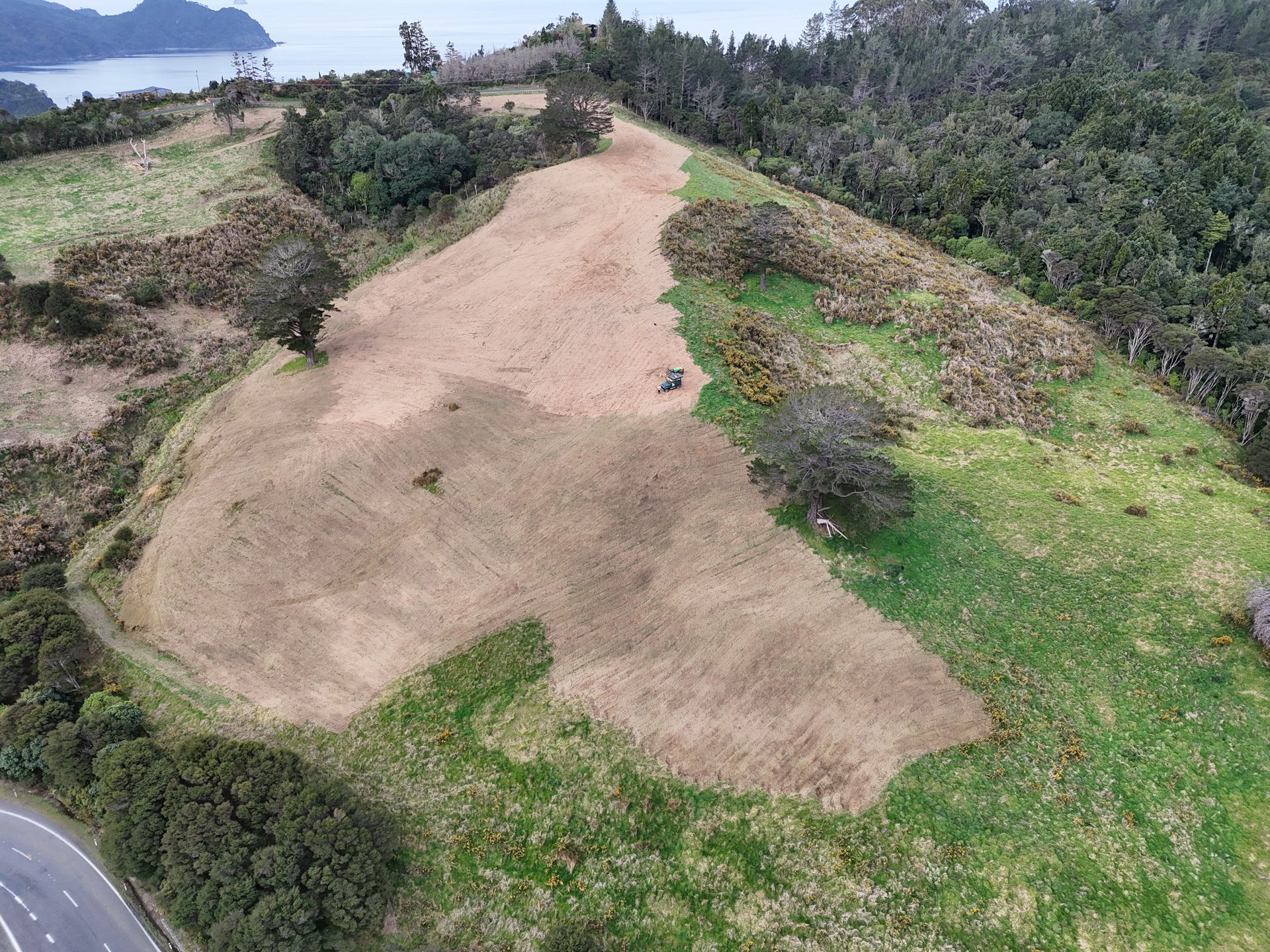
Published NZ price guides put tree felling at $350 to $5,000+ including GST, and steep banks often sit higher. Here is what changes the price and what to confirm in a quote.
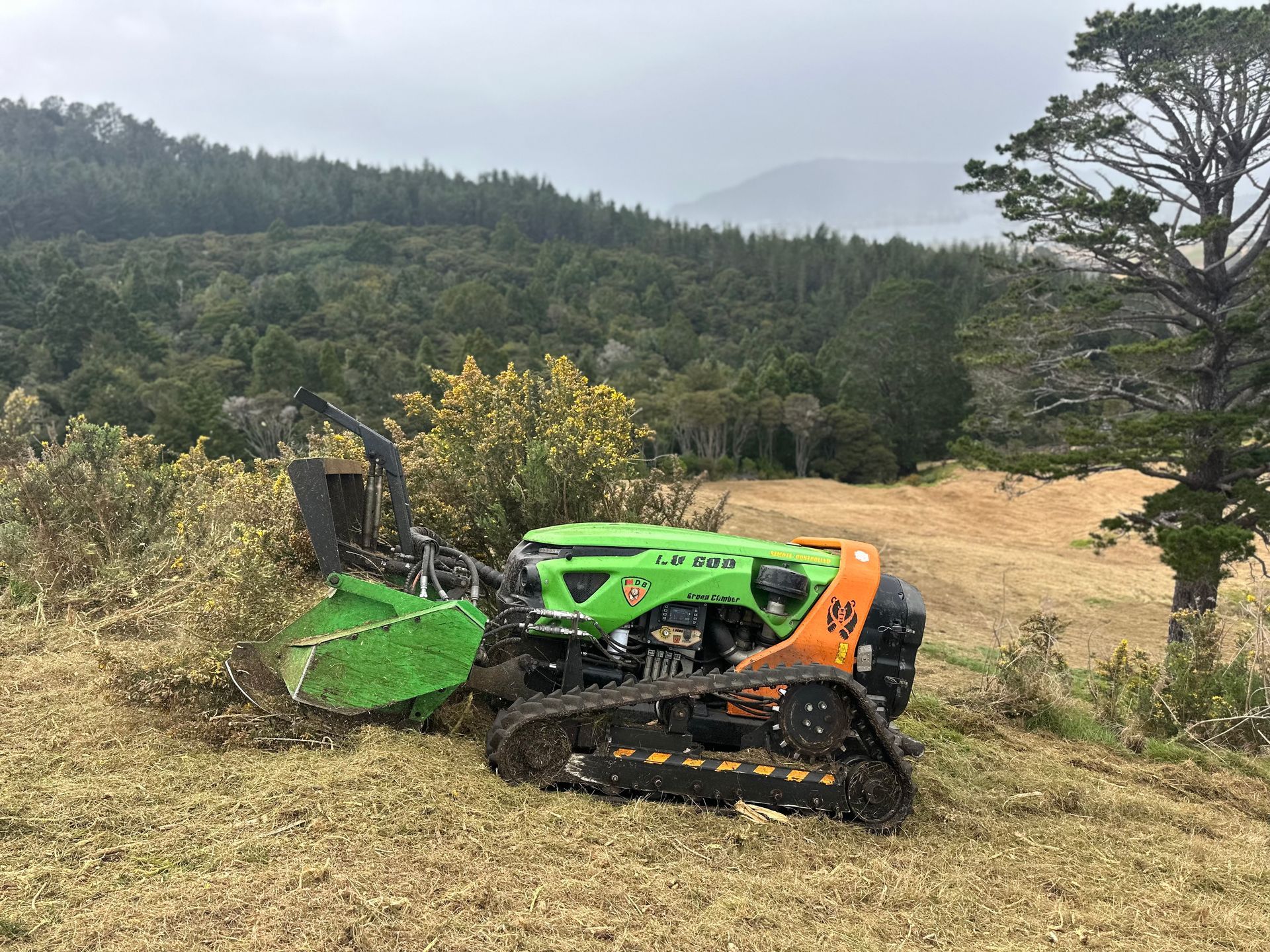
Understand when standard 4WD farm tractors reach dangerous slope limits and why tracked slope mulchers are needed for steep Waikato sidlings.
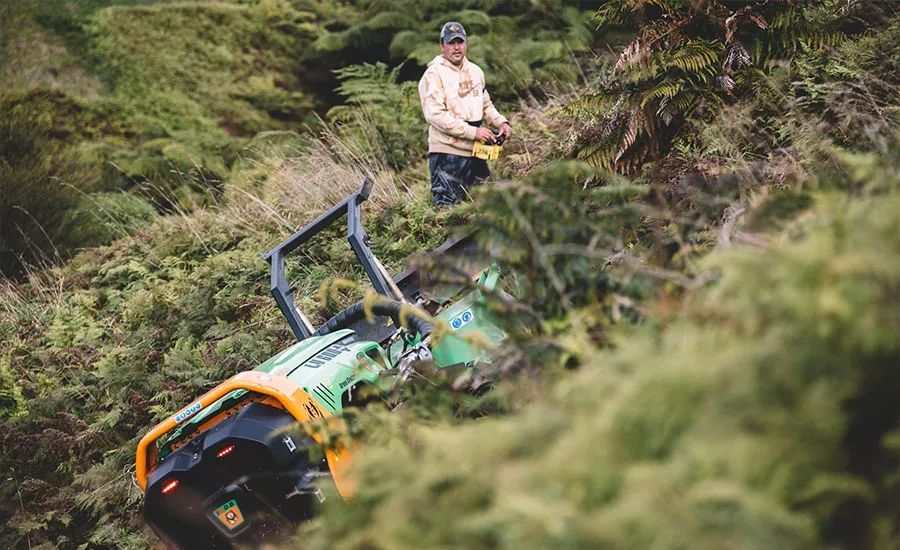
Learn how to protect vulnerable native tree ferns while clearing invasive gorse and blackberry across steep North Island gullies.
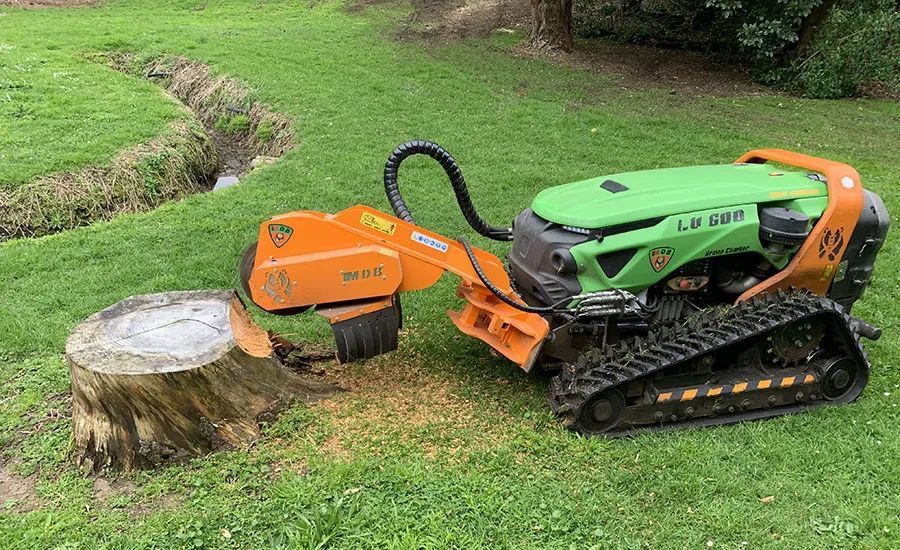
A practical guide to stump grinding costs, machine requirements, and site preparation for steep banks and gullies across Tauranga.
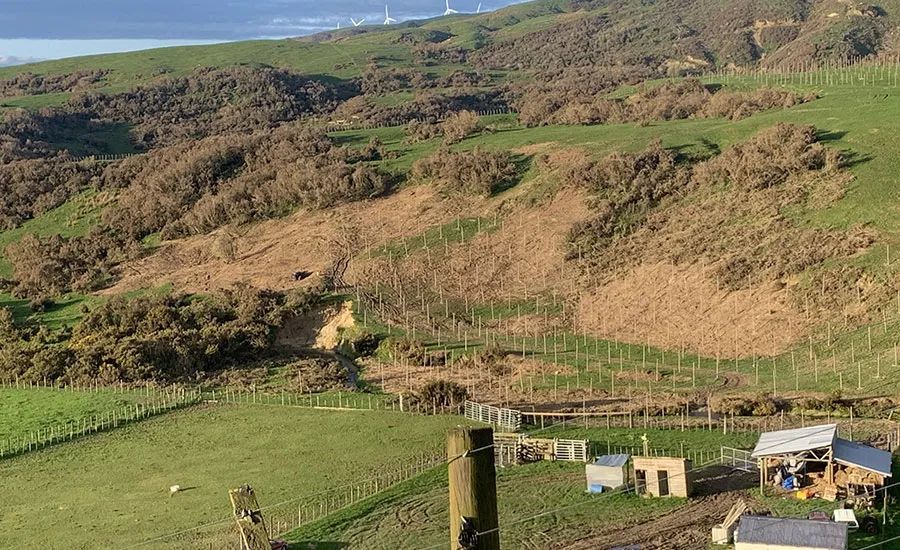
Standard tractors cannot safely mow slopes beyond 20 degrees. Here is how remote-controlled tracked mulchers pulverise gorse and rank growth to reclaim steep hill paddocks.
Standard Tauranga lawn mowers face severe rollover hazards on slopes over 20 degrees. Here is how remote-controlled tracked mulchers clear steep lifestyle banks safely.