
Stump Grinding Tauranga: Costs on Steep Banks in 2026
No Mans Land Mowing • October 11, 2026
Stump grinding on steep Tauranga banks costs between $180 and $280 per hour for specialized tracked machinery, or $1,200 to $2,200 for a full day on difficult gullies. Here at No Mans Land
we are definately at the lower end of this hourly rate scale. Please call or text for a current hourly rate. Unlike flat suburban sections quoted at flat rates per stump, hillside work across the Western Bay of Plenty is billed on mobilization and machine hours because anchoring on 30-to-50-degree inclines dictates job duration. Slope gradient, volcanic ash subsoil, and timber species drive those hours and determine overall contractor pricing.
When walking a steep slope behind a house in Bethlehem, jagged pine stumps left behind after tree felling make foot traffic dangerous and stop property maintenance. Standard suburban operators often turn these jobs down because their gear cannot access the face. Getting an accurate quote for extreme ground requires looking at machine setup and timber density rather than counting tree heads.
What Stump Grinding Costs on Steep Tauranga Terrain
On steep Tauranga banks, forget flat per-stump quotes. Pricing is driven by mobilization and running hours because anchoring machinery and cutting a root plate on a 40-degree incline takes far longer than running across a flat lawn. Challenging terrain requires continuous winch positioning to work the cutting wheel across the root flare safely.Hourly rates versus flat per-stump pricing
Flat rates work fine when a contractor wheels a walk-behind machine through an 800mm boundary gate onto flat turf. On residential sections, shows standard suburban equipment requires 750mm to 900mm of flat clearance. That system falls apart on a 35-degree gully slope. Most specialized contractors charge $180 to $280 per hour, or day rates from $1,200 to $2,200 plus GST. Here at No Mans Land we are definately at the lower end of this hourly rate scale. Please call or text for a current hourly rate. This rate covers high-depreciation tracked equipment, heavy tooth wear, and the skill required to operate on slopes without tearing up the hillside. We handle these environments through our specialized stump grinding and land clearing services.Mobilization and transport across the Western Bay
Mobilization covers float trailers, pilot vehicles where required, and site establishment. In town areas like central Tauranga, travel fees sit between $100 and $180. Outlying properties in Katikati face transport fees between $200 and $350. Delivering tracked machines safely down tight rural driveways takes dedicated plant trailers. Securing gear on steep access tracks adds setup time before the cutter head spins.How Slope Gradient and Volcanic Soil Dictate Machine Hours
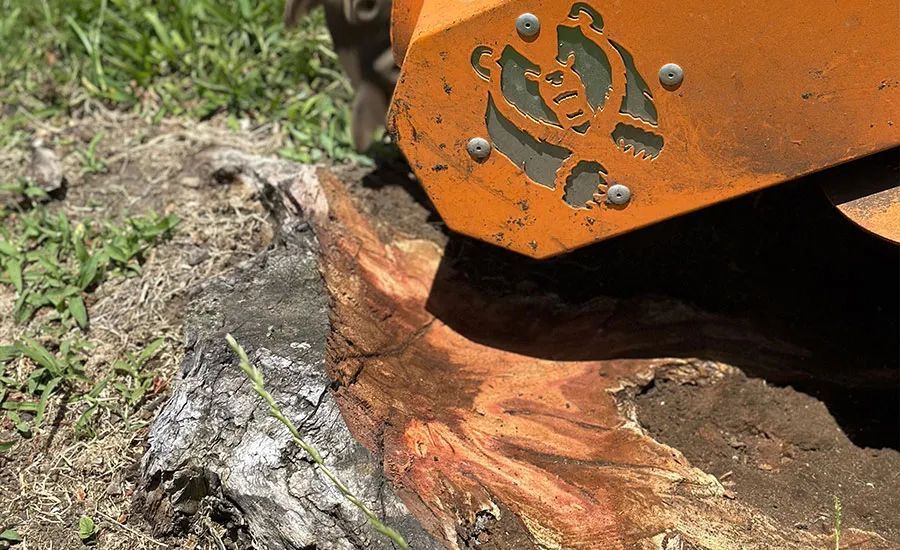
Slope angle and soil structure dictate cutting speed. Standard wheeled or tow-behind stump grinders have a high center of gravity that slips the second they hit damp Western Bay volcanic ash soils. Putting a manual operator behind a wheeled machine on a 35-degree gully slope is an extreme rollover hazard that no site safety plan should permit. Anyone claiming a standard wheeled stump grinder is safe on a 40-degree damp grass bank is ignoring severe operator rollover risks.
Why wheeled grinders fail above 20 degrees
Stump grinding equipment works on steep slopes and gullies only when configured on low-center-of-gravity tracks. Standard commercial wheeled units lose directional traction past 20 degrees. When a heavy spinning cutting wheel bites into wood on a slope, the rotational torque tries to kick the machine sideways. Without wide steel-embedded rubber tracks gripping the bank, the grinder slides downslope, risking machine loss or operator crushing. Much like how steep lifestyle properties face dangerous lawn mowing rollover hazards on banks, tree grinding equipment requires positive mechanical traction to stay planted. Tracked units operated by No Mans Land provide that required grip on challenging contours.Managing saturated spring subsoils without bank slips
Mid-spring across the Bay of Plenty brings saturated subsoils in gully bottoms beneath deceptively dry surface grass. If machinery lacks low-ground-pressure tracks, it will churn the slope into a slide instead of maintaining positive traction across the contour. Volcanic ash layers lose cohesion rapidly when churned by spinning wheels. Operating on these slopes requires equipment that distributes operating weight over broad contact patches, allowing the cutter wheel to shave the stump without peeling the hillside apart.Estimated Project Costs Across Common Steep Land Scenarios
Every bank is different, but machine hours and site access create predictable pricing bands. We offer a 10-15 min windoe where client can view the machine in action on site and give us the "Thumbs Up" or "Thumbs down" with which we shake hands and head home no cost to the client. This is both 1. An act of good faith and allowing Client a 1st hand view of machines 2. A real belief from No Mans Land that our machines will be able to "Do the talking for us" once on site. Wood species dictates machine hours and tooth wear. Soft Radiata pine cuts down quickly into fine chip, while dense eucalyptus chews through cutting teeth and can double the machine time on a single stump. These are all things that Clients understand but we will also explain on site as well.Grinding depth for grass cover versus native replanting
Only grind down to just below the surface if you are just establishing grass cover or replanting shallow native shrubs. Deeper if job requires, this can be an added cost if not physically required. Chasing deep taproots past 400mm on a steep incline simply adds billable machine hours without providing structural benefit to the landowner.Tracked Remote Grinders Versus Heavy Excavators on Escarpments
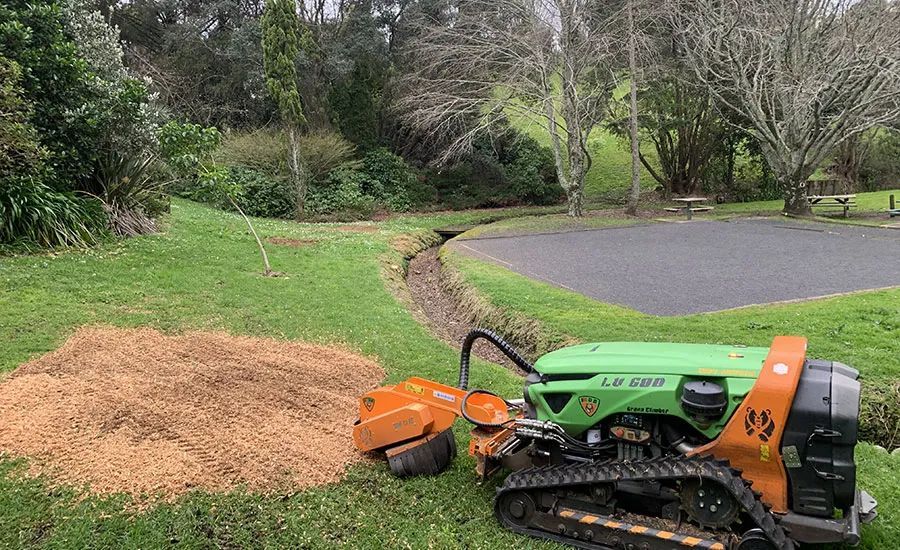
Landowners often wonder if a standard farm digger with a thumb or ripper tooth is the fastest way to deal with hillside stumps. On steep Tauranga escarpments, this approach frequently backfires.
Geotechnical damage from heavy digger tracks
Bringing a 12-tonne excavator onto a steep coastal or volcanic escarpment to rip stumps out often triggers the exact hillside slip you were trying to prevent. Heavy diggers shear the fragile subsoil structure and rip out anchoring root networks, leaving open slip planes exposed to spring rains. Tearing an entire root wad out leaves a cavernous void that catches overland stormwater runoff, funneling water directly into sensitive volcanic layers.Low-ground-pressure robotic grinding advantages
Rubber Tracked remote-controlled machines eliminate this ground destruction. Rather than ripping roots from the earth, tracked units shave the stump down in place, turning the root core into mulch while leaving the deeper interlocking root system intact underground. Those subsurface roots slowly decompose over several years, holding the soil matrix together while newly planted vegetation establishes. For landowners dealing with difficult terrain, pairing stump grinding with remote-controlled paddock mulching allows complete bank management without setting foot on dangerous inclines. Purpose-built machinery from No Mans Land protects bank integrity throughout the job.Hidden Site Hazards That Add Unexpected Machinery Hours
The fastest way a landowner wastes money is by making the contractor clear hidden fencing wire and volcanic rocks before the cutting wheel can even turn. Clients Walking the bank, flagging hidden hazards, and clearing debris away from root flares ahead of time cuts billable machinery hours immediately.Buried fencing wire, waratahs, and volcanic rocks
Old lifestyle block boundaries often have ancient No. 8 wire embedded directly into tree trunks. When a stump grinder tooth running at high RPM strikes high-tensile wire or a buried steel waratah, it shears the Tungsten-carbide tips instantly. Replacing a set of shattered teeth mid-job stops work tooling replacement fees to your final invoice may result, this is just a pre work conversation of possible things that may arise, if its driver error or lack of adhering to client information then costs are all on No Mans Land.Locating private irrigation and utility lines
Always locate private boundary irrigation and drainage pipes before touching a stump on a residential slope. In lifestyle orchard corridors around Katikati, buried lateral pipes and underground power cables often run along boundary shelterbelts. As outlined in the MoneyHub consumer guide to Tauranga arborists, hiring contractors carrying full public liability insurance ($2,000,000 to $3,000,000) is standard practice in New Zealand to protect landowners against accidental utility strikes. No Mans Land mowing carries the appropriate Public Liability insurances for these "hopefully never" incidencesHow to Prepare Your Hillside Section to Reduce Contractor Costs
You can cut machine hours and minimize your final invoice by carrying out basic groundwork before the crew arrives on site. Clear the root flare with a hand mattock, scraping away surface soil and blackberry so the operator can inspect the cutting zone immediately. Check the trunk and pull any old fencing wire or staples to avoid costly tooth replacement charges. Finally, spray-paint or flag any private water pipes and irrigation lines running through the bank. Confirming these access details beforehand helps No Mans Land get straight to work without delays. Never pay to haul stump grindings away from a steep hillside section. Leaving the processed wood chip scattered over the cut bank creates an immediate erosion blanket that suppresses weed flush and stabilizes exposed volcanic topsoil through drying summer winds.Frequently Asked Questions
What is the typical hourly rate for steep slope stump grinding in Tauranga?
Tracked machinery operating on steep or difficult ground generally runs between $180 and $280 per hour, plus a regional mobilization fee. This rate reflects the capital cost, machine maintenance, and ground-engagement tooth wear necessary to tackle hazardous hillside terrain. (Currently as at 14/10/26 No Mans Land mowing is $210+gst per hour.)Can stump grinding equipment be used safely on 40 to 50 degree banks?
Standard wheeled stump grinders become dangerous rollover hazards on slopes over 20 degrees, especially on damp ground. Remote-controlled tracked grinders operate safely on steep inclines up to 50 to 60 degrees while keeping operators positioned securely away from the hazardous slope face.How deep should tree stumps be ground on a hillside?
Grinding 150mm to 200mm below the surface is ideal for re-grassing and maintaining slope stability. Going deeper than 300mm on a steep bank can undermine soil structure, trigger erosion pockets, and increase billable machine hours.Should I haul away the wood chips after grinding stumps on a slope?
No, leaving clean wood mulch on steep banks saves significant transport and landfill fees while protecting exposed soil. The wood grindings create an immediate erosion barrier that retains moisture and prevents topsoil loss during dry Western Bay summers.Can heavy excavators be used instead of stump grinders on Tauranga escarpments?
Using 12-tonne excavators to rip out stumps on sensitive volcanic ash escarpments often causes slips by shearing fragile subsoil structure. In-situ grinding shaves the stump down safely without tearing out the underlying root matrix that anchors the slope.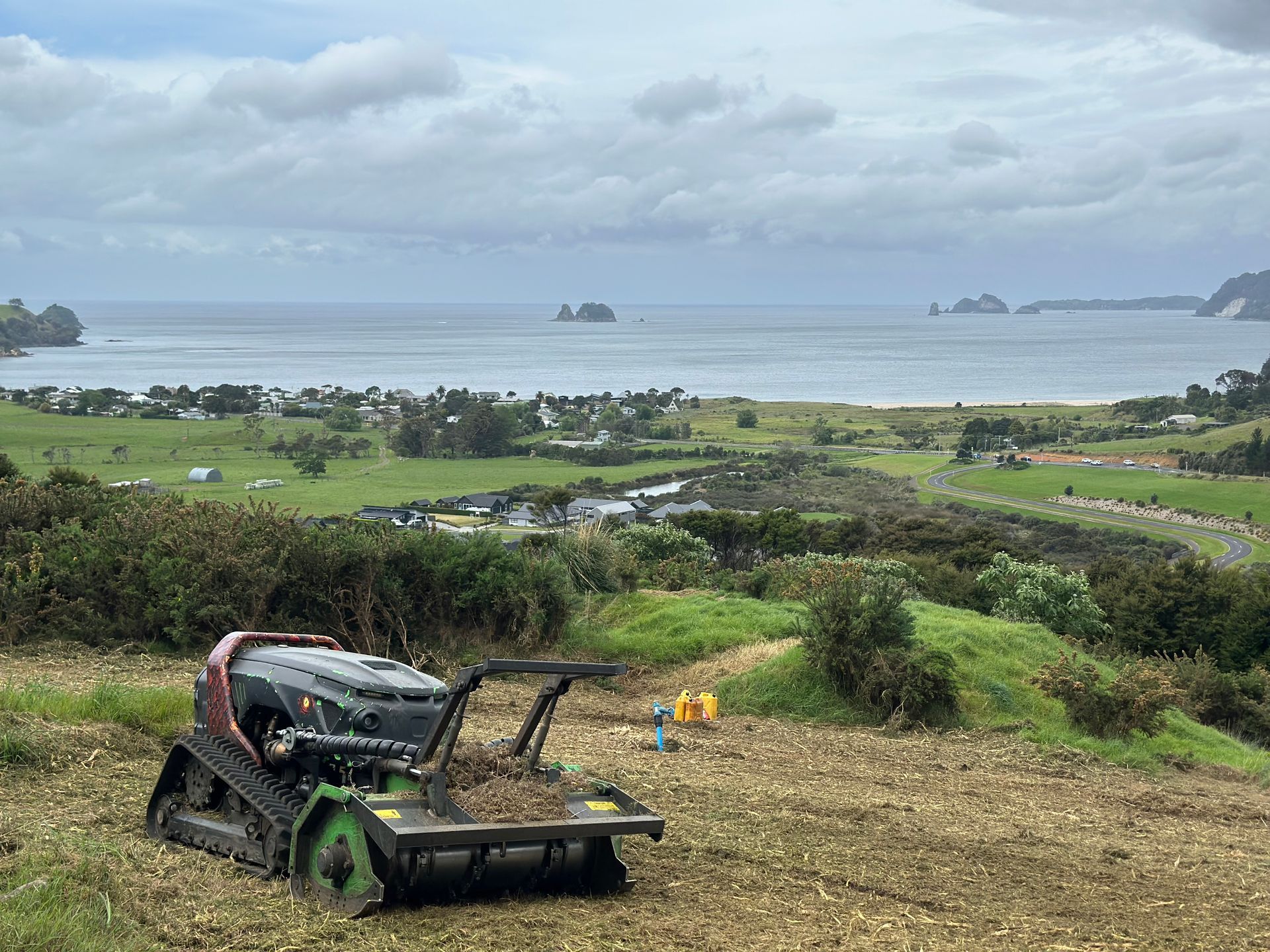
Mechanical mulching clears gorse and blackberry on steep slopes without herbicide, and the ground and follow-up decide how well the clearing holds.
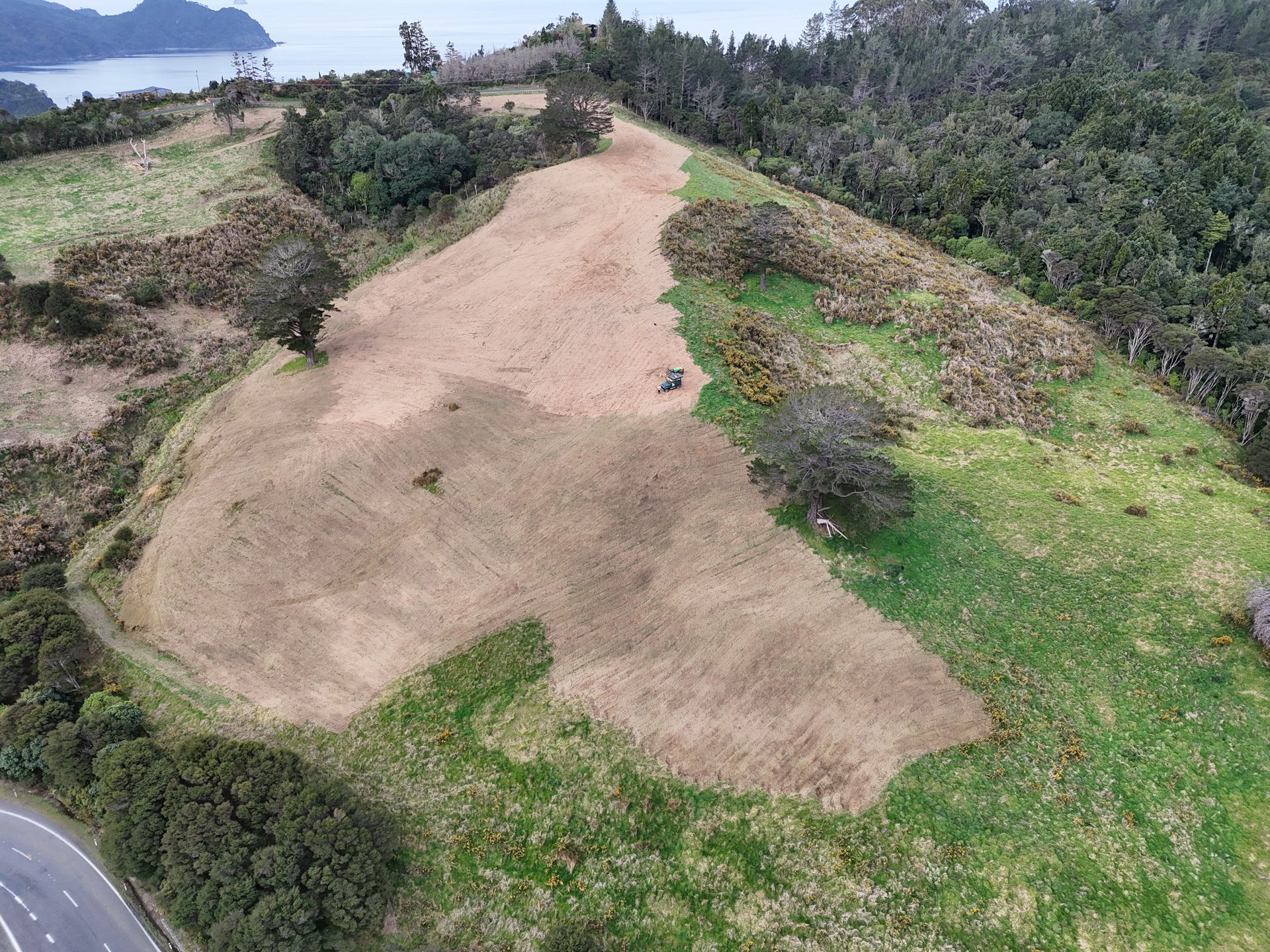
Published NZ price guides put tree felling at $350 to $5,000+ including GST, and steep banks often sit higher. Here is what changes the price and what to confirm in a quote.
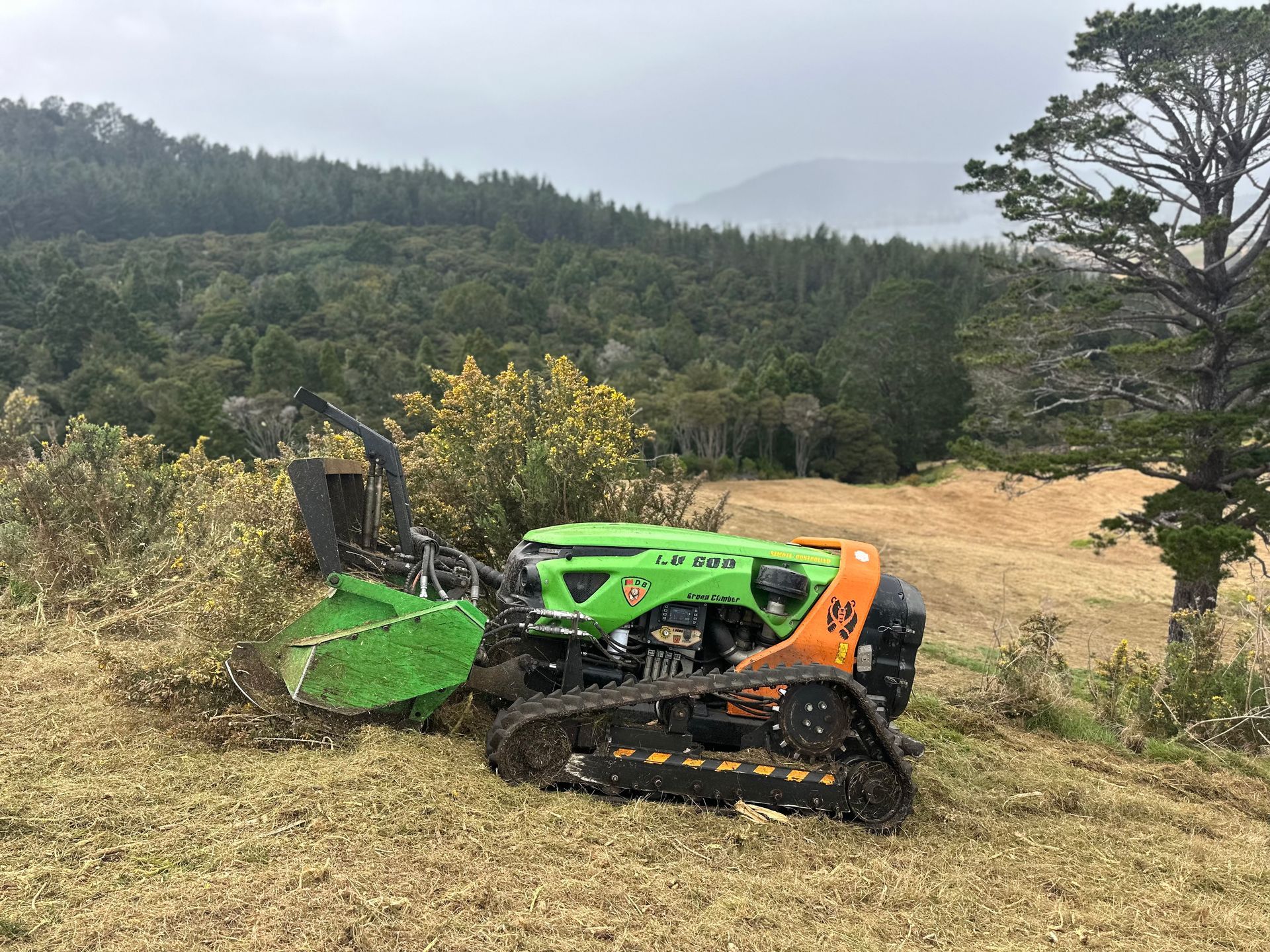
Understand when standard 4WD farm tractors reach dangerous slope limits and why tracked slope mulchers are needed for steep Waikato sidlings.
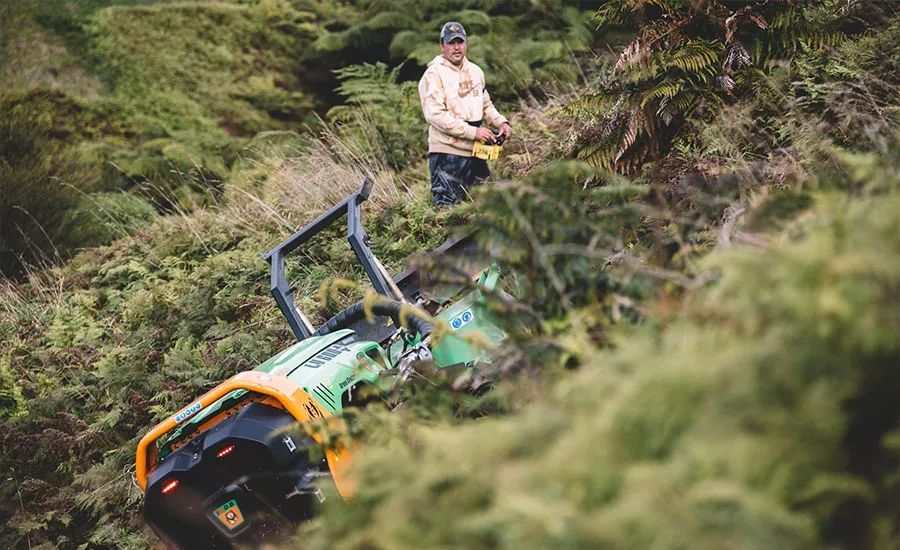
Learn how to protect vulnerable native tree ferns while clearing invasive gorse and blackberry across steep North Island gullies.
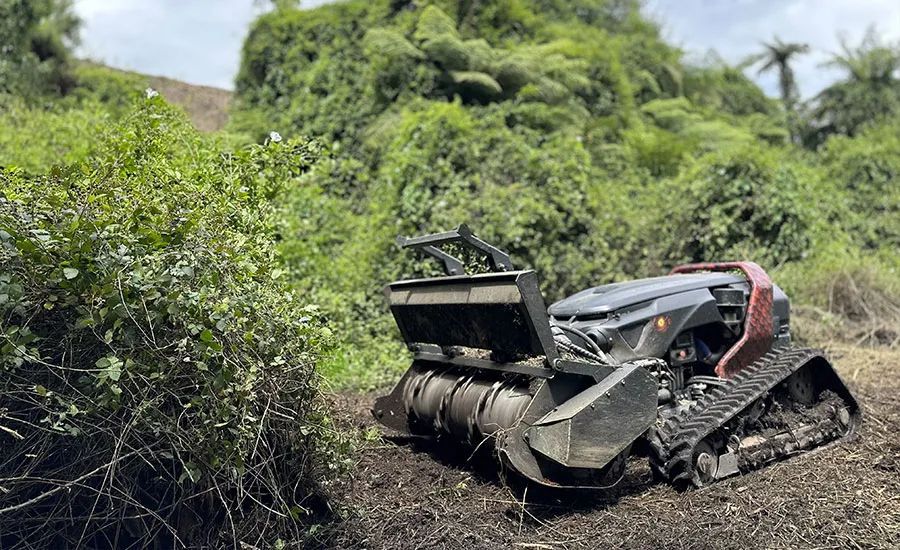
Stop invasive woolly nightshade from taking over steep gullies and risking spray drift into nearby orchards. Learn how remote mulchers shatter root plates flush to the ground.
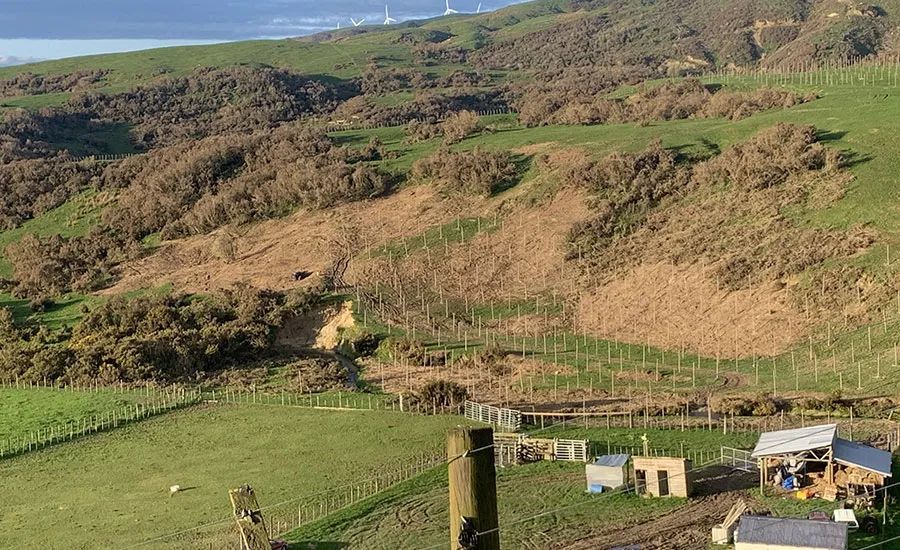
Standard tractors cannot safely mow slopes beyond 20 degrees. Here is how remote-controlled tracked mulchers pulverise gorse and rank growth to reclaim steep hill paddocks.
Standard Tauranga lawn mowers face severe rollover hazards on slopes over 20 degrees. Here is how remote-controlled tracked mulchers clear steep lifestyle banks safely.