
Native Trees: How to Clear Weeds on Steep Slopes in 2026
No Mans Land Mowing • October 12, 2026
Native trees survive invasive weed clearing as long as their fibrous trunks and central apical crowns stay intact. Because native trees lack true secondary wood, heavy blackberry blankets can snap fronds under sheer weight or rot the outer root mantle. At No Mans Land Mowing, we use remote-controlled tracked mulchers for steep slope clearing
to grind woody weeds very close to standing native ferns/trees without tearing their aerial roots or destabilising wet slopes.
October and early November brings a heavy spring flush across the Western Bay of Plenty and Waikato. This surge in rainfall accelerates blackberry and gorse growth, pulling down mature fronds and burying emerging crowns before landowners can intervene. Mechanical clearing liberates these plants quickly, dropping the weed canopy without the drift risks of chemical sprays or the soil tearing caused by heavy diggers.
How do invasive weeds threaten native trees in steep gullies?
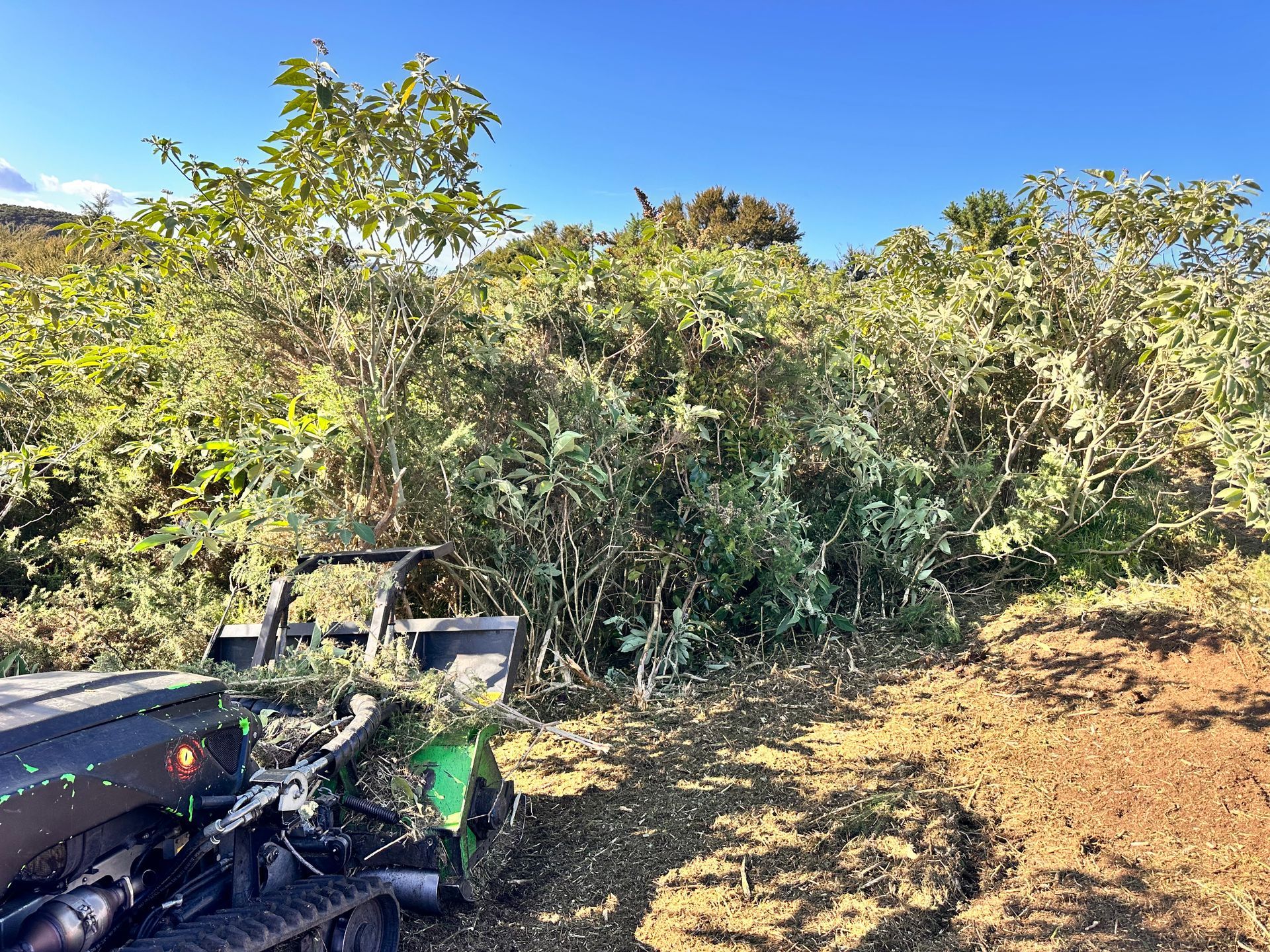
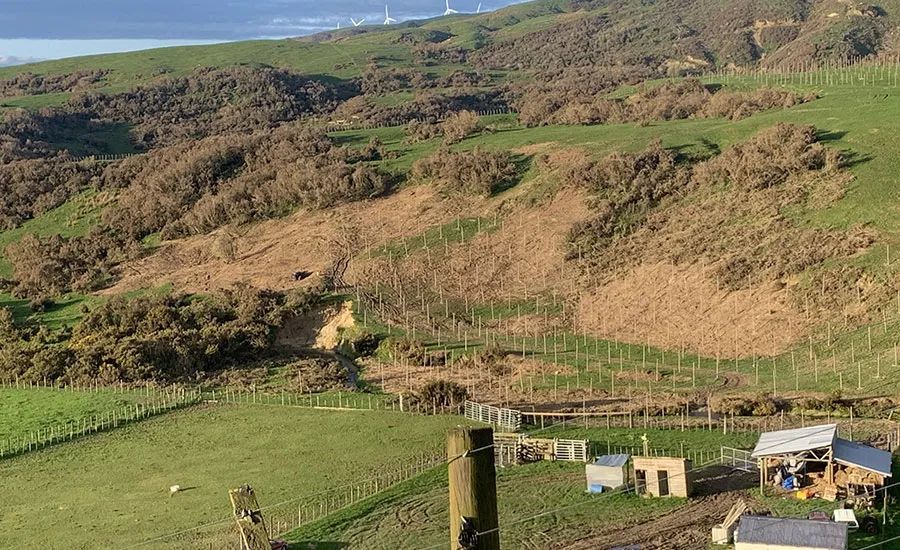
Dense gorse and climbing blackberry dominate damp, unmanaged hillside gullies across the North Island. When left unchecked, these fast-growing weeds overtop the understory, locking native trees into a struggle for survival. At No Mans Land, we have found that leaving aggressive blackberry blankets to smother steep native gullies causes far more permanent ecological destruction than the calculated risk of mechanical brush clearing.
Frond collapse under heavy climbing blackberry
Blackberry canes use backward-pointing prickles to anchor into surrounding vegetation and climb toward canopy light. As these brambles scale native trees, they interweave through the frond stems. During spring flushes, the added weight of wet vine foliage places heavy downward tension on mature fronds, snapping them at the base long before they complete their natural multi-year growth cycle.How can you identify ponga, mamaku, and whekī before clearing?
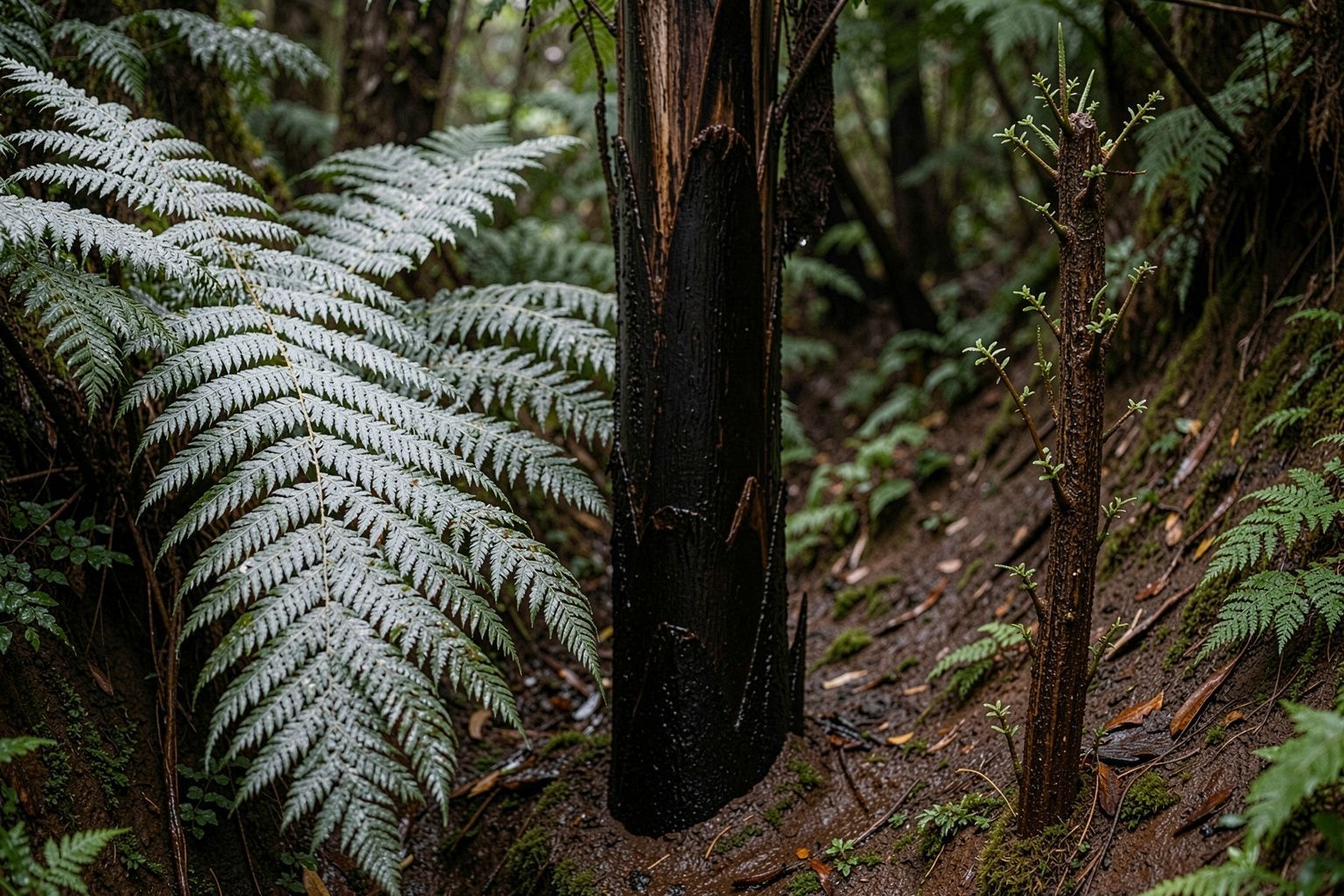
Effective native restoration clearing requires identifying native species on sight so machinery operators can adapt clearance margins to their specific biology. According to the botanical guides documented by Te Papa, New Zealand hosts several core native tree varieties, each displaying distinct trunk structures and survival responses.
Silver fern or ponga identification and canopy habit
Cyathea dealbata is instantly recognised by the silver-white undersides of its mature fronds. As noted in morphological descriptions from NZ Native Plants(2025), ponga acts as a primary slope-stabilising understory species along shaded hillsides. It grows from a single terminal crown. Any mechanical damage that crushes or severs that central growing point will kill the entire specimen.Mamaku height and solitary crown vulnerability
Sphaeropteris medullaris is New Zealand's giant black native tree, reaching heights over 10 metres. Its trunk features prominent hexagonal stem scars where old fronds have detached. While its thick fibrous trunk acts as a vital moisture-retaining host for native epiphytes like Tmesipteris tannensis , mamaku shares the ponga's vulnerability: it relies entirely on its single crown. If heavy falling limbs crush the apical core, the plant cannot form epicormic sprouts to recover.Whekī trunk budding and vegetative resilience
Dicksonia squarrosa displays unique survival traits among common native ferns. Morphological profiles from the Port St. Lucie Botanical Gardens show that whekī can grow up to 20 feet tall, with fronds reaching 5 to 12 feet across and annual growth rates up to 12 inches. It can sprout from adventitious buds along its trunk and spread through underground rhizomes. Even if smothering weeds snap the main stem, whekī can push fresh lateral shoots along the intact fibrous column once weed competition is cleared away.Why do excavators and chemical sprays fail near native ferns?
Standard land clearing techniques consistently prove destructive when deployed near native bush margins. Gully restoration demands methods that eliminate competing scrub while leaving sensitive indigenous plants unharmed.Track gouging and shallow root plate destabilisation
Heavy excavators have no place working tight native restoration lines because their churning steel tracks rip apart the delicate root zones native trees rely on for structural stability. Native ferns feature shallow, wide-spreading root systems anchored within the top few inches of topsoil. When a 12-tonne to 20-tonne digger slues across damp 50+ degree slopes, it tears away surface root plates, opening deep slip planes that lead to hillside erosion during subsequent rainstorms. For persistent invasive weed problems on sensitive banks, managing non-native wood without soil disturbance is essential, as detailed in our guide on woolly nightshade tree removal.Chemical spray drift onto living fibrous trunks
Broadcasting chemical herbicide across damp gully margins is reckless land management that routinely kills the native trees landowners are attempting to save. Chemical overspray also risks toxic runoff into sensitive riparian waterways at the gully floor.How does remote mulching protect delicate native tree trunks?
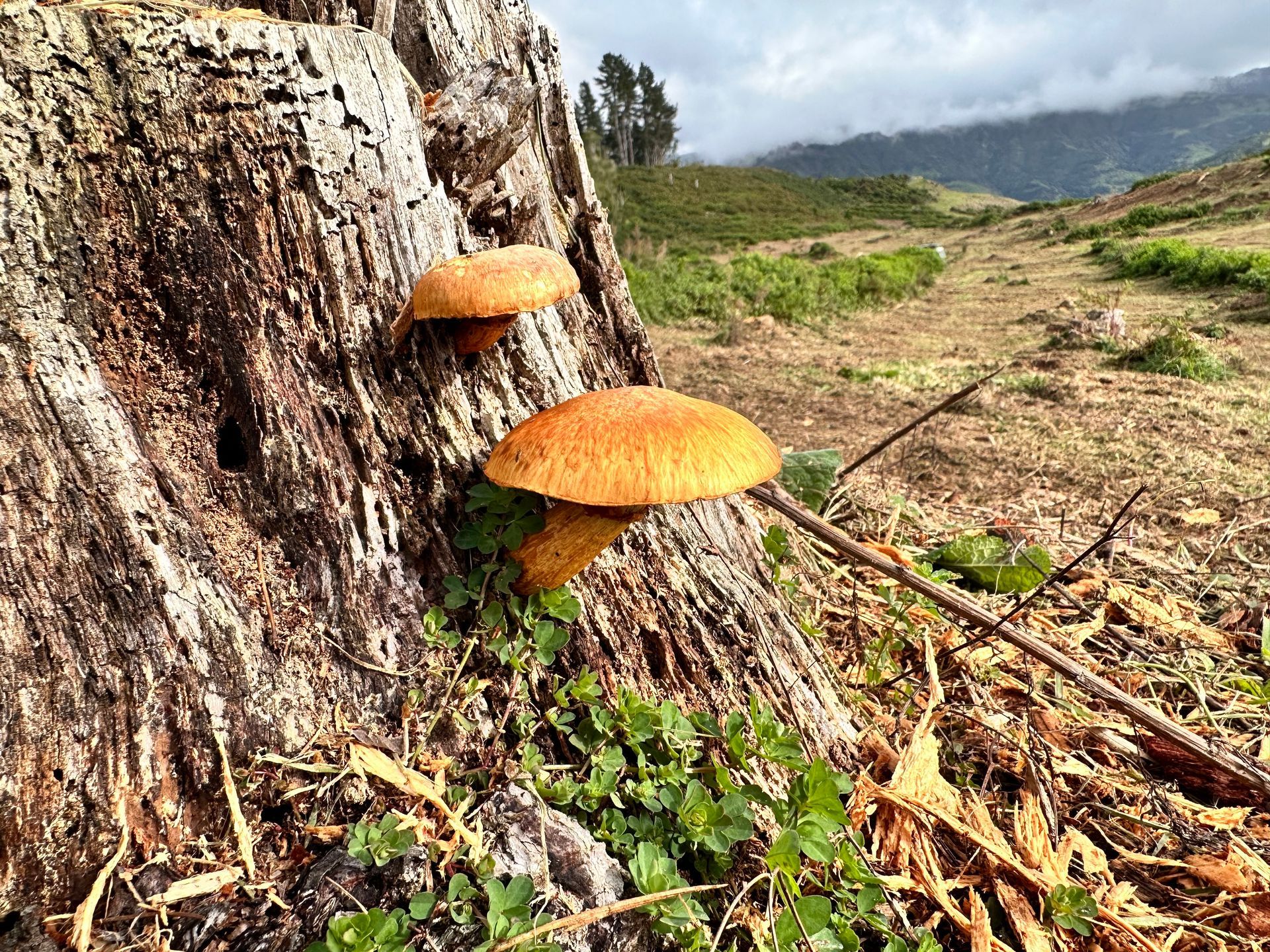
Precision clearing depends on low-impact machinery operated with precise control. Tackling dense, vine-choked gorse on steep slopes of 50+ degrees from inside a standard tractor cab is an unacceptable rollover hazard that no operator should risk. Remote-controlled tracked machines resolve both safety hazards and plant protection challenges simultaneously.
Protecting the external fibrous root mantle
As documented in taxonomic reviews of the Cyatheales order, native trees lack secondary woody xylem, relying structurally on that outer network of aerial roots. If mechanical teeth gouge into that fibrous mantle, the trunk structure weakens, opening pathways for fungal decay. With our two MDB LV600 Green Climber remote controlled machines, we bring 4,500 hours of operating experience to sensitive jobs. The high-speed tungsten mulching heads cleanly pulverise blackberry vines right up to the trunk margin without scraping or tearing the fibrous outer layers.Unobstructed line of sight on 50+ degree terrain
High-cab tractors and excavators create severe blind spots directly beneath the boom and along the tracks. Operating via remote control lets us stand on firm, stable ground with an unhindered line of sight directly onto the cutting drum. We observe the interaction between the mulching teeth and target scrub from feet away, adjusting machine travel to avoid hidden seedling trees. This level of visual precision is unmatched when working on challenging public and private banks, including complex gully clearing across steep slopes in the Waikato, BOP and Cormandel areas and beyondHow does fine weed mulch assist native bush regeneration?
Preparing a steep riparian zone for native planting works best by combining mechanical weed reduction with on-site biomass recycling. Mulching woody weeds provides clear biological advantages over burning or carting material off-site:- Smothering weed seedbanks without bare ground: The mulching drum reduces invasive gorse into an even layer of shredded organic matter. This dense carpet blocks sunlight from reaching dormant weed seeds stored in the soil, preventing immediate recolonisation without leaving bare soil exposed to erosion.
- Locking in gully soil moisture: Deep gullies experience drying winds during mid-summer. A heavy mulch layer acts as a thermal and moisture insulator, keeping shallow root networks damp and cool during dry spells.
- Creating damp seedbeds for natural spore settlement: As explained by Gardens Illustrated(2023), native trees reproduce through microscopic airborne spores shed from sporangia under mature fronds. Falling onto a damp, decomposing wood mulch layer, these spores find the stable, humid environment required to develop and sprout wild native seedlings.
What is the recommended site preparation before mulching begins?
Proper planning and transparent communication before machinery starts prevent accidental damage to high-value plantings and infrastructure.- Conduct a pre-clearing walkthrough: A pre-mulching walkthrough is a recommended next step to spot hidden fencing wire and juvenile ferns hidden beneath thick scrub. In dense, head-high blackberry, not every object can be identified in advance; debris strikes are an accepted part of the business, and potential debris strikes or asset repairs are discussed upfront regarding practical fixes and liability. This is not a “blame game” just a mature review of an unavoidable incident which is always a possibility.
- Check ground firmness and slope traction limits: We operate our MDB LV600 machines on steep slopes of 50+ degrees, but ground conditions always determine allowable slope steepness. Firm, compact soil provides reliable track traction right up to native bush fringes. In contrast, wet clay, saturated creek banks, or loose pumice dictate a wider operating buffer to eliminate uncontrolled sliding near standing ferns.
- Mark priority native specimens: Highlighting specimen ferns or young native canopy trees with high-visibility flags helps our operators distinguish prize native regeneration from surrounding invasive woody scrub during clearing passes.
Frequently asked questions
Will a native tree survive if its fronds are broken by falling scrub?
Yes. As long as the central growing apex situated at the crown remains undamaged, a native tree will unfurl new fronds and replace its canopy within six to eight weeks.Can whekī regrow after invasive blackberry is cleared from its trunk?
Dicksonia squarrosa possesses adventitious buds along its trunk and underground rhizomes, allowing it to produce fresh shoots quickly once smothering weed cover is removed.Why should herbicides be avoided around native tree gullies?
Native tree trunks consist of living aerial roots that readily absorb chemical sprays, leading to internal desiccation and chemical wash into adjacent riparian waterways.What slope angles can remote-controlled mulchers safely handle near native bush?
Tracked machines operate on slopes of 50+ degrees, provided firm soil offers reliable track traction.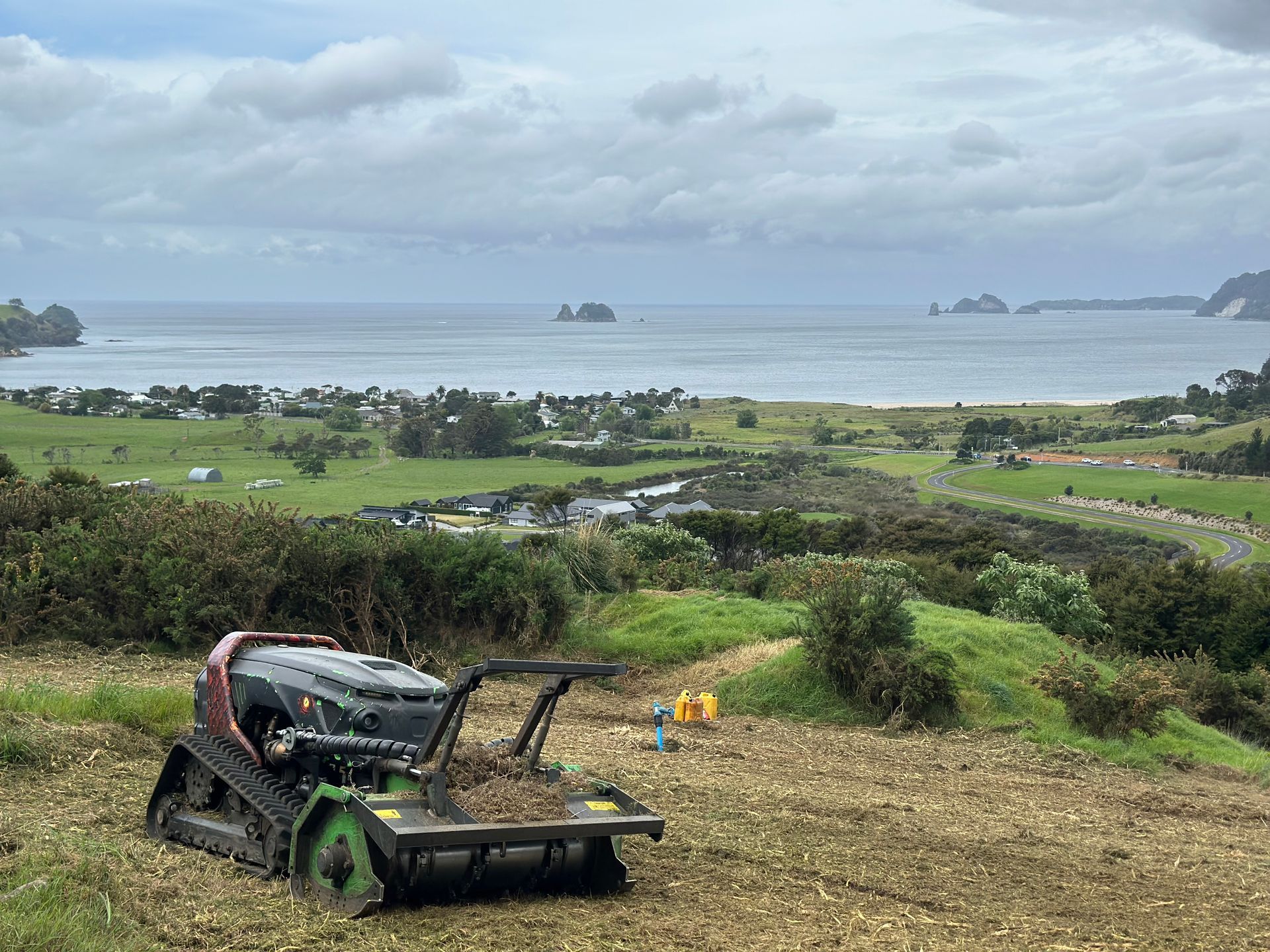
Mechanical mulching clears gorse and blackberry on steep slopes without herbicide, and the ground and follow-up decide how well the clearing holds.
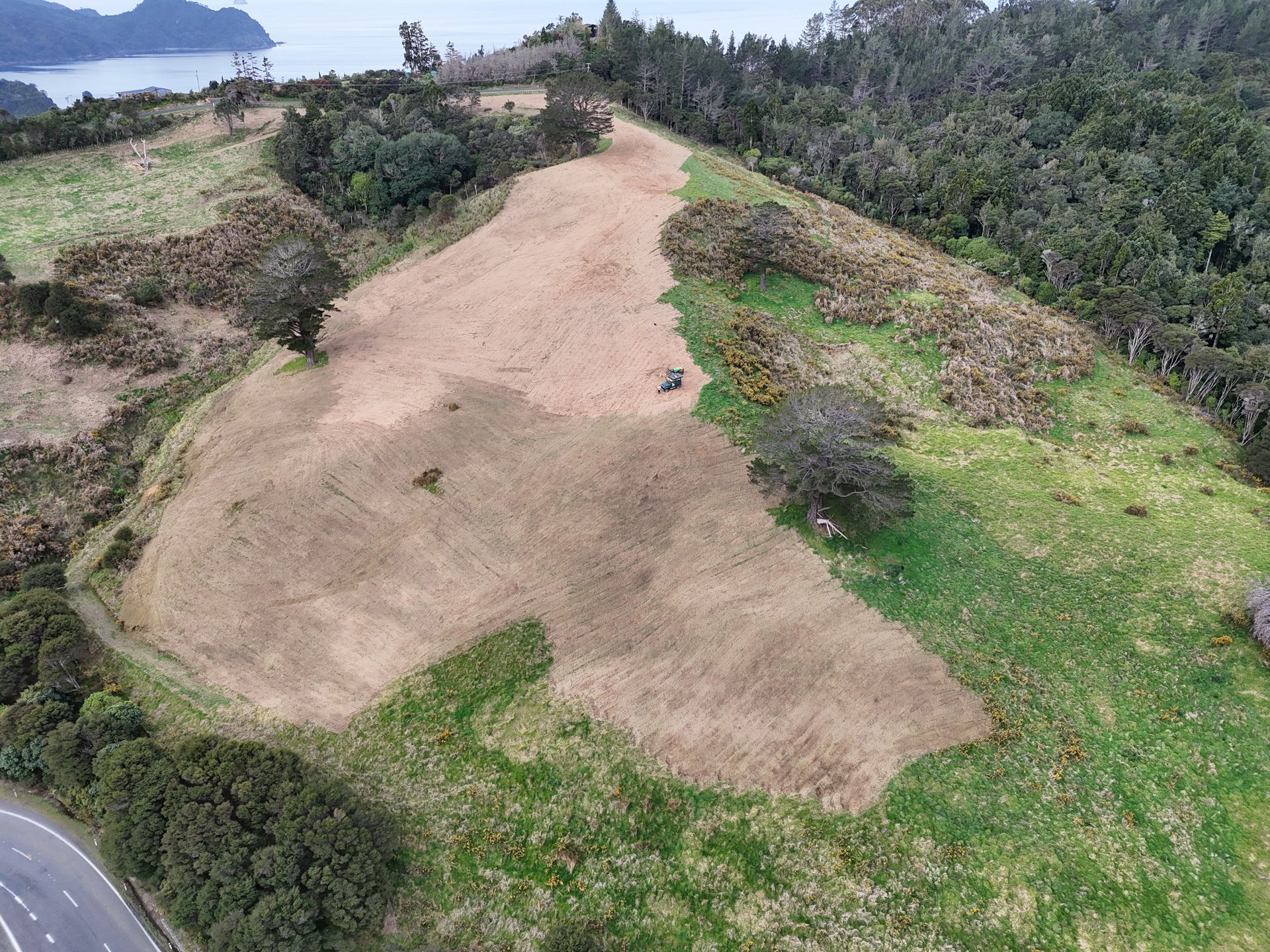
Published NZ price guides put tree felling at $350 to $5,000+ including GST, and steep banks often sit higher. Here is what changes the price and what to confirm in a quote.
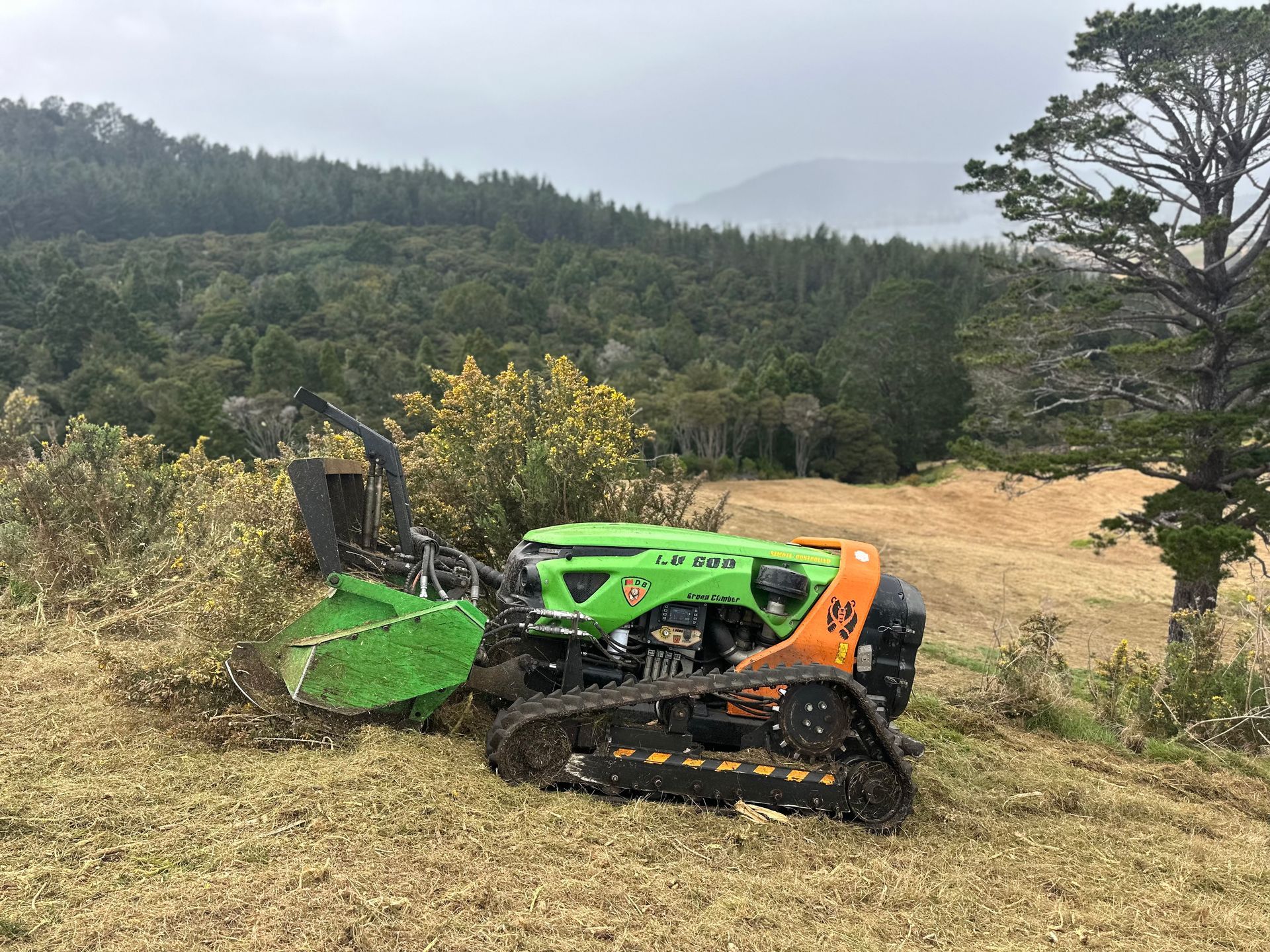
Understand when standard 4WD farm tractors reach dangerous slope limits and why tracked slope mulchers are needed for steep Waikato sidlings.
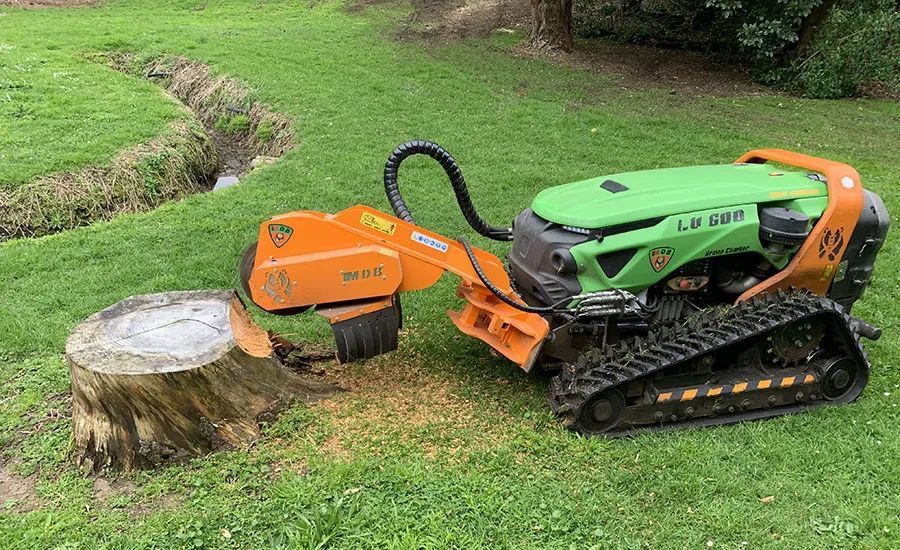
A practical guide to stump grinding costs, machine requirements, and site preparation for steep banks and gullies across Tauranga.
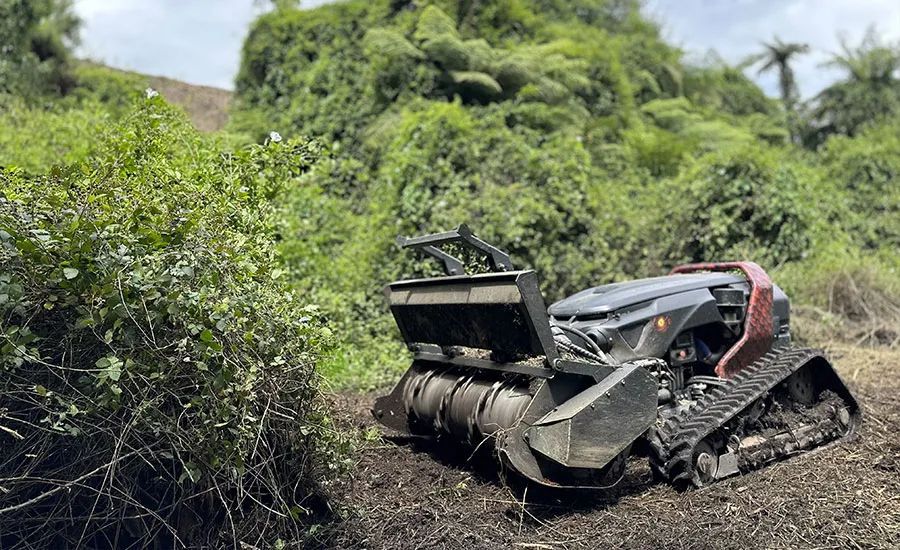
Stop invasive woolly nightshade from taking over steep gullies and risking spray drift into nearby orchards. Learn how remote mulchers shatter root plates flush to the ground.
Standard tractors cannot safely mow slopes beyond 20 degrees. Here is how remote-controlled tracked mulchers pulverise gorse and rank growth to reclaim steep hill paddocks.
Standard Tauranga lawn mowers face severe rollover hazards on slopes over 20 degrees. Here is how remote-controlled tracked mulchers clear steep lifestyle banks safely.