
Agricultural Contractors in Waikato: Tractors or Mulchers?
No Mans Land Mowing • October 14, 2026
The local ag contractor drove down the track, took one look at the 35-degree gorse-choked hillside, and loaded his tractor back onto the float. Conventional 4WD farm tractors reach critical rollover hazards on slopes steeper than 20 degrees, leaving steep sidlings and broken gullies untouched. If you need agricultural contractors in Waikato
for extreme topography, standard wheel-driven machinery cannot bridge the gap between flat pasture and vertical faces. Remote-controlled hillside mulching solves this limit by clearing slopes of 50+ degrees while the operator works safely away from machine.
Most farms across the Waikato basin balance two different landscapes: productive flat paddocks and broken, scrub-prone hill faces. Conventional agricultural contractors across the Waikato run heavy wheeled fleets for high-speed acreage work. When spring rain accelerates gorse flushes across steep sidlings, putting heavy tractors on those faces risks a rollover. Choosing the right machinery comes down to safe slope limits and operator position.
Key Criteria for Clearing Steep Waikato Hill Country
Selecting machinery for hill country maintenance requires looking past raw engine horsepower. Clearing rough pasture margins and steep gullies demands equipment that grips fractured ground without tearing up fragile soil.Incline angle limits and rollover physics
Standard 4WD agricultural tractors carry a high centre of gravity dictated by tall rear drive tyres and an elevated cab. On flat land, that weight creates traction for ground cultivation. On an incline, it becomes dangerous. Once a slope passes 15 to 20 degrees, a hidden tomo or rock shelf shifts the machine's centre of mass outside its wheel track width. When sideways momentum breaks tyre bead grip or a downhill wheel drops into a depression, dynamic rollover happens in fractions of a second. Wheeled tractors have no mechanical way to counter this sideways weight transfer on steep hill faces.Ground pressure and topsoil protection
A standard 120hp to 200hp tractor concentrates tonnes of deadweight across small rubber contact patches. On steep faces, wheel slip spikes as tyres claw through sod searching for traction. This churn exposes damp clay and invites erosion once spring rains arrive. Tracked slope systems distribute weight over wide continuous rubber bands. Minimising ground pressure prevents sliding keeping topsoil intact while the mulching head shreds woody growth flush to the dirt surface.Side by Side Comparison of Wheeled Tractors and Tracked Rigs
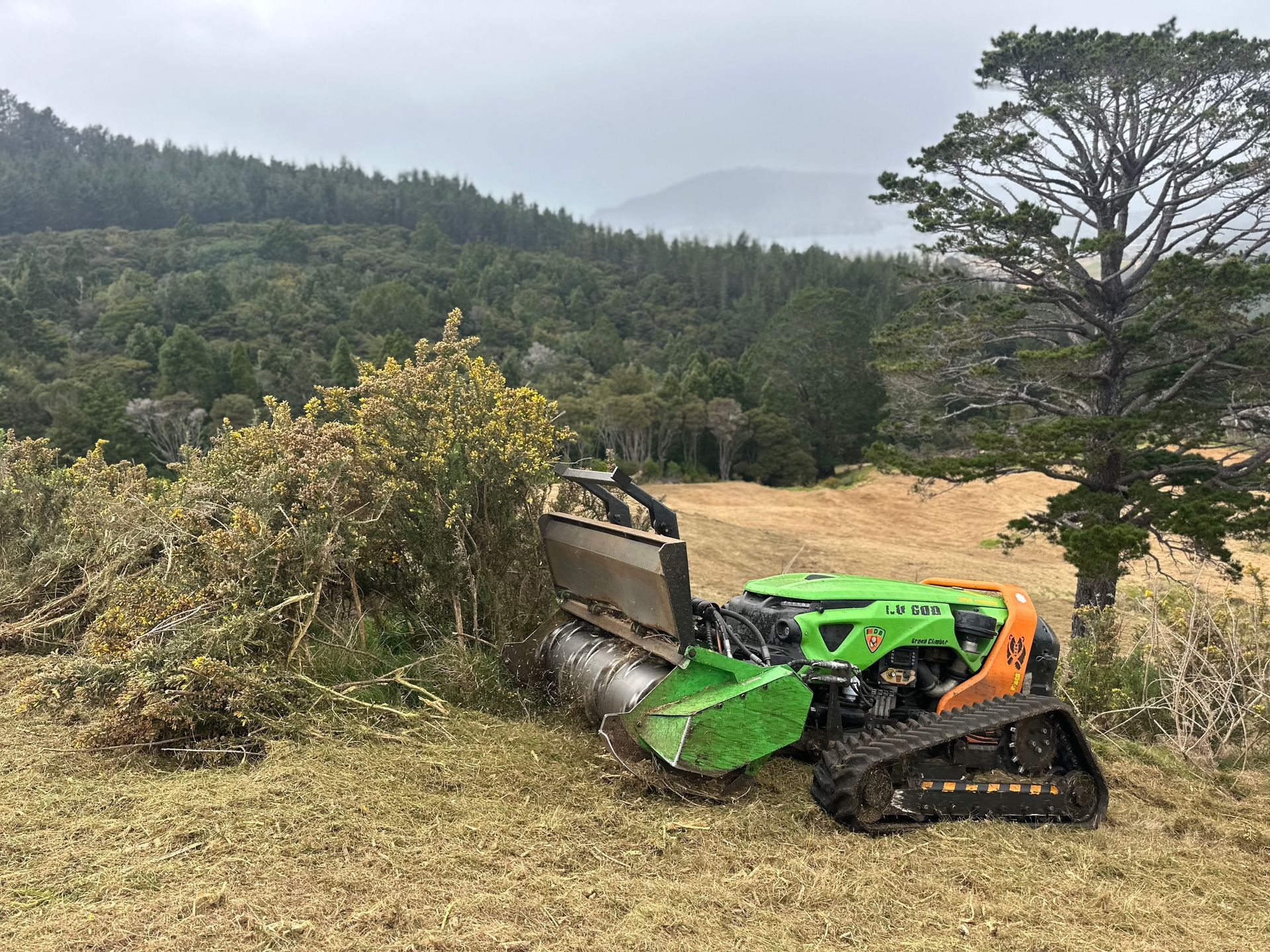
When assessing steep ground, machinery design determines where work can proceed safely. The following breakdown contrasts standard ag tractors against tracked slope mulchers across core operational factors. Operational Metric Standard 4WD Farm Tractor Specialized Tracked Remote Mulcher
-Maximum Safe Incline 15 to 20 degrees practical limit
-50+ degrees for remote machine Safe environment for Operator
-Seated in cab on slope with machine personal risk & danger
-Remote control Operator safe away from the machine on slope Ground Footprint
-High-pressure narrow wheel points
-Low-pressure expanding rubber tracks low CofG. Vegetation Capacity
-Slashers handle grass and light brush
-Fixed tungsten teeth pulverise heavy gorse and trees Turf Rutting
-Risk High risk of wheel spin and trenching
-Minimal surface broad spread of weight across contours View of work while in Operation
-In cab focusing forwards on driving
-Fixed safe vantage point to view results of mulch in “live” time
Landowners managing overgrown paddocks can read our guide on paddock mowing on steep hills
to see how tracked machinery handles rank vegetative growth without wheel churn.
Standard 4WD Farm Tractors for Flat and Rolling Pasture
Standard agricultural tractors remain the backbone of Waikato primary production. Their high-horsepower engines handle high-volume paddock workloads efficiently across productive flats.Where wheeled tractors excel
Conventional agricultural contracting setups excel across broadacre paddocks. When pulling round balers, spreading effluent, moving heavy equipment orchard bin work or short road load transport. forked or front end loading work wheeled tractors deliver unmatched efficiency across the flat Waikato basin, standard tractors provide the draft capacity rural operations rely on every day.Where incline and wheel slip create severe risk
A standard 4WD agricultural tractor has no place operating on ground steeper than 20 degrees, regardless of operator confidence or wheel ballast. High-horsepower wheeled machinery relies on tyre tread biting into clean ground. When encountering dense vegetation on steep inclines, weeds get rolled under the tyres, creating a slick green mat that breaks traction completely. Once wheel slip occurs past 20 degrees, braking systems become ineffective, and the tractor slides out of control. Furthermore, standard tractor slashers only cut and scatter scrub, leaving woody debris and standing root plates that puncture implement tyres also stock do not move over large chunks of woody debris thus regrowth quickly takes hold in the lengthy (not flush cut) stumps and large protective pieces . To clear slopes safely beyond these limits, bringing in No Mans Land eliminates rollover hazards while cutting scrub flush to the ground.Remote-Controlled Tracked Mulchers for Steep Sidlings and Gullies
When steep sidlings become overgrown, purpose-built tracked slope mulchers handle the vertical angles that halt tractors.Low centre of gravity and expanding tracks
We run two MDB LV600 Green Climber remote controlled machines with various attachments to satisfy land clearing requirements on flat to very steep, rough terrain. The steel undercarriage hydraulically expands outward, widening the machine's footprint to lower its centre of gravity right down against the hillside. This wide, low-profile stance ensures stable tracking across rugged contours that would roll wheeled machines. Backed by over 4,500 hours of operating experience on these machines, we clear slopes of 50+ degrees on firm ground without relying on chemical sprays or putting crews on manual scrub cutters. Equipped with heavy-duty tungsten-carbide teeth, our mulchers reduce dense gorse down to fine mulch. For advice on dealing with dense hillside infestations, see our resource on woolly nightshade tree removal.Zero operator cab exposure on hazardous faces
Traditional tractor setups place the driver directly inside a heavy cab balanced on the slope, if a terrace gives way, or the machine rolls, the operator is trapped inside a tumbling chassis. Remote operation shifts the operator outside the hazard zone entirely. Using radio control, our operators guide every track adjustment, mulching head angle, and travel line from up to 150 metres away on safe, level ground. This completely eliminates operator rollover injury risks while maintaining clear line of sight across every square metre of clearing work.Subsurface Debris Strikes and Rapid Mechanical Repairs
Clearing unmanaged Waikato hill country involves working through years of accumulated vegetation that completely conceals the underlying terrain.Hidden obstacles beneath mature scrub
Walking the ground beforehand is a recommended next step before starting any mechanical clearing project. However, landowners must recognize that pre-mulching inspections cannot uncover every hidden obstacle buried beneath mature scrub. Overgrown gullies frequently conceal abandoned No. 8 wire fences, volcanic boulders, discarded Warratah posts, concrete footing blocks, and historical farm dumps. When a mulching drum spinning at over 2,000 RPM strikes an unseen steel post or submerged rock shelf, tooth damage is an inevitable reality of heavy scrub remediation. Machine damage, fixes, and liability should always be openly discussed and agreed upon before work begins. No blame game with us just “rural realities” We contact debris often. But only mechanical damage never operator injury due to remote operation.In-house mechanical repair and fast turnaround
When high-impact debris strikes break teeth, impact damage of mulcher body, or damage hydraulic lines, standard contractors often face weeks of equipment downtime waiting on dealership service bays. At No Mans Land Mowing, we operate an in-house repair facility. Handling our own engineering work and mechanical fixes keeps our turnaround faster and repair overheads lower so running costs are lower than other remote operators as well , ensuring that multi-day hillside clearing contracts stay on schedule. Rural and semi-urban property managers in Hamilton facing difficult terrain challenges can review our guide to lawn service in Hamilton to see how these mechanical capabilities handle tight suburban gully margins.Safety Certifications Required for High-Risk Hillside Clearing
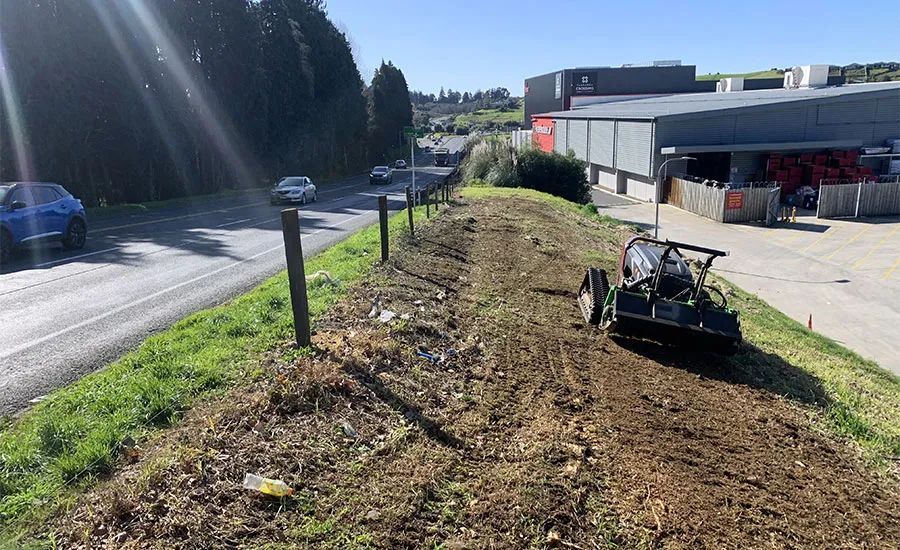
No Mans Land produce verified Tōtika, SHE, or SiteWise pre-qualifications, Contractors should not be allowed on commercial or high-hazard hillside slopes if they cannot produce something similar pre Job if in a commercial environment as there could be major issues if mistakes are made. Regional councils, infrastructure operators, and commercial forestry managers across the North Island may require these “Quals or similar:
- Tōtika PreQual: A cross-industry pre-qualification scheme providing an audited health and safety assessment standard recognized across New Zealand supply chains.
- SiteWise PreQual: An independent grading system that assesses contractor safety systems, safe work method statements, and site accident reporting.
- SHE PreQual: A comprehensive safety system evaluating environmental compliance, emergency response planning, and operational risk mitigation for hazardous plant environments.
Environmental compliance and waterway protection
Hillside land management in the region operates within clear environmental frameworks. As outlined in the Draft Waikato Regional Biodiversity Strategy(Te Mauri o te Taiao) and the National Policy Statement for Indigenous Biodiversity 2023, regional authorities enforce objectives to halt indigenous biodiversity decline and protect waterway margins. Spraying steep gorse infestations instead of mulching them mechanically just leaves a dangerous standing fuel load that someone will still have to deal with when summer fire bans kick in, alongside runoff risks near waterways. Mechanical tracked mulching avoids chemical sprays entirely, grinding invasive woody scrub down into a clean protective layer of organic mulch that locks loose topsoil against rainfall erosion. Proportional remote steering lets the operator carefully manoeuvre the machine around regenerating bush blocks, clearing out privet and woolly nightshade while leaving established flora undamaged. For landowners clearing steep gullies while protecting sensitive bush, our guide on protecting native trees details non-chemical clearance methods along vulnerable waterways.How to Choose the Right Contractor for Your Farm Contours
Matching machinery to ground contour is the most practical way to protect your property, manage costs, and avoid serious machinery accidents. For broadacre flats, seedbed preparation, silage cutting, and baling across the Waikato plains, a conventional wheeled agricultural contractor running 4WD tractors remains the most cost-effective solution. When your workload involves clearing gorse, blackberry, and scrub on slopes steeper than 20 degrees, standard tractors must be parked. Ground conditions determine allowable slope steepness every time; firm, compact soil and dry grass permit our MDB LV600 machines to clear slopes of 50+ degrees, whereas wet clay, winter bogs, or loose sandy loam require reducing the working angle to ensure solid track traction. A recommended next step is to assess your slope angles and soil firmness, then contact the team at No Mans Land Mowing to get unmanageable steep country cleared safely.Frequently Asked Questions
At what incline angle do conventional 4WD agricultural tractors become unsafe?
Standard 4WD agricultural tractors face severe rollover hazards once slopes exceed 15 to 20 degrees, especially when traversing uneven ground or turning across contour lines. A high centre of gravity paired with narrow tyre contact patches makes wheeled tractors susceptible to sudden sideways weight shifts and uncontrollable sliding on steep pasture.How steep of a slope can a remote-controlled mulcher safely clear?
Specialized tracked mulchers like the MDB LV600 can clear slopes of 50+ degrees on firm, compact soil and grass. The hydraulically expanding undercarriage lowers the machine's centre of gravity directly against the slope surface, maintaining stable traction across rugged contours where wheeled tractors cannot travel.What health and safety pre-qualifications are needed for council hillside clearing contracts?
Regional councils, forestry corporations, and commercial infrastructure owners require audited third-party pre-qualifications to verify safe operating procedures on hazardous terrain. The standard benchmarks in New Zealand are Tōtika PreQual, SHE PreQual, and SiteWise PreQual certifications.How do remote-controlled mulchers eliminate operator injury risks?
By removing the operator from the machine cab entirely and utilizing proportional remote controls from up to 150 metres away, the operator works from safe, level ground. This completely eliminates cab-entrapment and rollover injury risks while maintaining clear line of sight across the active clearing zone.How do spring soil moisture conditions affect steep slope mulching?
Ground conditions directly determine allowable slope steepness; firm, compact soil permits steeper work, whereas saturated spring clay or mud reduces the workable angle to maintain track grip.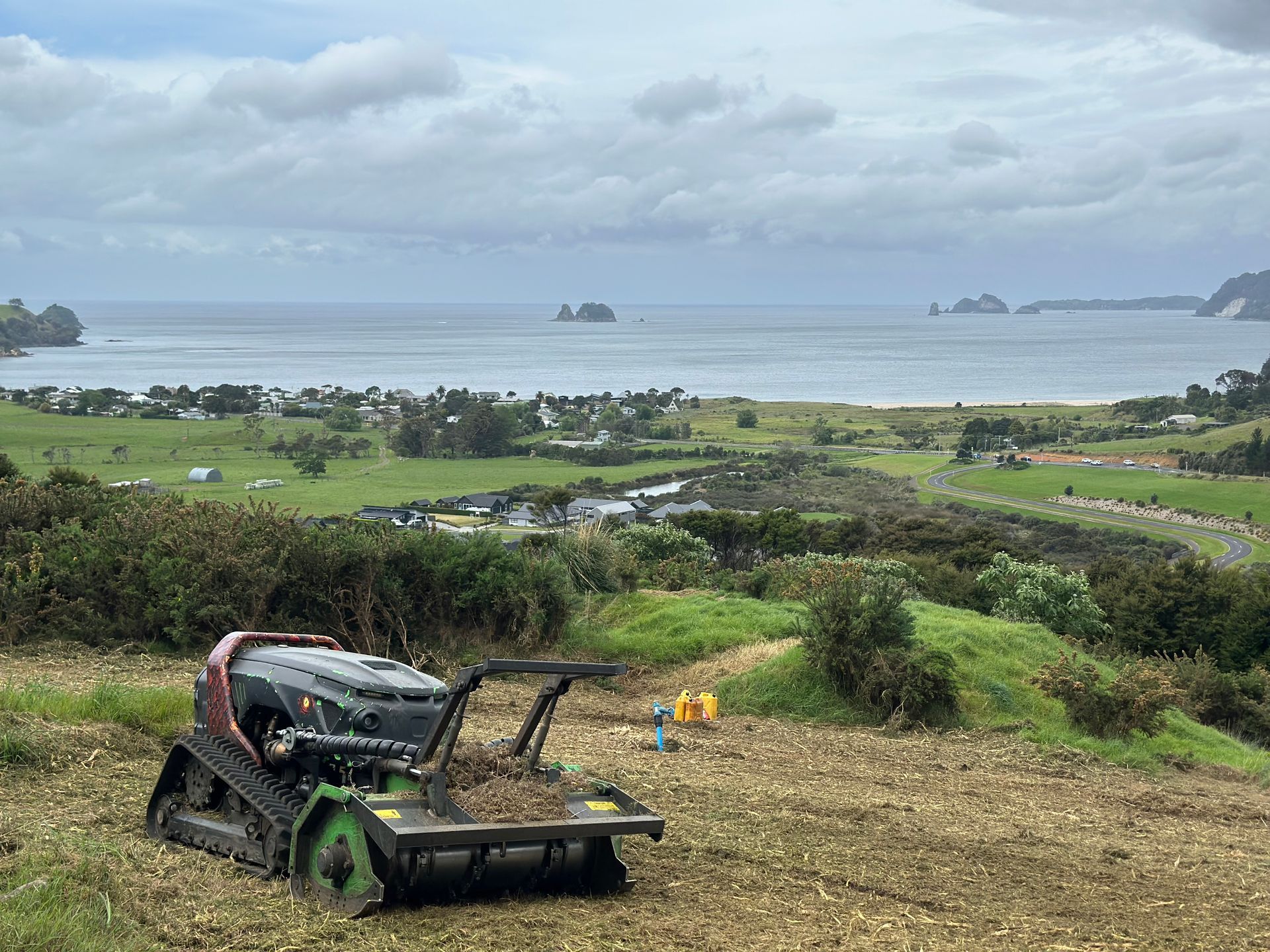
Mechanical mulching clears gorse and blackberry on steep slopes without herbicide, and the ground and follow-up decide how well the clearing holds.
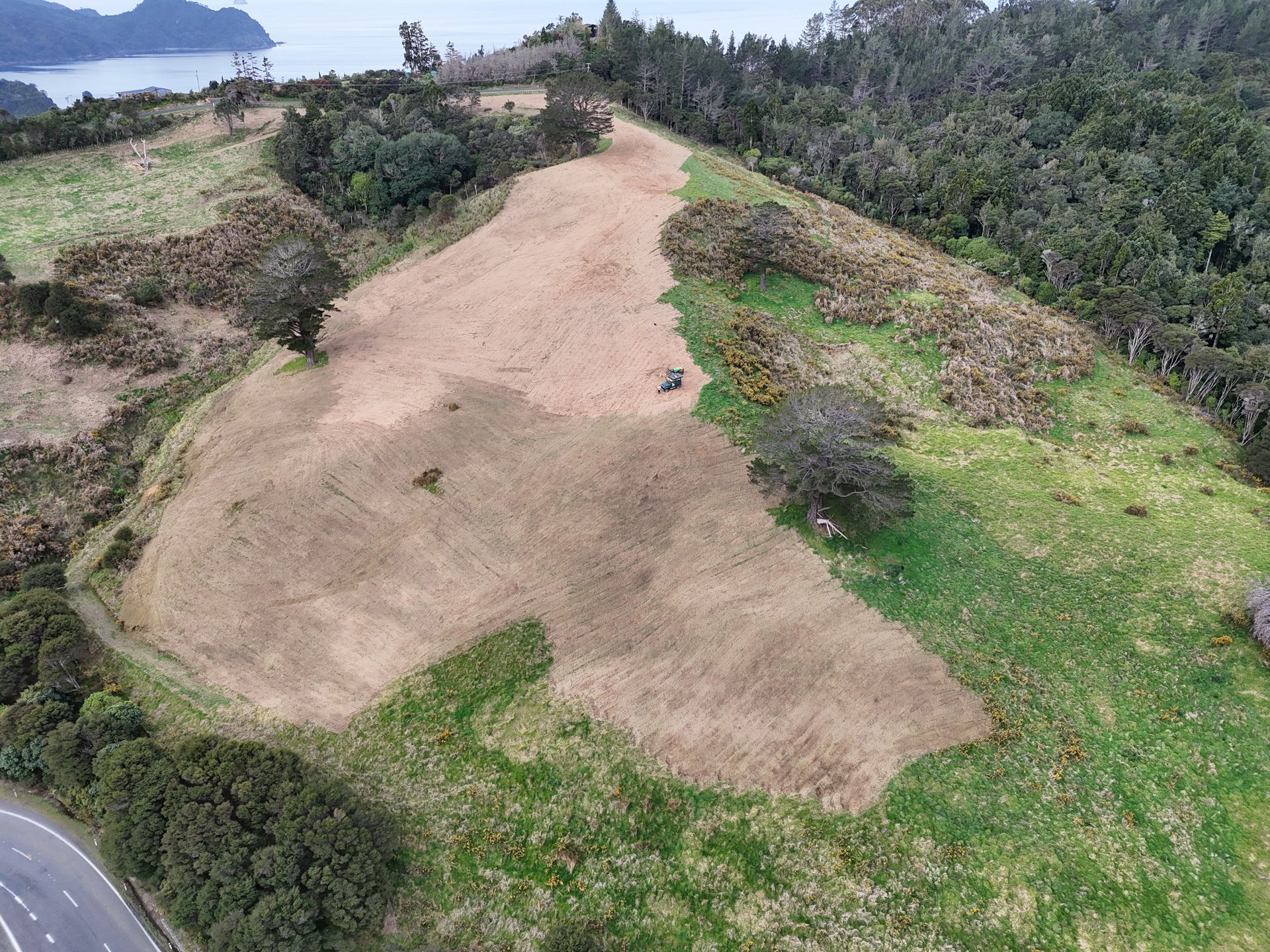
Published NZ price guides put tree felling at $350 to $5,000+ including GST, and steep banks often sit higher. Here is what changes the price and what to confirm in a quote.
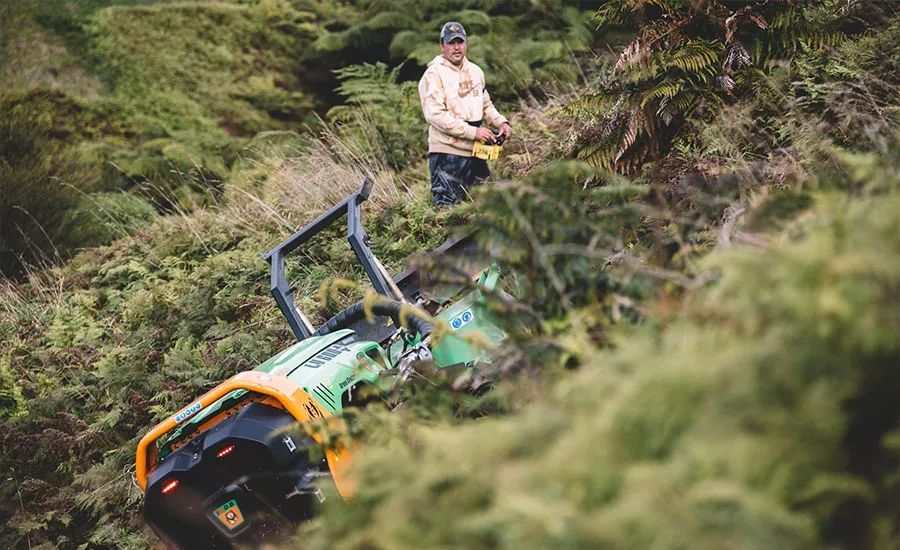
Learn how to protect vulnerable native tree ferns while clearing invasive gorse and blackberry across steep North Island gullies.
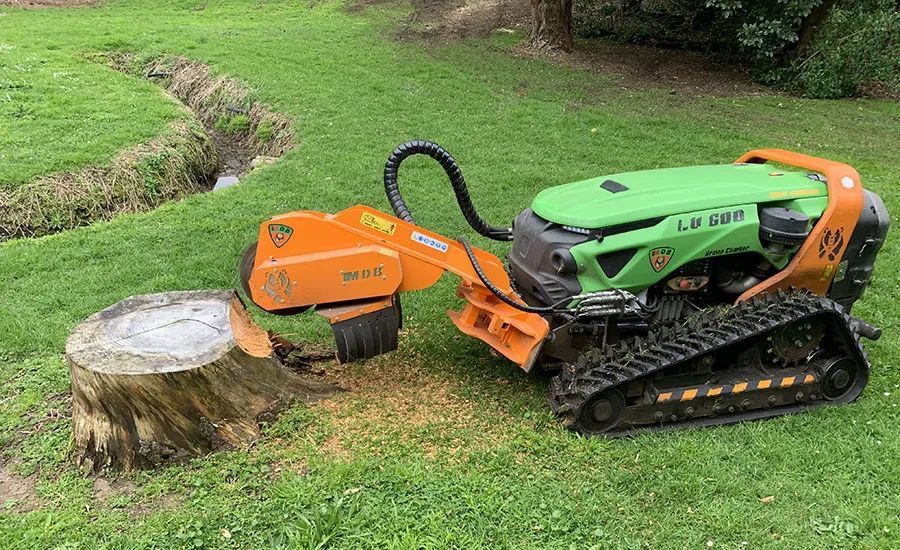
A practical guide to stump grinding costs, machine requirements, and site preparation for steep banks and gullies across Tauranga.
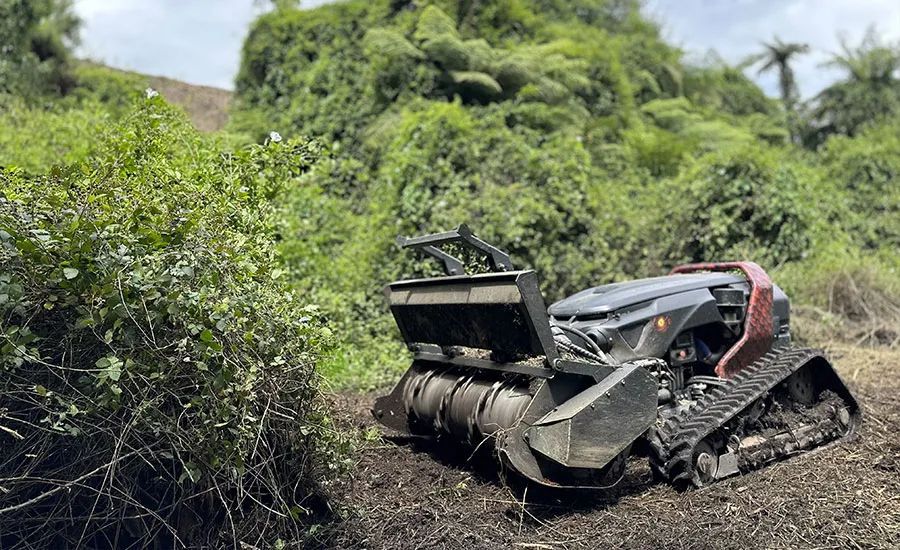
Stop invasive woolly nightshade from taking over steep gullies and risking spray drift into nearby orchards. Learn how remote mulchers shatter root plates flush to the ground.
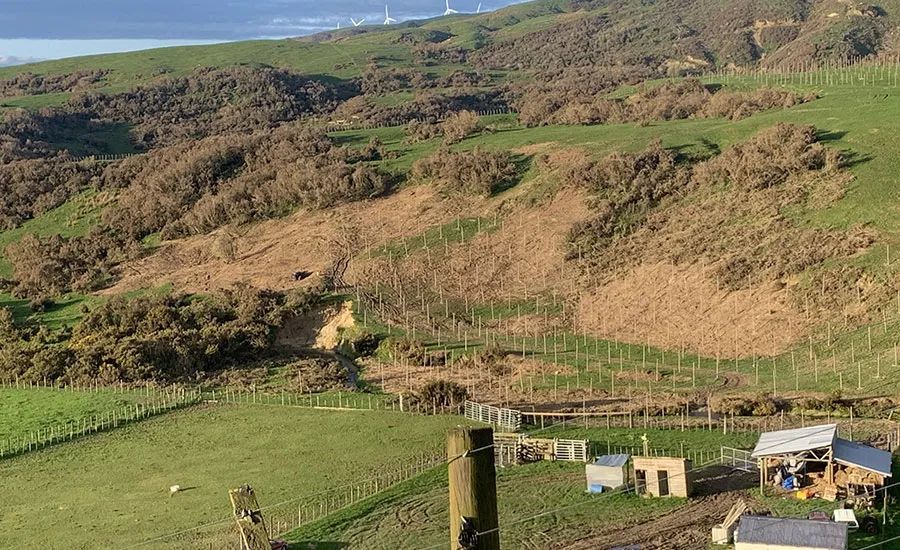
Standard tractors cannot safely mow slopes beyond 20 degrees. Here is how remote-controlled tracked mulchers pulverise gorse and rank growth to reclaim steep hill paddocks.
Standard Tauranga lawn mowers face severe rollover hazards on slopes over 20 degrees. Here is how remote-controlled tracked mulchers clear steep lifestyle banks safely.