Paddock Mowing on Steep Hills: How to Reclaim Pasture
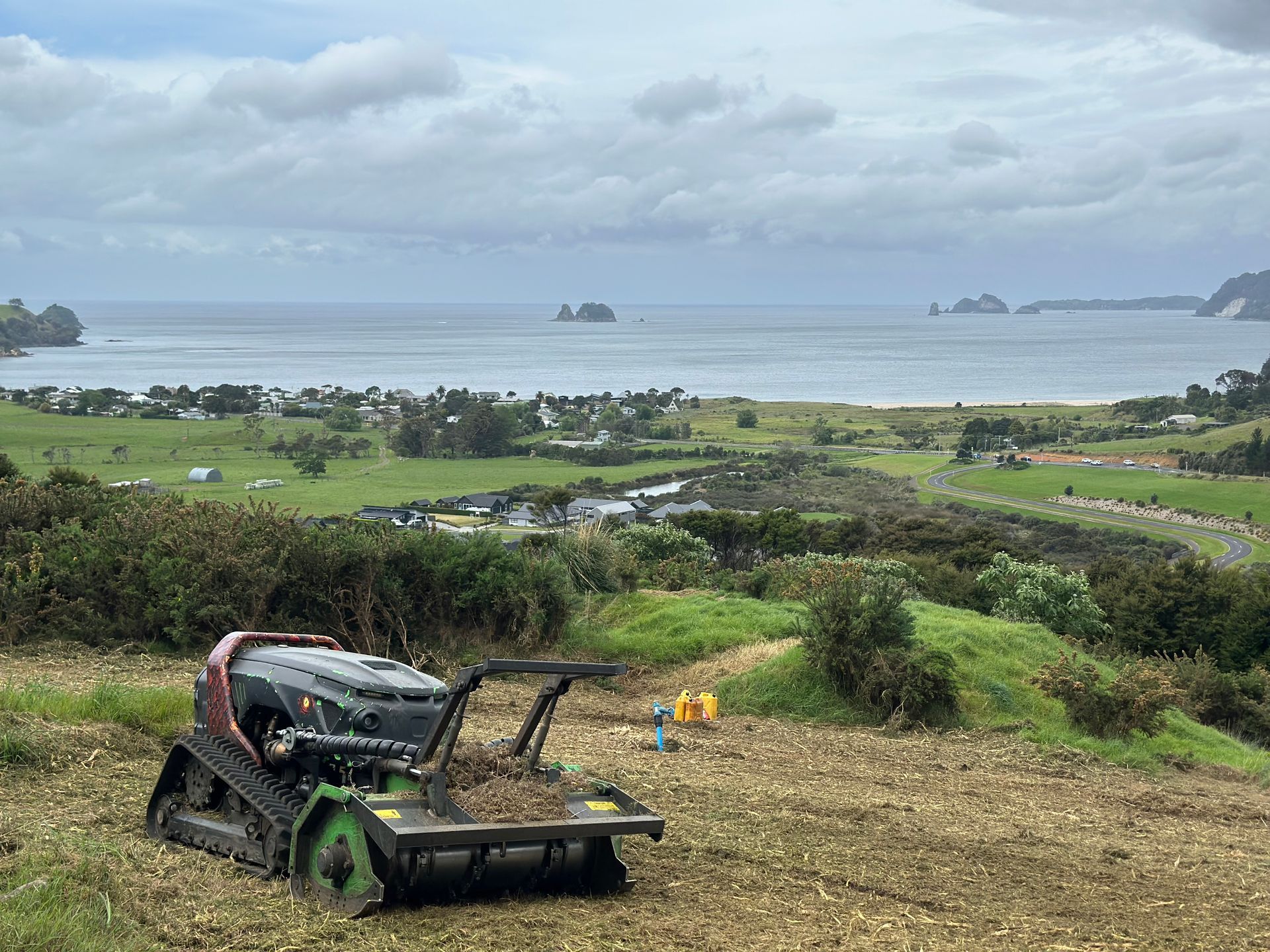
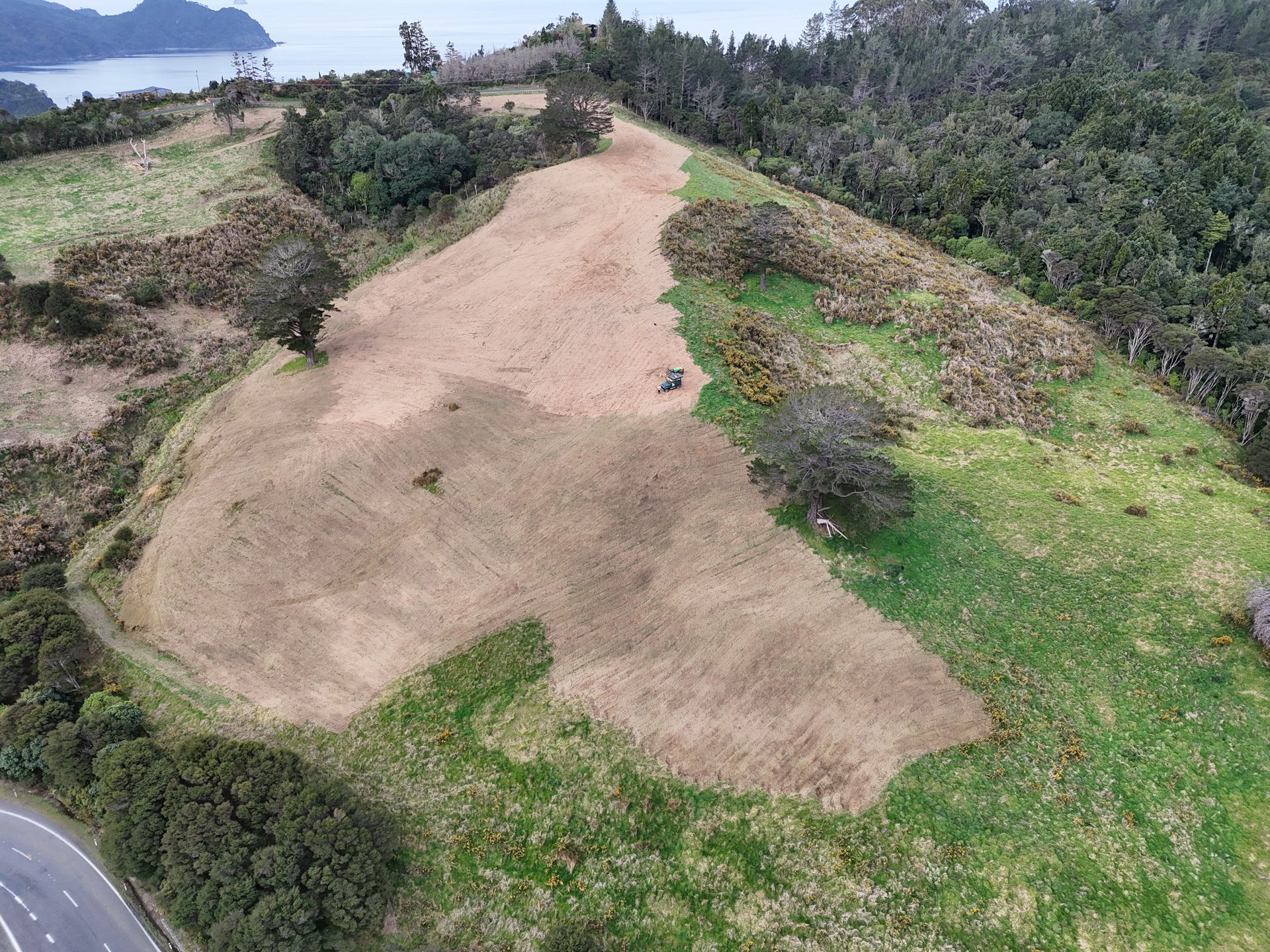
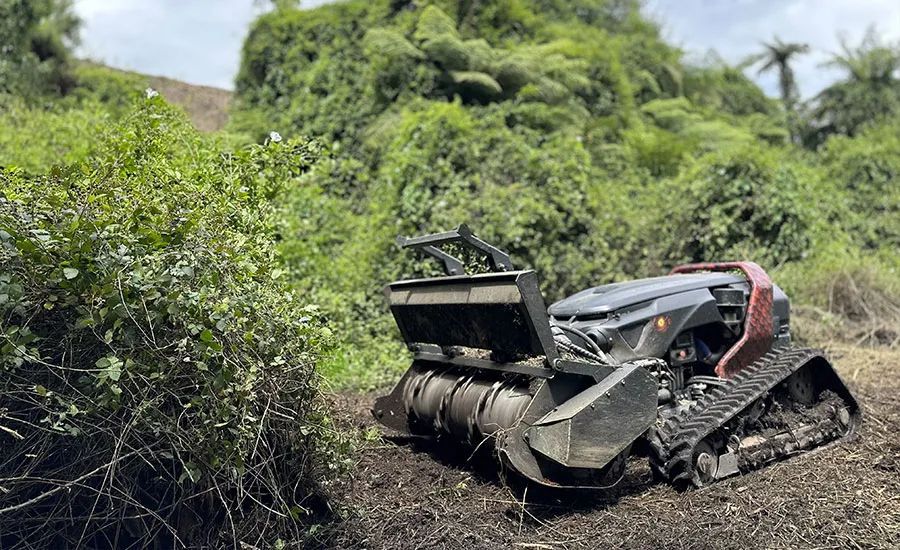
Paddock mowing across steep hill ground means cutting rank growth and heavy woody weeds where standard farm machinery cannot safely tread. Using remote-controlled tracked mulchers, we pulverise standing gorse and dense brush directly in place across slopes up to 60 degrees. The shredded residue blankets damp clay batters, curbs erosion from heavy spring rain, and forms an organic bed for pasture strikes without hauling away debris.
Tackling broken sidlings and steep gully heads differs completely from flat pasture topping. Standard rotary slashers just push over rank grass and woody stalks without grinding them down. That leaves heavy windrows that break down slowly and smother pasture. Pulverising standing brush where it grows puts down an organic blanket that protects fragile spring topsoil while you get new grass established.
Step 1 Assess Slope Angles and Spring Ground Moisture
Before walking gear onto a hillside, check the ground conditions on foot. If you cannot walk a steep paddock batter in October without sliding in your boots, do not put a wheeled tractor or ride-on slasher on it. Saturated spring clay turns steep slopes into rollover ground, making remote-controlled tracked machines the only sensible way to cut them.
Recognising the 20-Degree Rollover Threshold
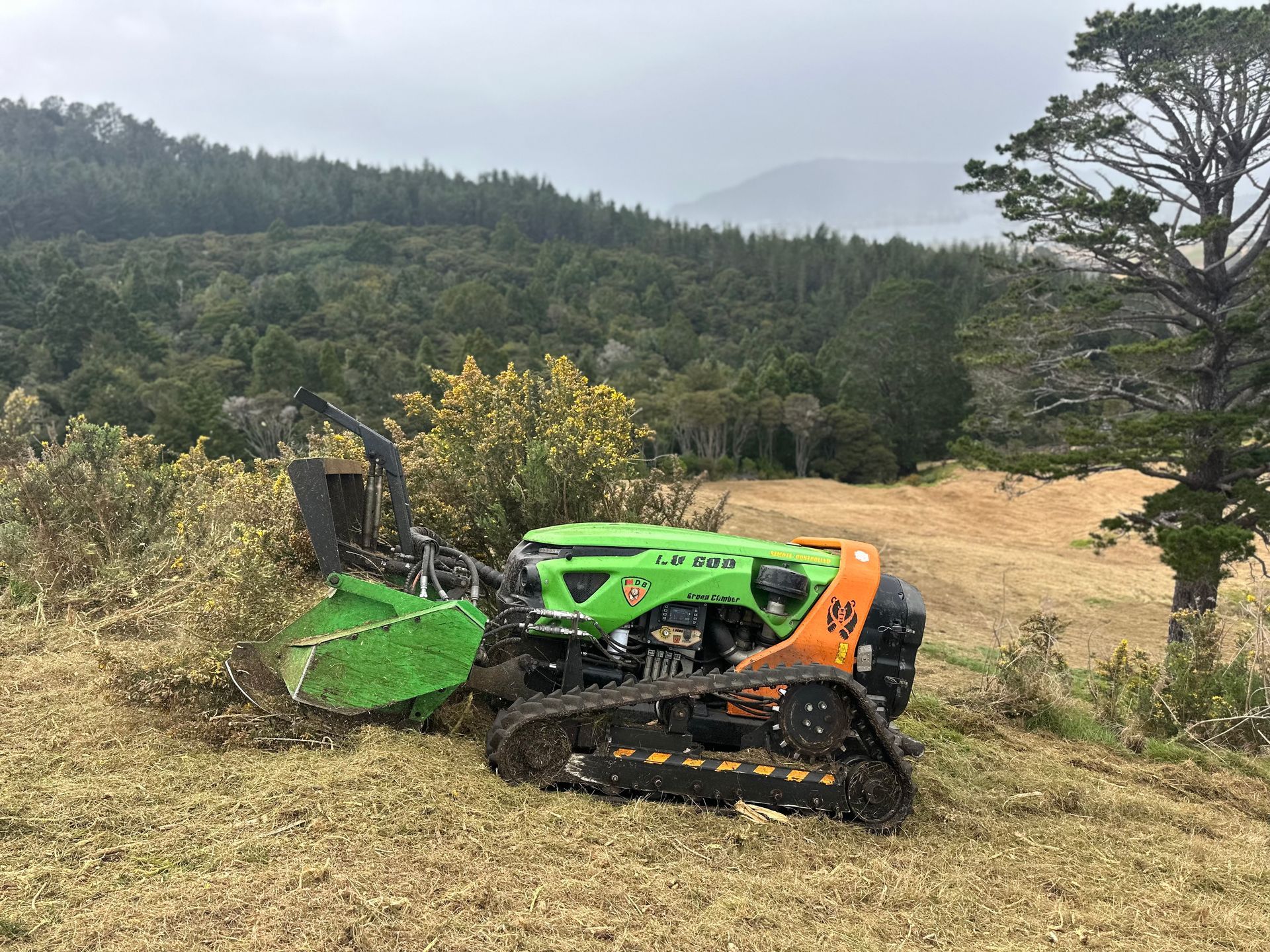
Standard farm tractors reach their operating limits at roughly 20 degrees. Beyond that pitch, a high centre of gravity invites sudden slips and rollovers, particularly when downhill wheels hit a soft pocket or wet grass. As covered in our guide to Tauranga lawn mowing on steep slopes, running an MDB LV600 with a handheld console keeps the operator firmly on safe footing while the machine handles terrain up to 60 degrees.
Checking Spring Soil Traction on Clay Batters
North Island clay faces across the Waikato and Western Bay hold heavy moisture well into October. Wheeled machines break the surface crust quickly, gouging ruts that turn into water channels after heavy downpours. Broad rubber or steel tracks spread machine weight across a wide footprint, delivering low ground pressure that works damp sidlings without tearing open the subsoil.
Stage timeline and hazard: Walking and assessing a site takes 30 to 45 minutes. The critical mistake is underestimating ground moisture under heavy scrub and driving wheeled gear onto banks where traction fails instantly.
Step 2 Select In-Situ Mulching Over Bulldozing and Hauling
Reclaiming overgrown sidlings usually comes down to blading the face bare with an earthmover or mulching the vegetation where it stands. Bulldozing steep paddock sidlings strips fragile topsoil and leaves raw clay exposed to heavy spring rain. In-situ mulching preserves the underlying root network and lays down an organic blanket that holds the hillside together.
Factor Bulldozer Scraping In-Situ Tracked Mulching Topsoil Protection Strips topsoil layers and exposes bare subsoil Preserves topsoil while adding organic cover Debris & Haulage Piles scrub that requires burning or cartage Zero haulage with all material processed on the hill Erosion Risk High erosion on bare clay banks after downpours Low risk as ground mulch limits surface runoff Track Wear Heavy trucks rut and damage farm access routes Tracked footprint avoids damage to farm access tracks
Why Bulldozer Blading Triggers Hillside Erosion
Scraping a scrubby slope bare cuts the organic top layer away from the clay pan. When spring rains hit, water cannot soak in. It runs down the face, washing topsoil into gully bottoms. Grinding the standing growth where it grows keeps the root net intact to hold the batter together while laying down a woody blanket that buffers heavy rainfall.
Eliminating Debris Haulage and Track Damage
Landowners often think clearing scrub requires excavators and tip trucks, which runs up costs and tears up farm tracks. Mulching the brush on the hill removes the need for trucks and turns standing scrub into ground cover. Our productive land reclamation and slope mulching services focus on pulverising woody material back into the paddock floor instead of hauling it away.
Stage timeline and hazard: Choose your clearing method before moving gear onto the property. Bringing in earthmoving blades often turns a simple weed problem into an expensive slip repair.
Step 3 Pulverise Dense Scrub and Gorse Down to Ground Level
Rotary slasher mowers are typically used to knock down rank pasture growth, but they only chop woody stalks into thick lengths. In dense gorse, a tracked mulcher running fixed tungsten teeth is needed to smash woody growth down flush with the dirt.
Grinding Stems and Old Stumps Flush with the Surface
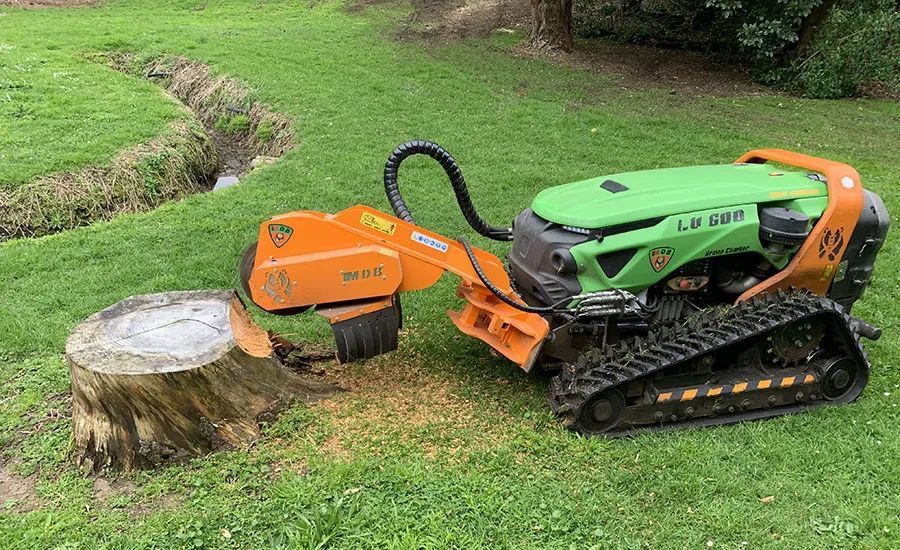
Hillside scrub often hides hardwood stumps and rock outcrops that snap shear pins on rotary slashers. Fixed tungsten teeth chew straight through tough stumps flush with the soil, clearing hazards that would otherwise puncture tractor tyres or wreck mower decks later. We use this exact approach when removing invasive woolly nightshade trees across rough gullies.
Casting Mulch Evenly to Avoid Smothering Ground Cover
Heaping mulch into dense windrows locks up nitrogen and prevents grass from striking. The mulching head needs to cast shredded material across the contour so light and moisture reach emerging grass. A layer spread two to four centimetres deep protects damp soil from drying out in early summer winds while decomposing under spring rain.
Step 4 Clear Overgrown Growth Along Boundary Fence Lines
Clearing along paddock boundaries with standard tractor decks or digger buckets often hooks wires and pulls out staples. Thick scrub also levers against post-and-batten fences, pushing wires out of line. Remote operation gives the operator a direct line-of-sight to clear within centimetres of wires without catching fences.
Protecting Wire and Battens with Direct Line-of-Sight
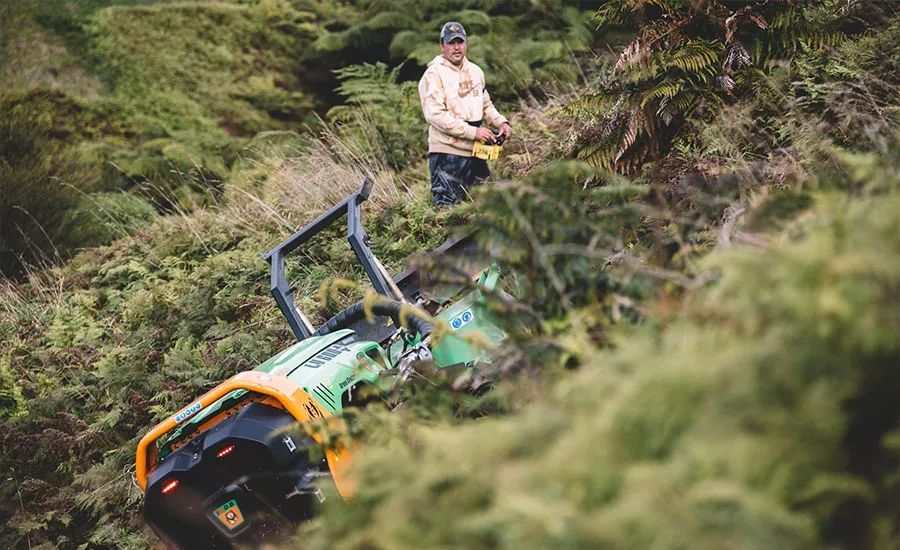
Sitting in a tractor cab fifty feet away or operating a digger down a gully gives a poor angle on boundary lines. Standing nearby with a remote control console gives the operator clear line-of-sight to the mulcher drum. That level of control allows the machine to chew blackberry directly away from posts and stays.
Meeting Boundary Pest Rules Without Spray Runoff
Regional councils enforce pest management plans that require owners to clear invasive weeds along boundary corridors. Spraying fence lines on steep slopes brings spray-drift liability near orchard blocks or farm streams during breezy spring weather. Mechanical mulching knocks growth flat right to the boundary peg without using chemical sprays.
Oversowing into the Protective Surface Mulch
The fibrous mulch layer acts as protective cover for broadcast pasture seed. It holds surface moisture, shields young root strikes from drying winds, and stops birds from cleaning out bare seed. Spring rain washes the seed through loose mulch fibers straight onto the damp ground below.
Timing Seed Establishment Ahead of Summer Dry
October provides the ideal window for steep sidlings. Weeds are in soft spring growth before woody stems harden off for summer, and the soil holds warmth and moisture for quick seed germination. Pushing work back into late November exposes young strikes to summer dry spells, resulting in patchy ground cover that gorse easily outcompetes.
Stage timeline and hazard: Broadcast seed within 48 to 72 hours of mulching. Leaving cleared slopes bare for weeks gives the dormant weed seed bank an open opportunity to sprout.
If you have steep sidlings, rough gullies, or boundary lines that standard tractors cannot safely work, contact No Mans Land Mowing to reclaim your land using remote-controlled slope mulchers.
Frequently Asked Questions
Do you need to haul away woody debris after slope paddock mulching?
No. Remote-controlled mulchers grind gorse and blackberry into fine surface residue that decomposes directly on the hillside. Processing material on site builds organic matter, limits soil erosion, and cuts out haulage costs and track damage.
How steep of a slope can a remote-controlled mulcher mow safely?
Tracked machines like the MDB LV600 are rated beyond 50 degrees ground conditions pending e.g. Muddy, sandy or slippery Clay etc. Conventional wheeled farm tractors become rollover risks once slopes exceed 20 degrees, particularly on greasy spring clay.
Will gorse and blackberry regrow after being mulched flush with the ground?
The machine destroys the standing brush and grinds stumps flush, but dormant weed seed will germinate once sunlight reaches the soil. Oversowing pasture seed straight into the fresh mulch bed establishes strong competing cover before weeds can recover.
How does mechanical mulching protect boundary fences compared to diggers?
Remote controls give the operator clear line-of-sight while standing right beside the working line and the ability to "side shift" the mulching head. That visibility lets the mulching drum chew right up to wires and fence posts without catching high-tensile wire or breaking wooden battens.
Can paddock mowing on steep hillsides be completed in wet spring conditions?
Yes, as long as low-ground-pressure tracked machines are used. While tractor tyres slip and tear up damp clay, broad tracks distribute machine weight evenly across the slope, clearing steep sidlings without gouging ruts or triggering slips.