Tauranga Lawn Mowing Services: No Mans Land Mowing
Standard Tauranga lawn mowing services cap equipment safety at 15 to 20 degrees because wheeled mowers face severe loss-of-traction and rollover hazards on steeper banks. When gully batters exceed that limit, specialized tracked mulchers from No Mans Land Mowing provide a stable mechanical alternative that clears thick vegetation without putting an operator in harm's way.
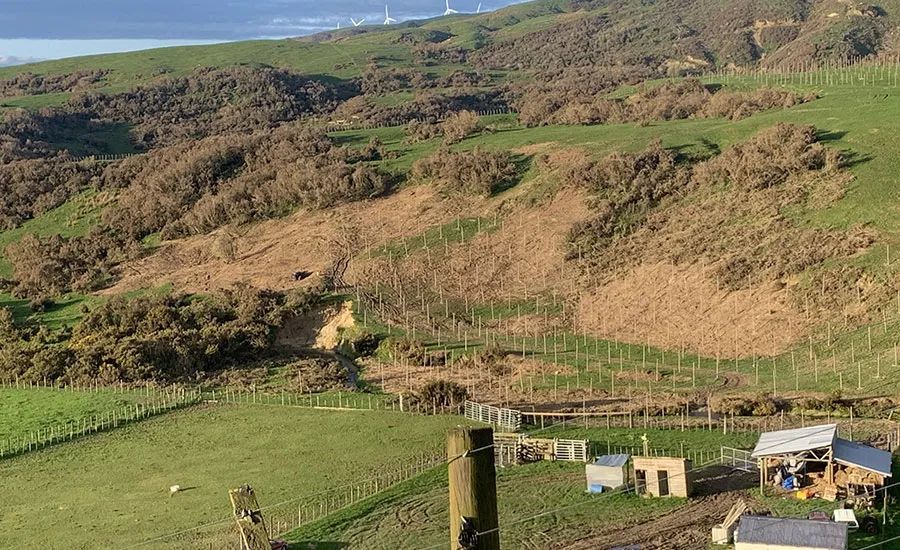
Lifestyle blocks across Tauriko and the Western Bay hills deal with rapid spring vegetative growth across steep drop-offs. Within a few warm weeks, unmanaged Kikuyu chokes out boundary tracks and fence lines. Calling standard gardening services in Tauranga often ends with a refusal at the farm gate. Wheeled ride-ons simply cannot hold traction on wet spring clay without tearing up the hillside or sliding out of control.
Why October Rain and Steep Gullies Defeat Standard Mowers
Western Bay spring weather combines warm sunshine with frequent rainfall. This mix triggers rapid weed growth across gully batters while keeping the underlying subsoil saturated well into the season.
The Bay of Plenty Spring Growth Flush
Between September and November, rising ground temperatures accelerate pasture growth across the region. Kikuyu can add inches in days, burying hidden rocks and washouts under a thick green mat. Domestic deck mowers choke on this heavy volume.
The Twenty Degree Limit for Ride-On Mowers and Tractors
Commercial zero-turn mowers excel on flat coastal lawns across Papamoa and Mount Maunganui. Take those same wheeled machines onto steep hillsides, and physics turns against them.
Equipment Type Safe Working Limit Absolute Max Limit Primary Failure Point on Slopes Standard Commercial Zero-Turn 10 to 12 degrees 15 degrees Front caster drift; downhill slide Agricultural Wheeled Tractor 12 to 15 degrees 20 degrees (dry only) High center of gravity;
Lateral rollover Remote-Controlled Tracked Mulcher Up to 50 degrees 60 degrees Structural breakover limit
Manufacturer Operating Ceilings
Most commercial zero-turn mowers are rated for slopes up to 15 degrees. Under dry conditions on manicured turf, 20 degrees represents the absolute operational limit. Past 20 degrees, wheeled machinery enters rollover territory. An engine mounted high over the rear axle pulls the balance point downward. As soon as that center of gravity shifts outside the downhill tire contact patch, the machine tips before the operator can correct it.
Point Loading and Wheel Slide Hazards
Four pneumatic tires apply concentrated point loading onto wet turf. When a machine tries to turn or brake on a slope, those narrow contact points break the surface tension of the grass. Locked tires turn into skids on wet clay. A ride-on mower has no business on slopes past 20 degrees, and seating a driver on a wheeled machine on that gradient is an unacceptable gamble.
Why Tauranga Contractors Walk Away from Steep Lifestyle Blocks
Lawn care operators turning down steep batters in Welcome Bay or Te Puna are making a sensible commercial choice. Gully faces present practical liabilities standard operators cannot insure.
Insurance and Health and Safety Liabilities
Commercial policies draw clear lines at steep terrain. If an operator rolls a ride-on on ground that exceeds the manufacturer slope rating, insurance coverage is typically voided. New Zealand workplace safety regulations require contractors to eliminate known life-safety hazards where mechanical alternatives exist. Putting a worker in the seat of a ride-on across a 30-degree batter breaches those basic safety duties.
The Inefficiency of Manual Scrub Cutting
The common fallback is sending workers onto banks with scrub cutters. While this avoids machine rollovers, it introduces severe foot-slipping risks on wet clay. Clearing rank Kikuyu and woody scrub with line trimmers is slow and physically draining. A batter that takes a crew days to cut by hand racks up massive labor costs, and it leaves heavy swaths of green waste sitting on the slope to smother the turf underneath.
How Remote Tracked Mulchers Tackle Sixty Degree Slopes Safely
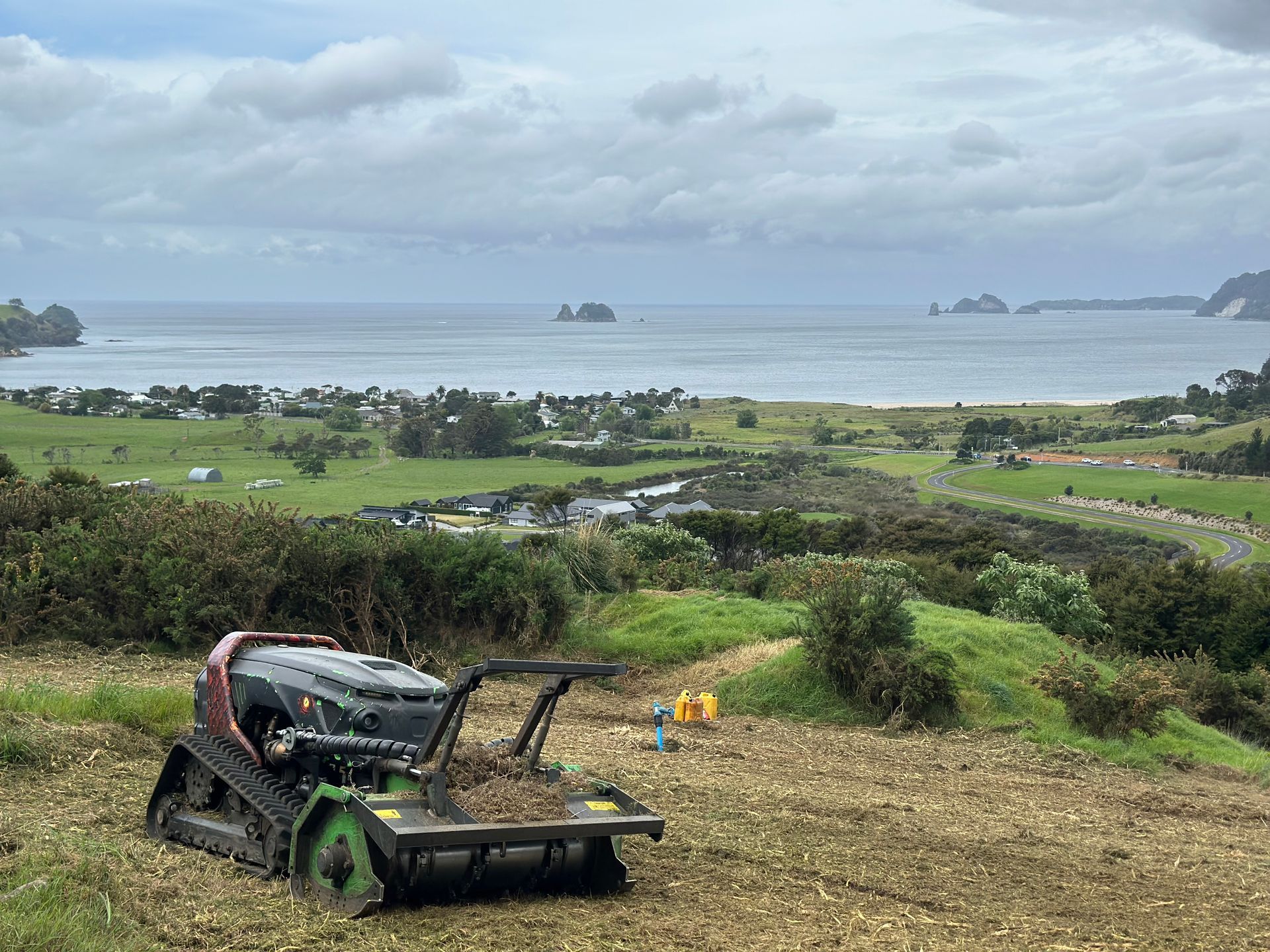
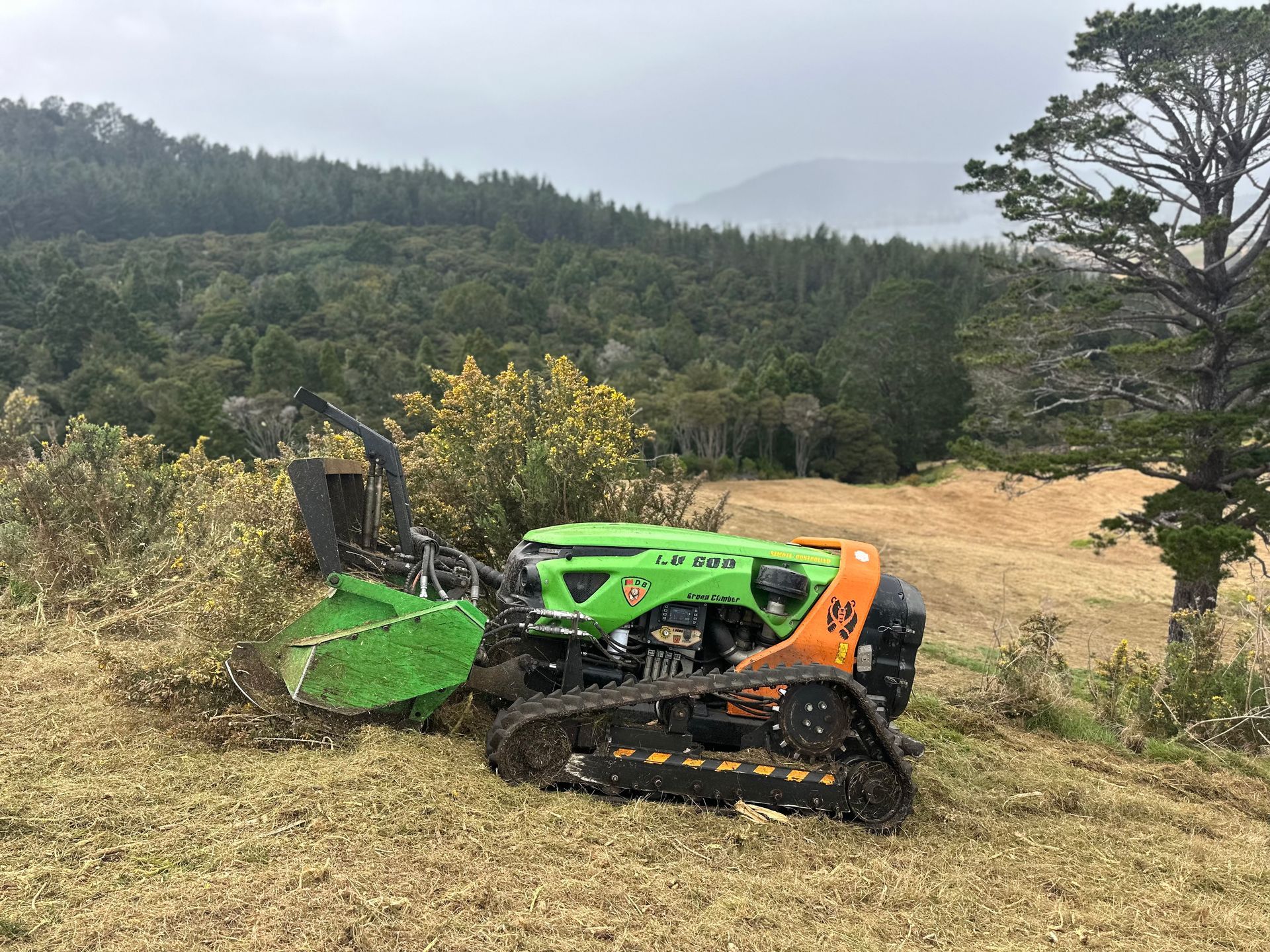
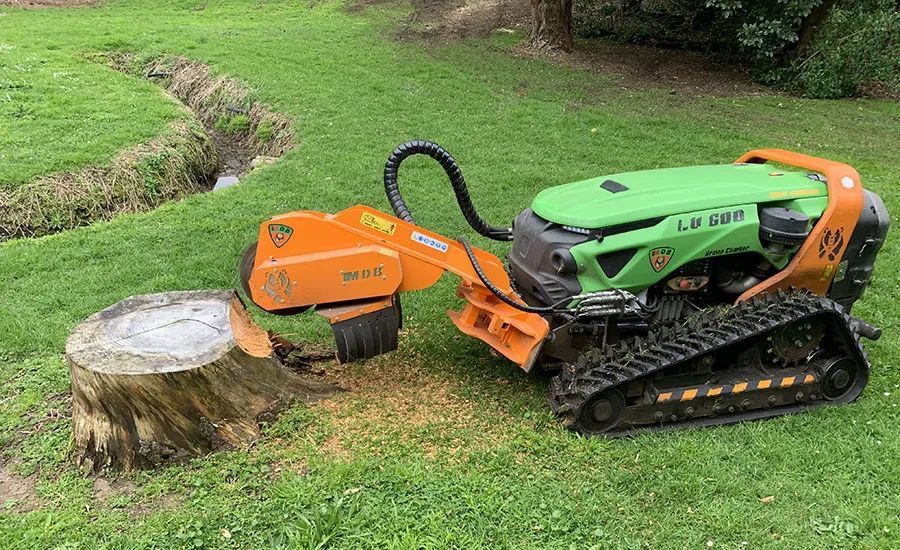
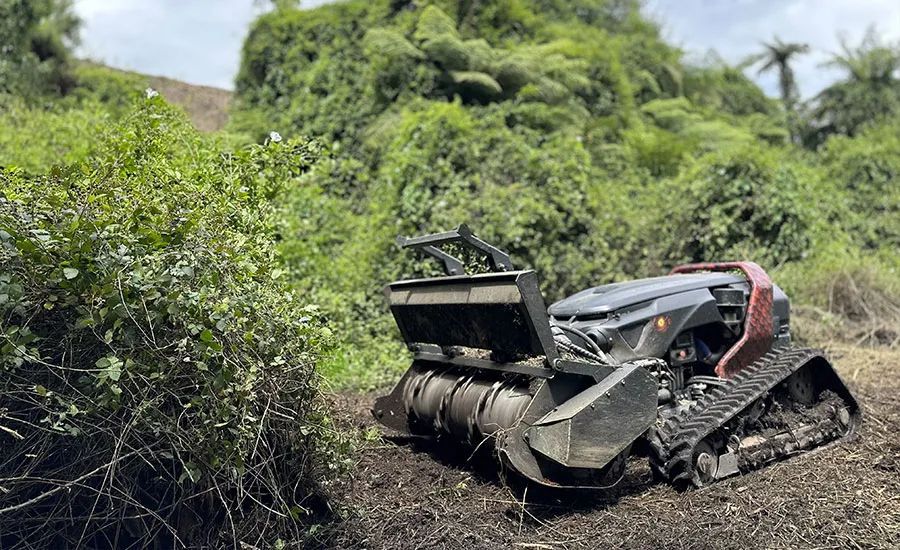
Clearing extreme ground demands purpose-built equipment. Through our steep slope mulching work, we deploy MDB LV600 Green Climber remote-controlled machines engineered specifically for steep inclines.
-
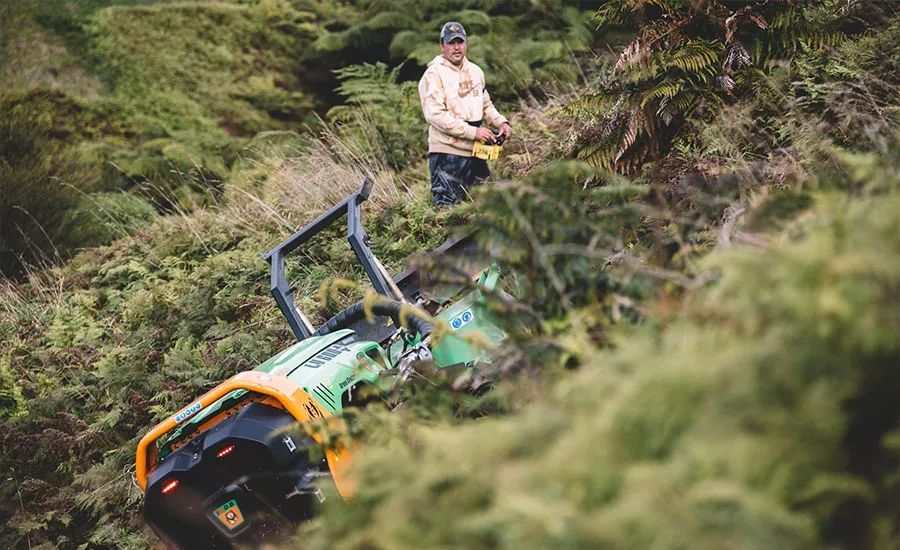
Positioning the operator on solid ground: The operator stands clear of the cutting zone on with a remote control. Maintaining direct line of sight eliminates driver crush injuries and rollover hazards.
-
Expanding the mechanical footprint: The chassis features hydraulically extendable rubber tracks. Widening the tracks lowers the machine's balance point and locks the machine against steep slopes to prevent lateral slips.
-
Engaging high-torque mulching drums: A commercial forestry mulching head fitted with tungsten-carbide teeth grinds dense gorse and scrub directly into fine mulch in a single pass.
-
Traversing extreme gradients: Dedicated hydraulic motors and pressurized lubrication systems keep the engine running smoothly on angles reaching up to 60 degrees.
Zero-Risk Ground Positioning for Operators
Removing the operator from the machine eliminates the core hazard of slope work. Hidden washouts and sudden ground slips pose real dangers to someone riding in a cab. Controlling the machine from the flat allows the operator to spot obstacles early and maneuver along orchard margins and boundary lines.
Low Center of Gravity on Extreme Batters/Slopes
Standard tractors stand tall. The MDB LV600 Green Climber carries its engine, hydraulic pumps, and heavy steel frame low between its tracks. This keeps the center of gravity pinned to the hill. Wide rubber tracks maintain surface contact across wet faces where a worker on foot cannot find secure footing.
Protecting Fragile Volcanic Soils Against Slips and Washouts
Clearing a bank is only half the job; the hillside must hold together through the next heavy rain. Western Bay volcanic ash and clay profiles slip easily if stripped or gouged incorrectly.
Wheeled tractors exert intense point-load pressure that ruts wet ground. During heavy rain, runoff flows down those tire ruts, cutting channels that develop into active slips. Tracked mulchers distribute machine weight across wide rubber footprints, eliminating rutting. The mulching head cuts vegetation flush with the surface without ripping out the root structures holding the subsoil together. Keeping root networks intact preserves bank stability common with kiwifruit shelterbelts and retention ponds as examples.
Why Pulverising Scrub In Situ Beats Manual Raking
Tackling cut green waste on a 40-degree incline creates real headaches. Raking, dragging, or hauling tons of wet brush up a gully batter or slope requires heavy manual labor and damages fragile topsoil.
Creating an In Situ Erosion Control Blanket
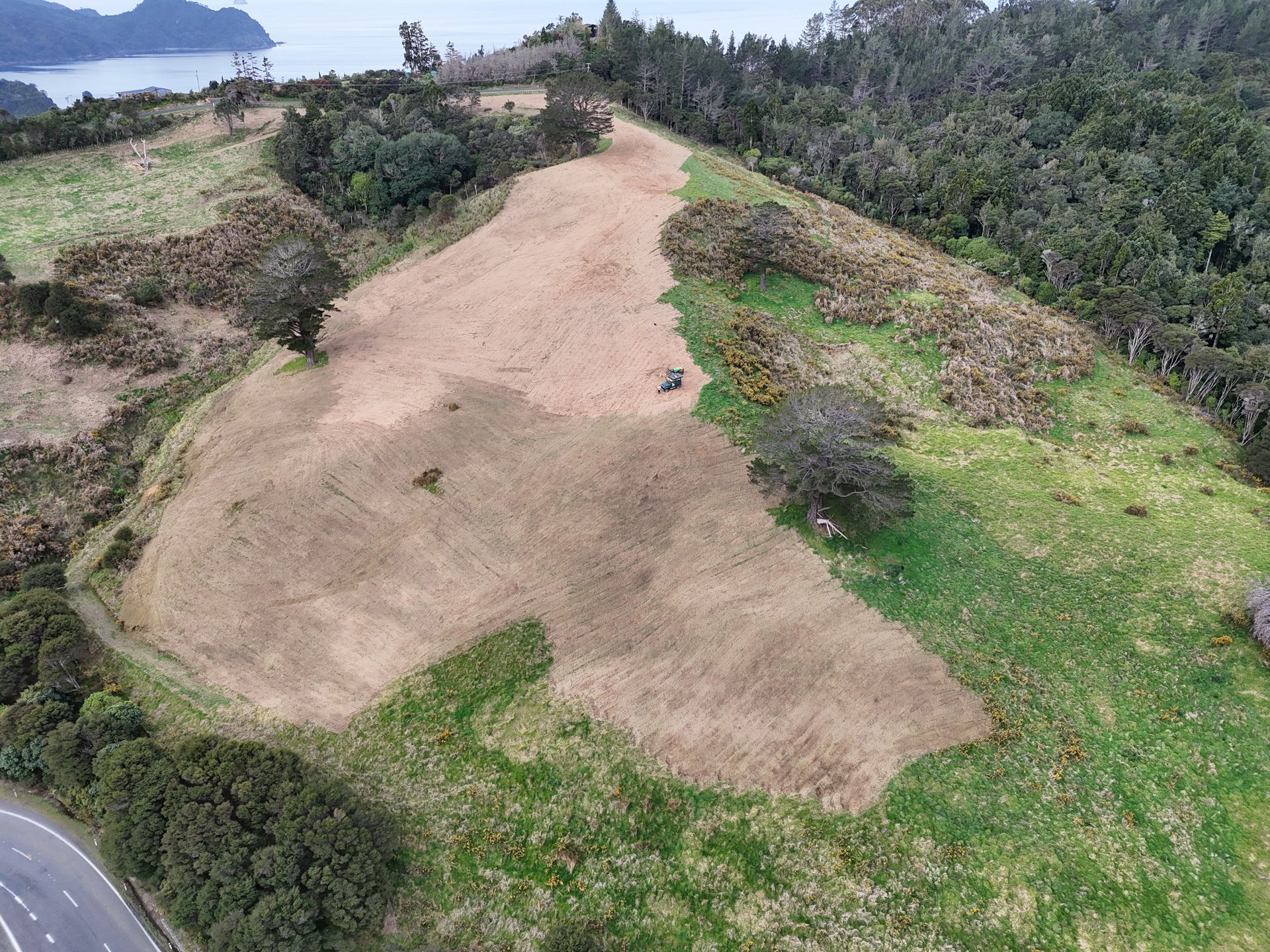
Tungsten-carbide teeth pulverize heavy scrub, dense blackberry, and rank grass directly where it stands. The shredded residue spreads evenly across the slope. This mulch acts like a protective erosion blanket, absorbing the direct impact of sunlight and driving spring rain and preventing bare volcanic soil from washing into gully waterways.
Suppressing Regrowth Without Herbicide Spray Drift
The mulch layer blocks sunlight from reaching dormant weed seeds, slowing the return of opportunistic gorse and privet. Mechanical mulching also avoids chemical sprays. Neighboring avocado and kiwifruit orchards face strict rules regarding chemical drift. Pulverizing the vegetation eliminates the heavy fuel load without drenching stream margins in herbicide.
What to Check Before Booking a Steep Slope Clearance
A few quick checks before equipment arrives ensure clearing work runs smoothly and safely.
-
Check approach access: Measure farm tracks and access gates. Tracked mulchers are compact, but they need a direct path from the transport trailer to the slope face.
-
Identify hidden ground hazards: Overgrown Kikuyu conceals discarded fencing wire, steel waratahs, and volcanic rocks. Flag these hazards if possible with paint or stakes to avoid machine strikes. We accept not everything will be found and there is always unknowns (part of the job)
-
Locate services and pipes: Note the locations of shallow irrigation lines, culverts, and septic fields before clearing starts.
-
Verify contractor prequalifications: Slope operations require proven compliance. At No Mans Land, we back our work with 4,500 hours of operating experience on MDB LV600 machines alongside verified SiteWise, SHE, and Tōtika PreQual certifications.
If your hillside banks have outgrown standard mowers this spring, leave the domestic ride-on parked. Request an on-site assessment through our contact page to discuss your terrain with No Mans Land Mowing.
Frequently Asked Questions
At what slope angle does a ride-on lawn mower become dangerous?
Commercial ride-on and zero-turn mowers are safe on slopes up to 15 degrees, with 20 degrees being the absolute mechanical limit on dry turf. Beyond 20 degrees, wheeled machines lose lateral grip and face severe rollover hazards. Slopes exceeding this angle require purpose-built remote-controlled tracked equipment.
Why do Tauranga lawn mowing contractors turn down steep gully banks?
Lawn care operators carry insurance and health and safety policies that explicitly prohibit running ride-on mowers on steep ground. Sending workers onto wet banks with line trimmers creates severe slipping hazards and high labor costs. Contractors turn down steep gully sections to protect their staff and avoid commercial liability.
What happens to the mulched grass and scrub on steep banks?
Tracked mulchers grind heavy brush down into fine mulch directly where it grows. This organic blanket protects volcanic clay from heavy rain washouts, suppresses weed seed strikes, and gradually breaks down into humus. The process eliminates the need to rake or haul heavy brush off the bank.
Can tracked mulchers clear steep ground when spring soil is damp?
Yes. Wide rubber tracks distribute machine weight across a broad footprint, keeping ground pressure low on wet soil. This even footprint maintains traction on damp clay without churning the surface into ruts, allowing the machine to work slopes that wheeled tractors cannot safely traverse.